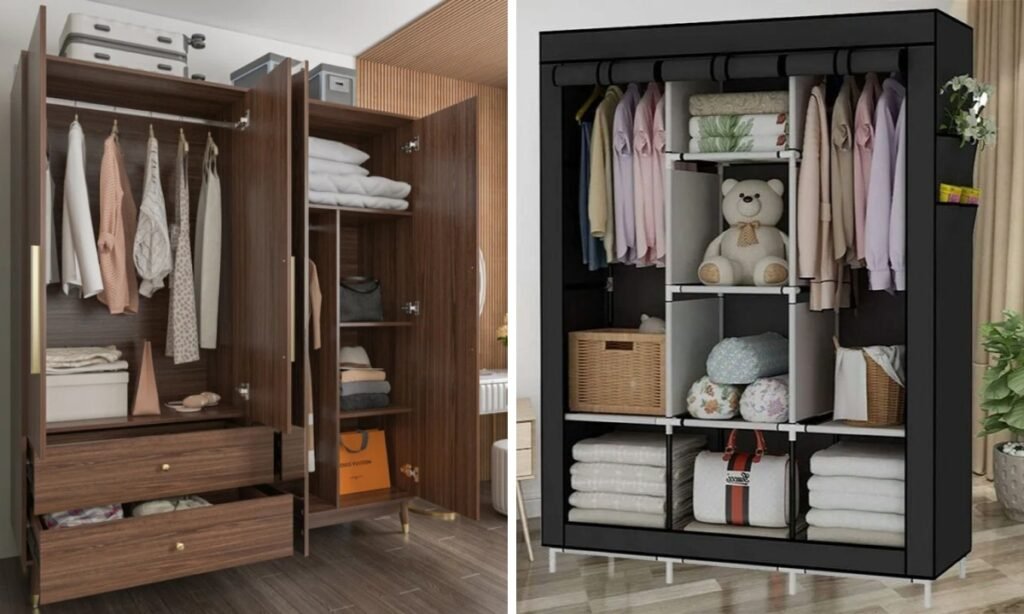
A messy wardrobe does more than make your closet look bad. It wastes your time every morning, makes getting dressed frustrating, and leaves you feeling like you have nothing to wear even when your wardrobe is full.
Most people don’t struggle because they lack storage space. The real problem is that their wardrobe has no simple system.
Clothes get stuffed into random places, unused items keep piling up, and after one busy week everything becomes messy again.
That’s why most wardrobe organization tips fail. They focus on making your closet look perfect instead of making it easy to manage in real life.
The good news is that you don’t need an expensive closet makeover or fancy organizers to fix the problem.
You just need a practical system that helps you declutter, use your space better, and keep your wardrobe organized without extra effort.
In this article, you’ll learn how to organize your wardrobe step by step, avoid common mistakes, and keep it clutter-free long term.
Why Most Wardrobes Become Messy So Quickly?
Most wardrobes do not become messy overnight. The problem usually starts with small habits that slowly create clutter.
You buy new clothes but never remove old ones. You throw clothes inside the wardrobe when you are busy.
You keep items “just in case” even though you never wear them. After some time, the space becomes overcrowded and hard to manage.
Another common problem is having no clear system. Many people store clothes wherever there is empty space.
Shirts end up mixed with jackets, seasonal clothes take over daily space, and drawers become stuffed with random items.
When everything is hard to see, getting dressed becomes stressful and time-consuming.
A lot of wardrobe organization advice online also feels unrealistic. Perfect-looking closets may work for photos, but they are difficult to maintain in daily life.
If your system takes too much effort, you will stop following it.
The best wardrobe organization system is not the fanciest one. It is the one you can maintain easily every day.
Once you understand what causes clutter, it becomes much easier to build a wardrobe that stays clean, organized, and simple to use.
Start by Decluttering Clothes You No Longer Wear
Before you organize anything, you need to remove clothes you no longer use.
This is the most important step because no organization system works well in an overcrowded wardrobe.
Many people try to buy storage boxes or hangers first, but the real issue is usually having too many unnecessary clothes.
Start by taking everything out of your wardrobe. Then go through each item one by one. Ask yourself simple questions.
Have you worn it in the last year? Does it still fit properly? Would you buy it again today? If the answer is no, it may be time to let it go.
You should also remove damaged clothes, duplicate items, and pieces that no longer match your lifestyle.
Keeping clothes out of guilt or emotional attachment only creates more clutter and makes daily organization harder.
Create separate piles for clothes to keep, donate, sell, or recycle. Be honest with yourself during this process.
The goal is not to create an empty wardrobe. The goal is to keep clothes that you actually wear and enjoy.
Once you reduce the clutter, your wardrobe immediately feels easier to manage and organize.
Create a Simple Wardrobe Organization System
After decluttering, the next step is creating a system that makes your wardrobe easy to use every day.
The mistake many people make is organizing clothes in a way that looks nice but does not fit their routine. A simple system always works better than a complicated one.
Start by grouping similar items together. Keep shirts in one section, pants in another, and jackets in their own space.
This makes it easier to find what you need without searching through piles of clothes.
Next, organize your wardrobe based on how often you wear certain items. Daily clothes should stay at eye level or in easy-to-reach areas.
Occasion wear and seasonal items can go on higher shelves or storage boxes.
You can also organize clothes by color if it helps you create outfits faster. Small details like matching hangers and drawer organizers can make the wardrobe feel cleaner without much effort.
The key is to give every item a proper place. When clothes have assigned spaces, it becomes much easier to keep the wardrobe organized.
You spend less time looking for things, and putting clothes back becomes a simple habit instead of a chore.
Use Smart Storage Solutions to Maximize Space
You do not need a large walk-in closet to keep your wardrobe organized. Most people simply need to use their available space more efficiently.
Smart storage solutions can help you create extra room without making the wardrobe feel crowded.
One of the easiest upgrades is using slim hangers. Bulky hangers waste space and make clothes look messy.
Slim hangers create more room instantly and keep clothing aligned neatly. Drawer organizers are also useful for socks, underwear, belts, and accessories that usually turn into clutter.
If your wardrobe is small, use vertical space as much as possible. Add shelf dividers, hanging organizers, or storage bins to separate different categories of clothing.
You can also store seasonal items in labeled boxes under the bed or on higher shelves.
Avoid stuffing too many clothes into one area. Overcrowding makes it difficult to see what you own and often leads to wrinkles and mess.
Leave some open space so your wardrobe feels easier to manage.
Good storage is not about buying expensive products. It is about making your clothes easier to access, easier to see, and easier to put back after use.
Organize Your Clothes Based on Daily Use
One of the smartest ways to organize a wardrobe is by arranging clothes around your daily routine.
Most people keep all clothing together without thinking about how often they actually use each item. This makes everyday dressing slower and more frustrating.
Start by identifying the clothes you wear most often. These may include work outfits, casual clothes, gym wear, or everyday shoes.
Keep these items in the easiest-to-reach areas of your wardrobe. When daily essentials are easy to access, your morning routine becomes much faster.
Clothes you wear less often, like formal outfits, party wear, or seasonal jackets, should stay in less convenient spaces.
You can place them on higher shelves, in storage boxes, or at the back of the wardrobe.
This method also helps reduce clutter because you stop mixing daily items with clothes you rarely use. Your wardrobe feels cleaner, and finding outfits becomes less stressful.
You can take this system further by planning outfits together or keeping matching pieces nearby.
Small changes like these save time every day and make your wardrobe more functional instead of just looking organized.
A wardrobe should support your lifestyle, not create more work for you.
How to Keep Your Wardrobe Organized Long-Term
Organizing your wardrobe once is easy. Keeping it organized is the real challenge.
Many people spend hours cleaning their closet only to see it become messy again within a few weeks.
This usually happens because they focus on cleaning instead of building simple habits.
The easiest way to maintain an organized wardrobe is to avoid creating clutter in the first place.
After wearing clothes, put them back immediately instead of leaving them on chairs or beds. Small habits like this prevent mess from building up over time.
You should also follow a simple “one in, one out” rule. Whenever you buy a new clothing item, try removing an old one.
This keeps your wardrobe from becoming overcrowded again.
Set aside a few minutes each week for a quick reset. Fold loose clothes, return items to their correct place, and remove anything you no longer wear.
Seasonal reviews also help you stay organized throughout the year.
Most importantly, keep your system realistic. If organizing feels difficult or time-consuming, you are less likely to maintain it.
A wardrobe should make your life easier, not feel like another task on your list.
Common Wardrobe Organization Mistakes to Avoid
Many people unknowingly make wardrobe organization harder by following habits that create more clutter.
Avoiding these mistakes can save you time and help your system last longer.
One of the biggest mistakes is keeping too many clothes. An overcrowded wardrobe becomes difficult to manage no matter how many organizers you buy.
If clothes are packed tightly together, you will struggle to see what you own and eventually create more mess.
Another common mistake is organizing without decluttering first. Storage boxes and fancy hangers cannot fix a wardrobe filled with unused clothes.
You need less clutter before any system starts working properly.People also make the mistake of creating unrealistic systems.
Perfectly folded clothes and color-coded wardrobes may look good online, but they are difficult to maintain if they do not match your daily habits. Your system should feel simple and practical.
Ignoring maintenance is another major problem. Even the best-organized wardrobe needs regular upkeep. Without small weekly resets, clutter slowly returns.
Finally, avoid buying storage products before understanding your actual needs. Too many organizers can waste space and make the wardrobe feel even more complicated.
Start simple and only add storage solutions that genuinely improve organization.
Conclusion
An organized wardrobe is not about making your closet look perfect. It is about making your daily life easier.
When your clothes are easy to find and your space feels less crowded, getting dressed becomes faster and less stressful.
The good thing is that you do not need a huge wardrobe or expensive storage products to make it work.
Simple habits like decluttering regularly, giving every item a proper place, and organizing clothes based on daily use can completely change how your wardrobe feels.
The key is to keep your system practical. If it is easy to maintain, you are more likely to stick with it long term.
Start small, focus on what you actually wear, and avoid overcomplicating the process.
Once your wardrobe becomes organized, you will spend less time searching for clothes, waste less space, and feel more in control of your daily routine.

Hi, my name is Zeeshan, and I am the founder of The Crafts Geek. I have been passionate about DIY projects, home organization, and creative problem-solving for years. Over time, I realized that simple storage solutions and practical DIY ideas can make a huge difference in how a home looks and functions.