You look around your room and wonder where all these clothes are supposed to go.
The closet is already full. Chairs are covered. Maybe there’s a pile on the bed or stuffed in random corners. And no matter how many times you try to organize, it somehow ends up messy again.
The real problem isn’t just “too many clothes.” It’s that your space wasn’t designed to store them properly. And when you don’t have enough room, even a small wardrobe can feel overwhelming.
You don’t want to throw everything away. You just need a smarter way to store what you already have, without making your room feel cramped or cluttered.
In this article, you’ll find simple, practical ways to store your clothes when you have no space.
No complicated setups. No expensive solutions. Just ideas that actually work in real life.
Why You Run Out of Space for Clothes So Quickly
You don’t run out of space just because your room is small. Most of the time, the real issue is that your storage setup doesn’t match how you use your clothes.
A typical room comes with limited storage like one small closet or a few drawers, but your clothes keep increasing over time.
You buy new items, keep old ones for “later,” and slowly the space that once worked becomes overcrowded.
On top of that, a lot of usable space in your room stays ignored.
The area under your bed, behind doors, or high up on walls often goes unused, even though it could solve part of the problem.
Another reason is that clothes you rarely wear still take up the same space as your everyday items, which makes things harder to manage.
When clothes are stacked or piled instead of properly arranged, you also lose visibility, and that leads to more mess because you keep moving things around.
So the problem is not just about having too many clothes or too little space. It’s about how your space is used and how your clothes are managed.
Once you understand this, you can stop trying random fixes and start using your space more effectively.
Before You Store Anything, Decide What You Actually Need
Before you start organizing or buying storage solutions, you need to figure out what you actually use.
If you skip this step, no system will stay organized for long.
Start by going through your clothes and being honest with yourself about what you wear regularly and what you don’t.
Clothes that you use often should stay easy to access, while items you rarely wear should not take up your main storage space.
Many people hold on to clothes just in case, but those items usually end up creating unnecessary clutter.
This doesn’t mean you have to throw everything away, but you do need to make clear decisions.
You can donate, sell, or store items that you don’t use anymore. Another important point is to avoid rushing into buying organizers before reducing your clothing.
If you try to organize everything without sorting first, you’ll just end up managing clutter in a different way.
When you keep only what you actually need and use, you naturally create more space and make it easier to organize the rest.
This step sets the foundation for everything that comes next.
Where to Store Clothes When You Have No Space
When you feel like you have no space, the solution is not always to find more room but to use the space you already have in a smarter way.
One of the most useful areas is under your bed, which can hold a large number of clothes that you don’t use daily.
This space works well for seasonal items or extra clothing that you want to keep but don’t need often. Another important area is vertical space.
Most people only use storage at eye level, but the walls above that are often empty and can be used for shelves, hooks, or hanging organizers.
Doors are another overlooked option. You can use over-the-door storage to hold clothes or accessories without taking up any extra room.
If you don’t have a closet, a simple clothing rack can work well for your everyday items because it keeps them visible and easy to reach.
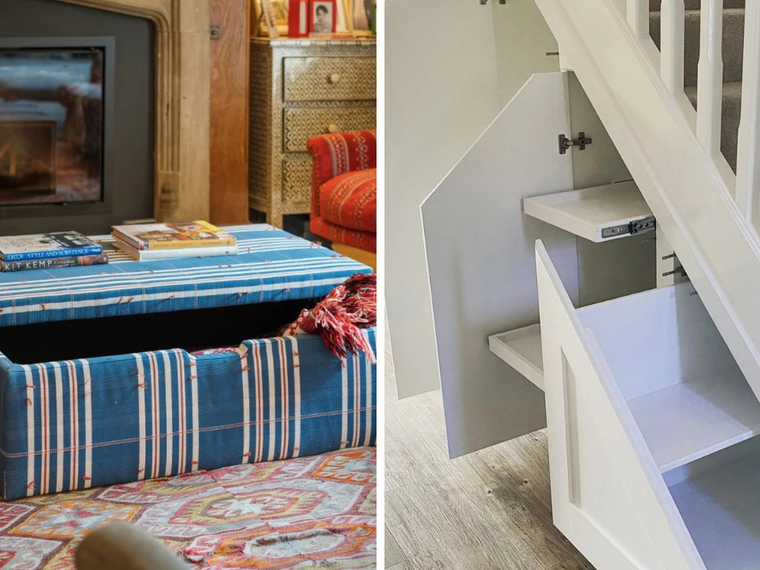
You can also use furniture like beds with storage or benches that open up to hide clothes while keeping your room clean.
Even items like suitcases can be used to store clothes instead of leaving them empty.
When you start using your space in layers based on how often you use your clothes, it becomes much easier to manage everything without feeling crowded.
Storage Ideas Based on Your Situation
The best storage solution depends on your specific situation, and this is where most people go wrong.
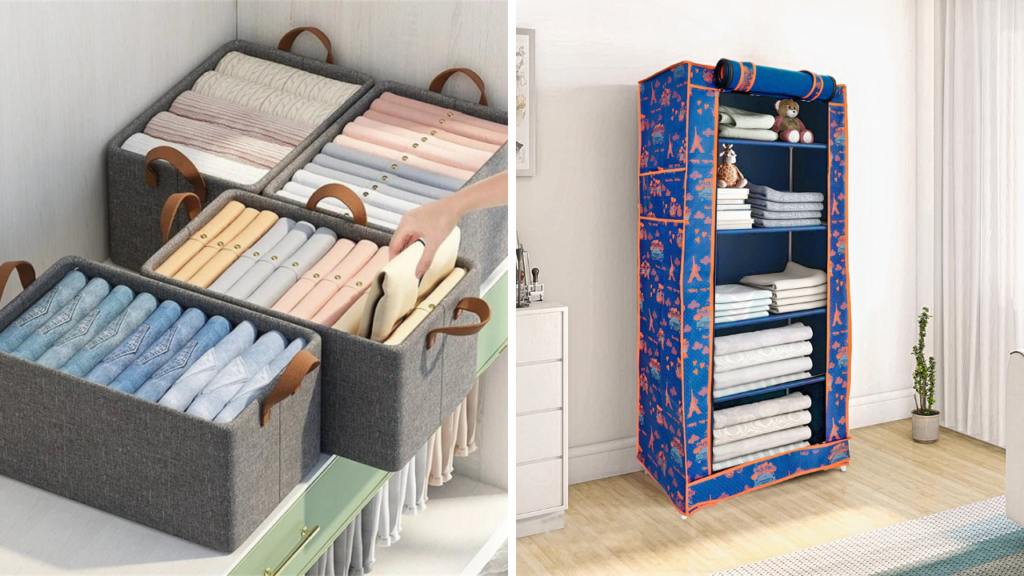
If you don’t have a closet, you need something simple like a clothing rack or a portable wardrobe to keep your daily clothes accessible.
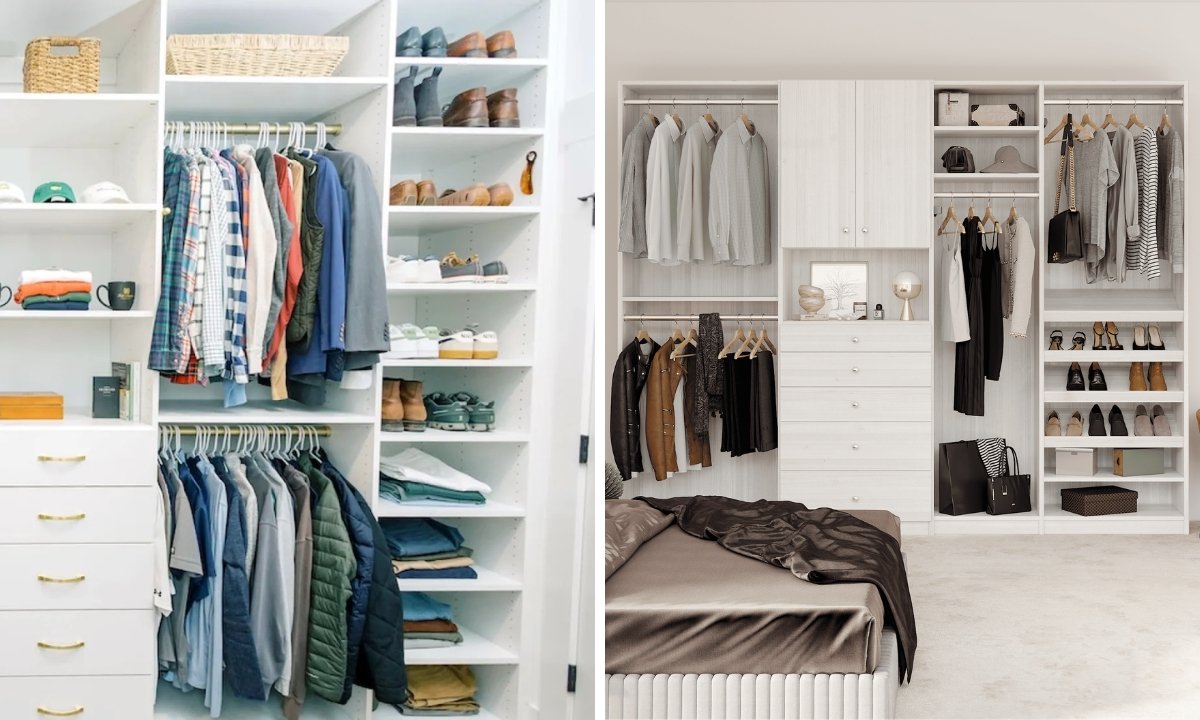
If your closet is small, you can increase its capacity by using hanging organizers or adding another rod to create more space.
For people living in shared rooms, it becomes important to clearly separate your storage so your clothes don’t mix with others.
In rental spaces where you can’t make permanent changes, you should focus on options like over-the-door hooks, freestanding racks, or stackable boxes that don’t require installation.
If your room has very little floor space, then using walls becomes the best option, whether through hooks or shelves.
When the main issue is seasonal clothing, the smartest approach is to store those items separately so they don’t take up everyday space.
If clutter is your biggest problem, then open and visible storage works better because it helps you keep track of what you have.
Instead of copying general ideas, you need to choose solutions that match your actual problem, which makes your setup more practical and easier to maintain.
What Clothes You Should Store in Each Place
To keep your space organized, it’s important to decide where each type of clothing should go instead of mixing everything together.
Clothes that you wear daily should always be kept in places that are easy to access, such as a rack, drawer, or your main closet.
If these items are hard to reach, you’ll end up creating piles and making your space messy again.
Clothes that you wear occasionally can be stored in less accessible places like bins, shelves, or under-bed storage because you don’t need them often.
Seasonal clothing should be stored separately since it doesn’t need to be available all year.
Items like winter jackets or summer clothes can be packed away in bags, suitcases, or higher storage areas.
Delicate clothes need extra care and should be stored in breathable covers rather than being compressed tightly.
Bulky items can take up a lot of space, so they should be stored in a way that reduces their size without damaging them.
When you assign each type of clothing to a specific place based on how often you use it, your space stays organized with much less effort.
Mistakes That Make Small Spaces Even More Cluttered
A lot of people struggle with storage not because they lack space, but because of small mistakes that make things worse over time.
One common issue is trying to fit too many clothes into one place, which makes everything hard to manage and use.
Another mistake is buying storage products without a clear plan, which often leads to more clutter instead of solving the problem.
People also tend to store frequently used clothes in places that are difficult to access, which leads to items being left out and creating mess.
Using the wrong storage methods can also cause problems, such as compressing clothes that shouldn’t be compressed or leaving bulky items unorganized.
Many people ignore vertical space and focus only on floors and closets, which limits their storage options.
Not labeling storage can also create confusion and force you to dig through everything repeatedly.
The biggest mistake, however, is not having a simple system. Without a clear way to store and access your clothes, even good solutions will fail over time.
Fixing these mistakes can make a noticeable difference without needing extra space.
How to Store Clothes Without Damaging Them
While saving space is important, you also need to make sure your clothes stay in good condition.
Before storing anything, always make sure your clothes are clean and completely dry because dirt and moisture can cause damage over time.
For long-term storage, using sealed containers or proper storage bags can protect your clothes from dust, pests, and moisture.
However, not all storage methods work for every fabric. For example, vacuum bags are useful for saving space but can damage delicate materials like wool, silk, or leather if used for too long.
It’s also important to store clothes in a place that is cool and dry, as humidity can lead to mold or unpleasant odors.
If you are storing clothes for an extended period, checking them occasionally helps prevent problems from getting worse.
Delicate items should be stored in breathable covers so they can maintain their shape and quality.
Overpacking storage boxes should also be avoided because it can lead to wrinkles and stress on fabrics.
Taking a few simple precautions ensures that your clothes remain in good condition while being stored.
Cheap and Easy Storage Ideas That Actually Work
You don’t need to spend a lot of money to solve your storage problem. In many cases, you can use things you already have at home.
Items like suitcases, boxes, and baskets can be turned into effective storage if they are used properly.
Simple additions like hooks and hangers can also create extra space without much cost, especially on walls and doors.
Vacuum bags are another affordable option that can significantly reduce the space taken by bulky clothing.
Plastic bins or fabric boxes can help organize clothes under the bed or on shelves without making the room look messy.
Even small changes like rolling clothes instead of folding them can help you save space and keep everything visible.
If you are willing to spend a little, options like over-the-door organizers, hanging storage, or stackable boxes can make a big difference without being expensive.
The key is not to buy everything, but to choose simple and practical solutions that match your needs.
Simple Tips to Keep Your Clothes Organized Every Day
Creating storage is only part of the solution, because staying organized requires simple daily habits.
The most important rule is to make sure every item has a fixed place so you always know where it belongs.
When you finish using something, putting it back immediately prevents clutter from building up.
Temporary piles are another issue that should be avoided because they quickly turn into permanent mess.
Taking a few minutes each week to reset your space and put things back in order can make a big difference.
Your daily clothes should always be easy to access, because if your system feels difficult, you won’t follow it.
It’s also helpful to be mindful when adding new clothes, as bringing in more items without removing old ones will create the same problem again.
Keeping your system simple is important because complicated setups are harder to maintain.
With small, consistent habits, you can keep your clothes organized even in a limited space.
Conclusion
Running out of space for clothes can feel frustrating, but it’s not something you can’t fix.
The problem is usually not just about space, it’s about how that space is used and how your clothes are managed.
Once you start thinking in terms of access, usage, and smart placement, things become much easier to control.
You don’t need a bigger room or expensive furniture to solve this. What you really need is a simple system that fits your daily routine.
Keep your most-used clothes easy to reach, store the rest in the right places, and avoid overcomplicating things.
Small changes like using hidden spaces, organizing by usage, and building simple habits can make a big difference.
The goal is not to make your space perfect. It’s to make it work for you.
When everything has a place and your setup feels easy to follow, your room stays clean without much effort.
Even if your space is small, you can still keep your clothes organized and your room comfortable to live in.

Hi, my name is Zeeshan, and I am the founder of The Crafts Geek. I have been passionate about DIY projects, home organization, and creative problem-solving for years. Over time, I realized that simple storage solutions and practical DIY ideas can make a huge difference in how a home looks and functions.