Your pots are stacked, your lids are missing, and every time you cook, you end up pulling out half the cabinet just to grab one pan.
It’s not that you have too many pots, it’s that your kitchen isn’t set up to handle them.
Most people keep rearranging things without fixing the real problem.
You don’t need more space or fewer pans. You just need a smarter way to organize them so everything is easy to reach, use, and put back.
How To Organize a Lot of Pots and Pans?
If you have a lot of pots and pans, the mistake most people make is trying to “fit everything in” without changing how they store it. That’s why your cabinets feel full but still don’t work.
Start by stopping the stacking habit. When you stack pans on top of each other, you create more mess every time you cook. Instead, store them vertically using a rack or divider. This way, you can pull one pan out without touching the rest.
Next, separate your lids from your pots. Lids are awkward and take up random space. If you keep them together, everything becomes harder to manage.
Use a lid holder, cabinet door rack, or even a simple stand so each lid has its own spot.
Now look at your cabinet space. If you’re using deep cabinets, you’re probably wasting half of it. Add a pull-out shelf or tiered organizer so you can actually see and reach everything inside.
If your kitchen is small, stop relying only on cabinets. Use your walls. A wall rail, hooks, or a pegboard can instantly free up space and make your pans easier to grab.
Finally, group your cookware by use. Keep everyday pans within easy reach and move rarely used items higher or further back.
If you mix everything together, you’ll always feel disorganized no matter how much space you have.
Once you set up your kitchen this way, cooking becomes faster, cleaner, and a lot less frustrating.
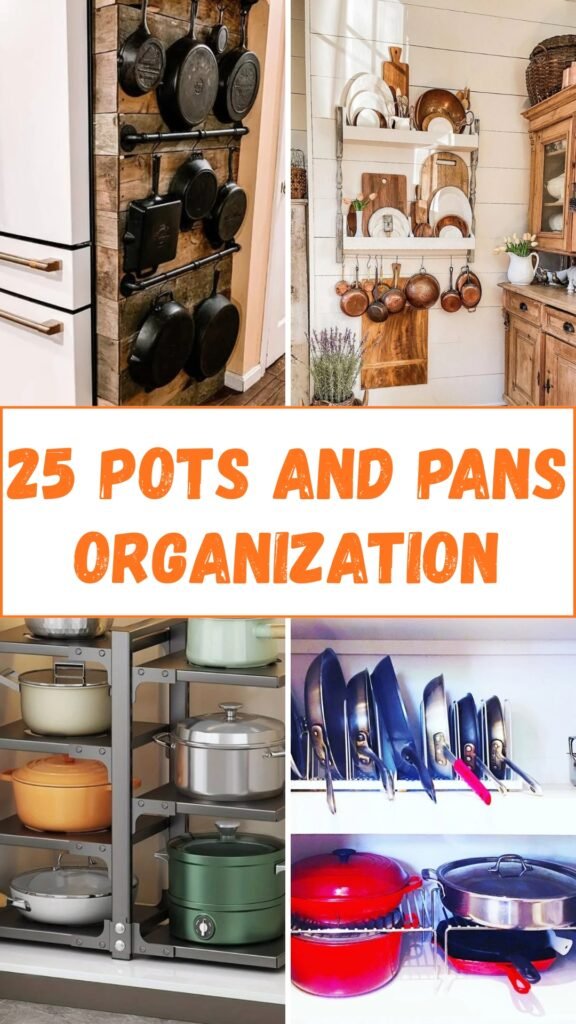
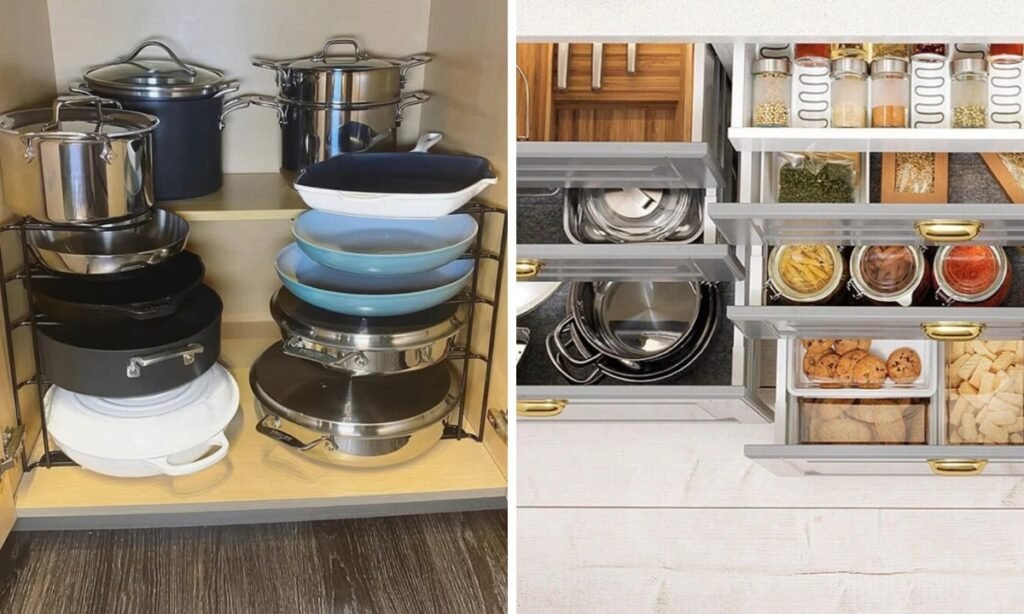
Sectioned Drawer Storage
Deep drawers only feel messy when everything gets thrown together.
Split the space into sections so each item has a clear spot, pots stacked neatly, lids standing on the side, and tools kept separate.
Add simple dividers or trays to hold everything in place.
This works best in wide drawers where you want quick access without pulling everything out.
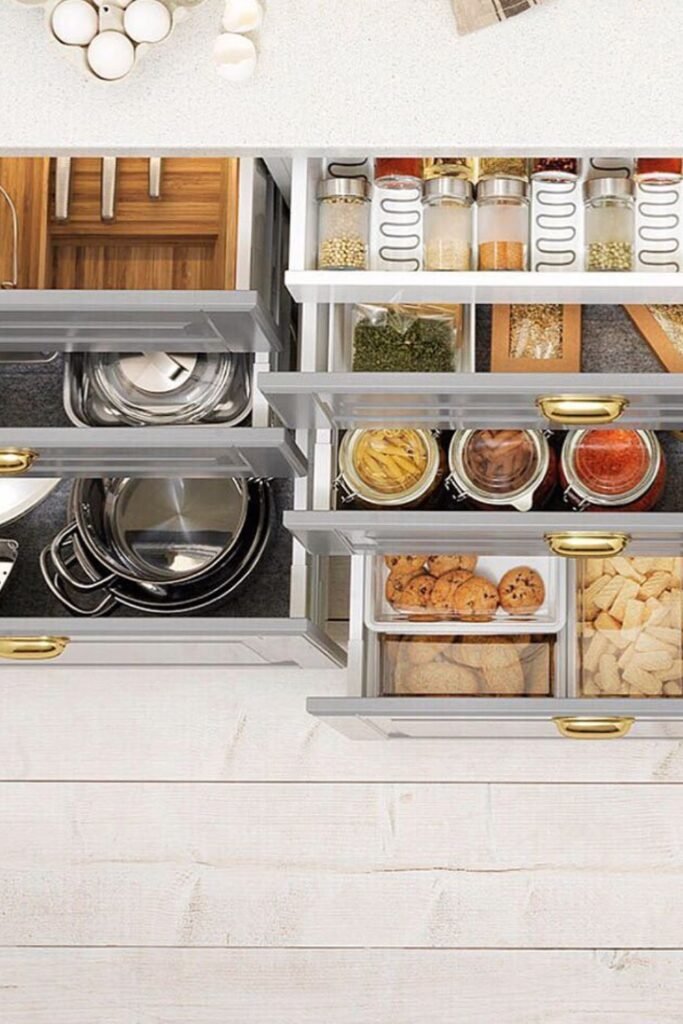
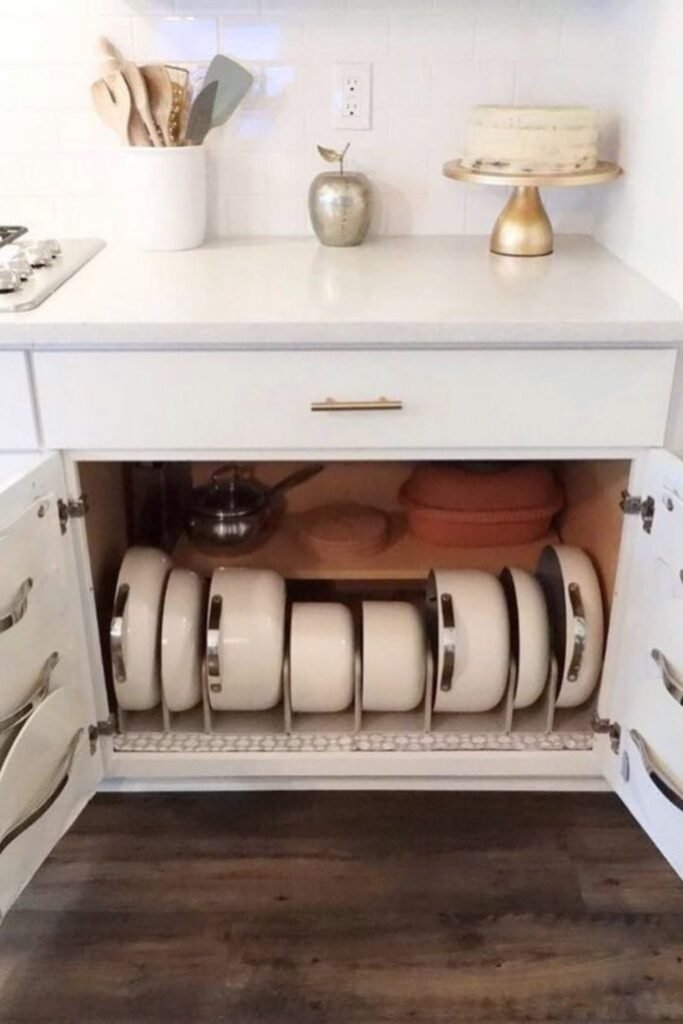
Vertical Pan Storage
Stacking pans might feel easy, but it slows you down every time you cook.
Stand them up instead. A simple rack lets each pan sit in its own slot, so you can grab one without touching the rest.
This works perfectly in lower cabinets.
Add a small lid holder beside it, and you turn a messy space into something you can use without thinking twice.
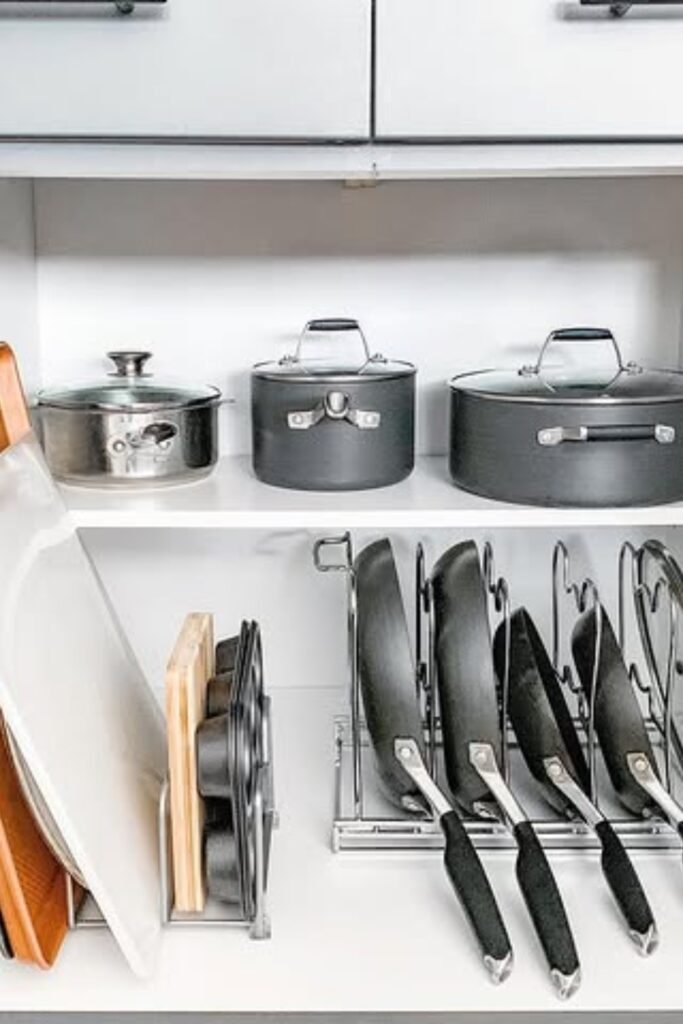
Split Cabinet Zones
When everything shares the same shelf, it quickly turns into a mix you don’t want to deal with.
Divide your cabinet into zones, stack trays and containers on one side, and stand pans vertically on the other.
Add a simple rack for pans and use the door for lids to free up space.
This setup works best in double cabinets where you can clearly separate items by type and stop the clutter from mixing.
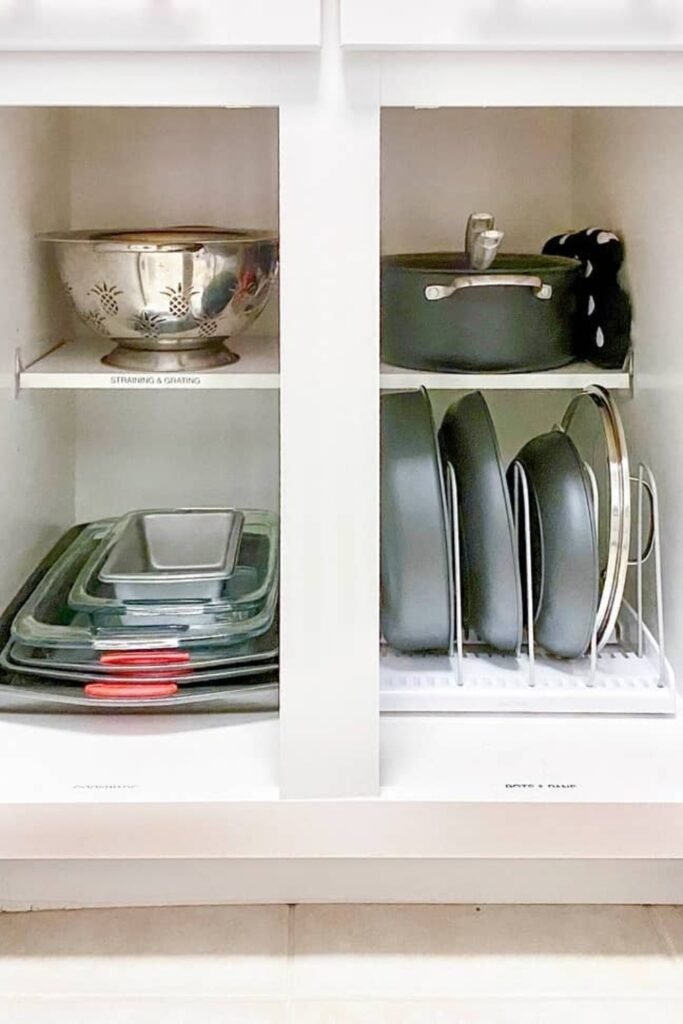
Tiered Stack Support
Stacking isn’t the problem, unstable stacks are.
Add tiered rack supports on both sides so each pile has structure and doesn’t collapse when you pull something out.
Keep heavier pots on the base and lighter pans on top.
This works well in standard cabinets where vertical space goes unused, letting you stack more without turning it into a shaky mess.
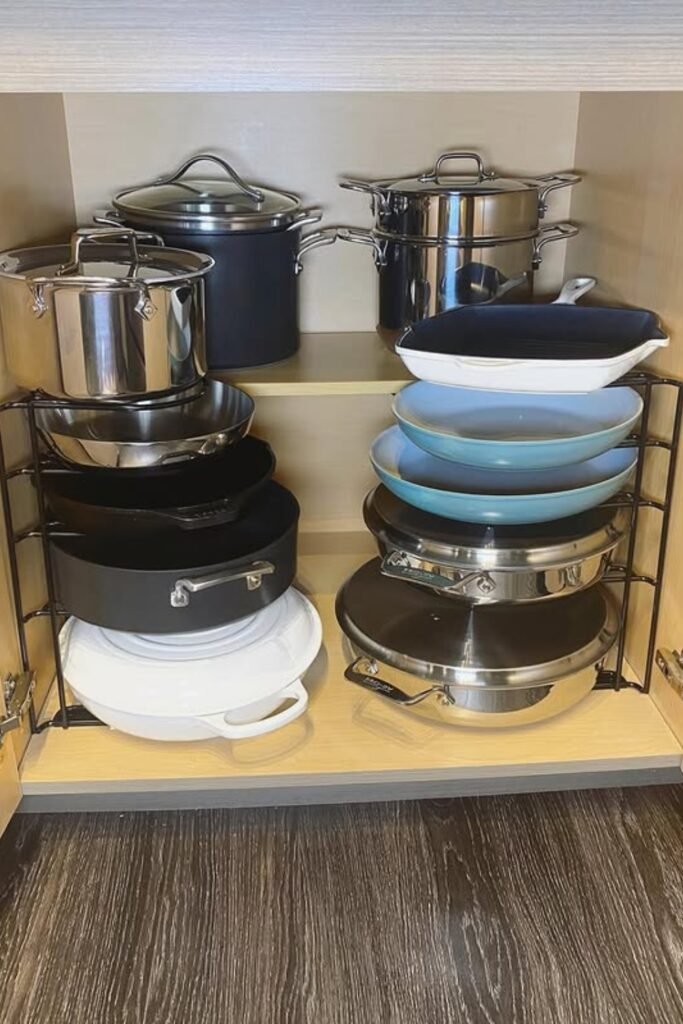
Adjustable Rack Divider
When your pans keep sliding into each other, you need something that forces space between them.
An adjustable rack does exactly that, each pan gets its own level, so nothing scratches or stacks awkwardly.
Place it inside a cabinet or even on the countertop if space allows.
It works best when you have multiple frying pans in different sizes and want quick, no-effort access every time you cook.
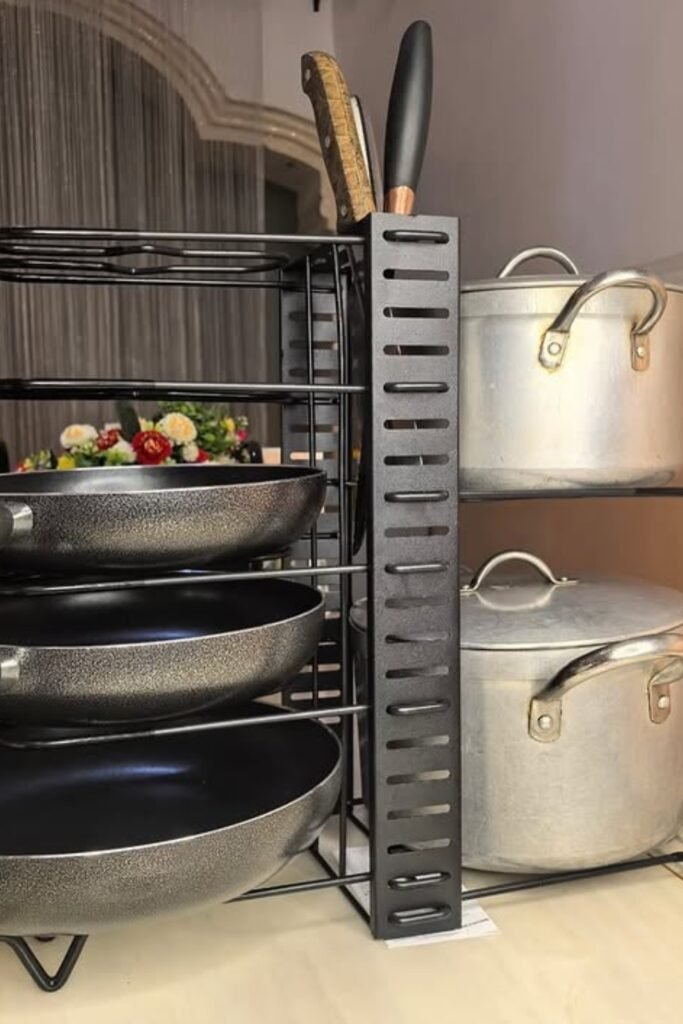
Categorized Pantry System
When everything looks the same, you waste time searching for simple things.
Group similar items together and give each category its own space, grains in one row, spices in another, and produce in labeled bins below.
Use clear containers so you can see what’s running low without opening anything.
This works best in tall cabinets where visibility matters more than stacking.
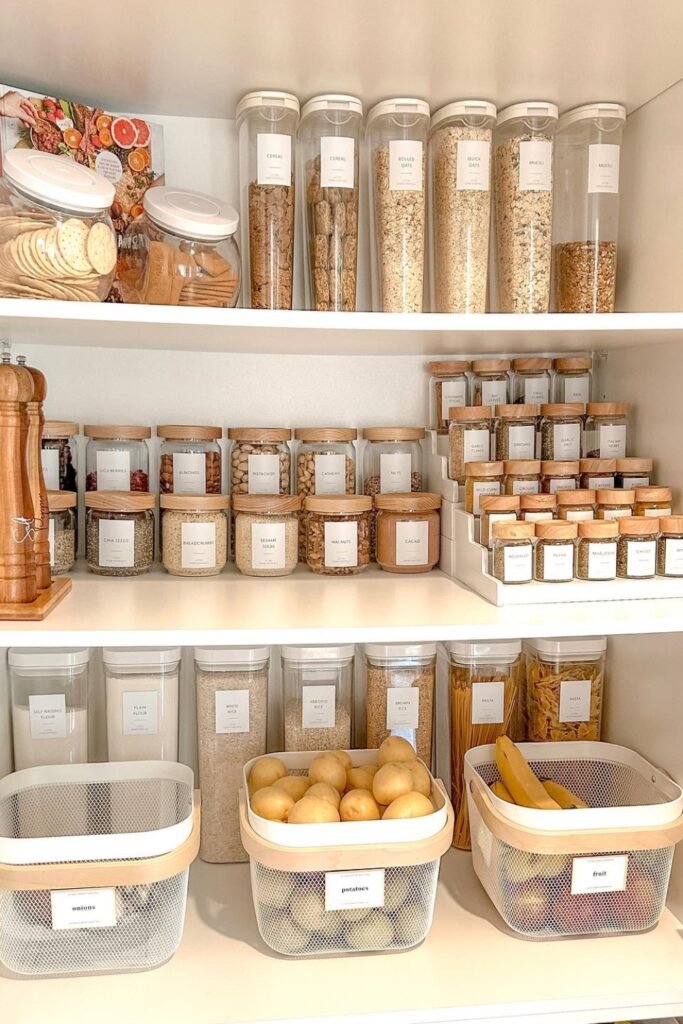
Lid Filing System
Lids become a mess the moment you stack them flat. Stand them up like files instead.
A simple rack or holder keeps each lid separated, so you can grab the right one without digging.
Keep containers stacked by size on the side and lids in one row.
This setup works best for food storage cabinets where matching lids quickly saves you time every day.
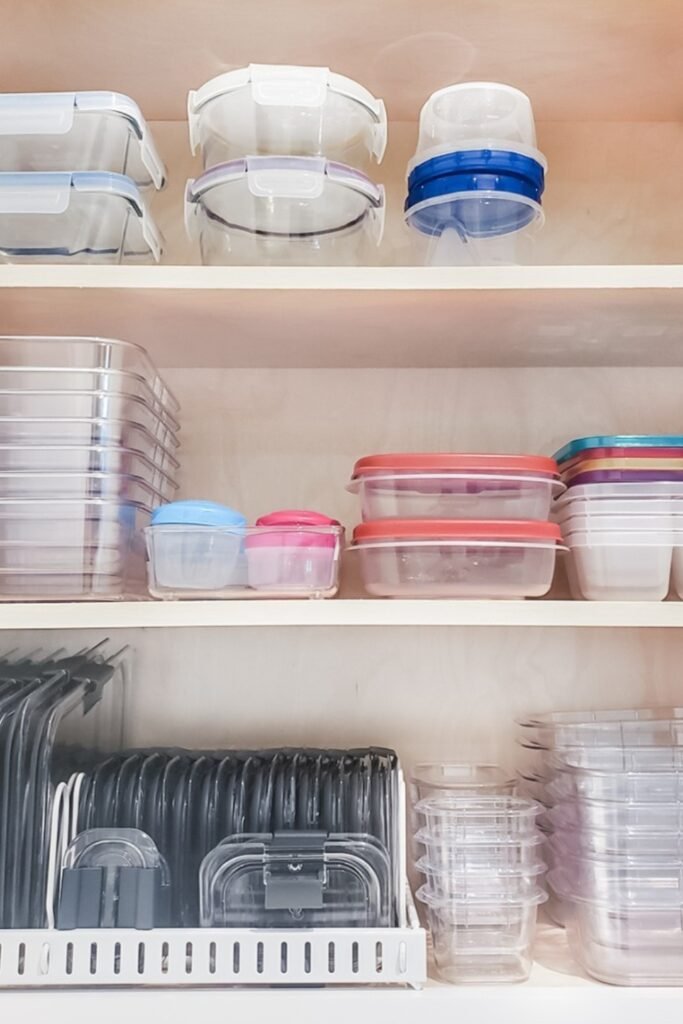
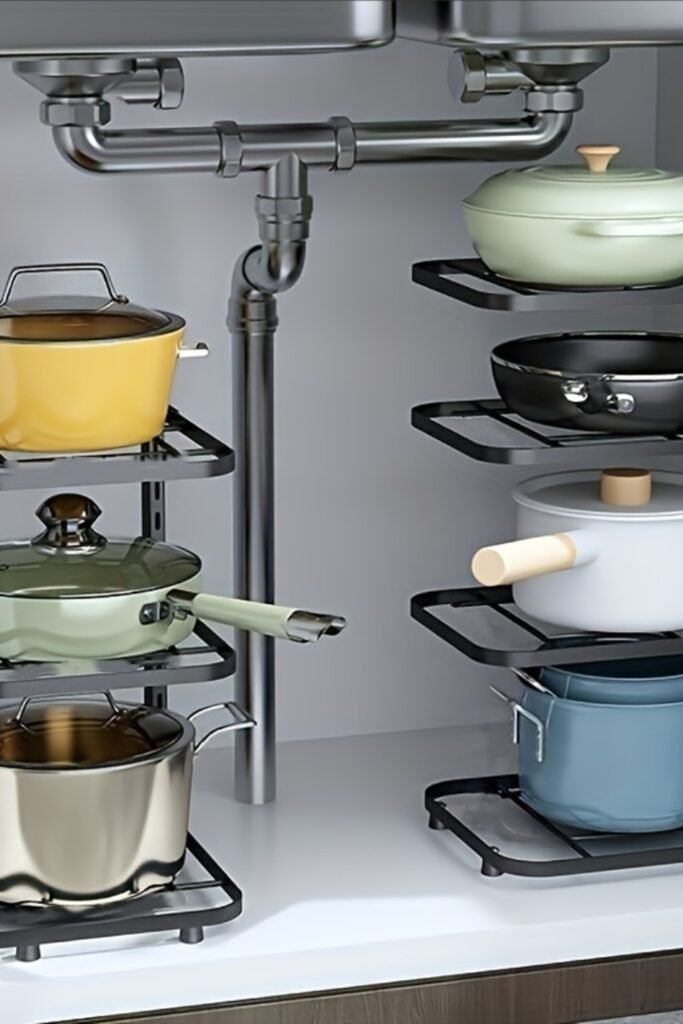
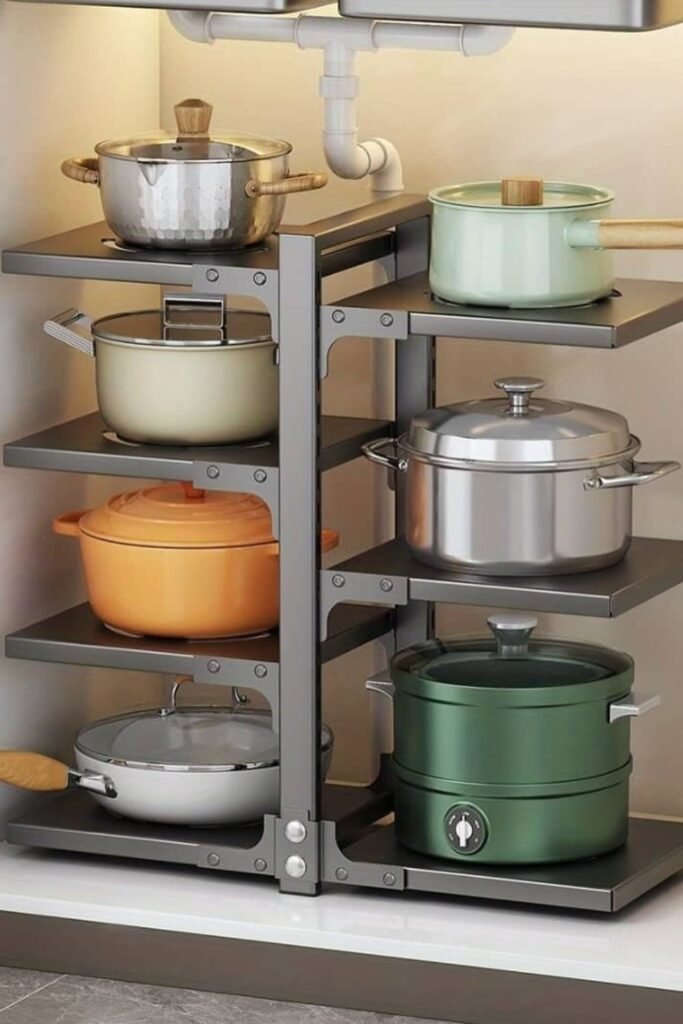
Under Sink Shelving
That awkward space under the sink usually goes to waste because of pipes in the way.
Work around it by using tiered shelves that create levels on both sides.
Place heavier pots on the bottom and lighter ones above so nothing feels cramped.
This setup works best for kitchens short on cabinet space, turning a tricky area into a usable spot instead of dead space.
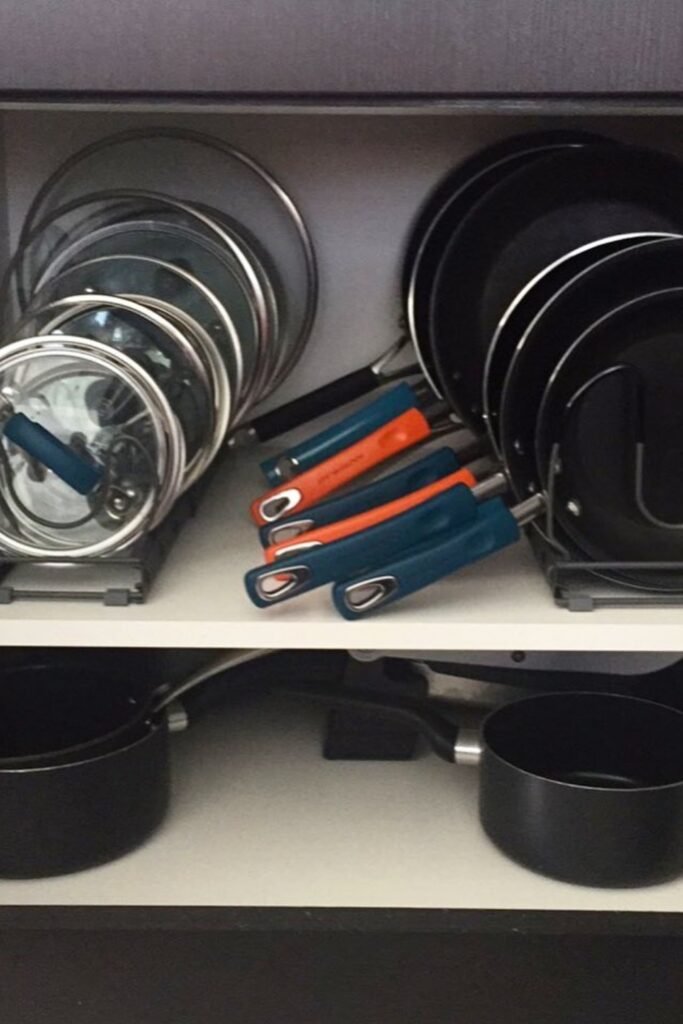
Dual Rack Separation
When lids and pans mix together, everything gets stuck and hard to pull out.
Split them into two racks, one for lids standing upright and one for pans facing the other way.
This setup keeps handles from clashing and makes each item easy to grab.
It works best in medium cabinets where you want both visibility and separation without adding complicated systems.
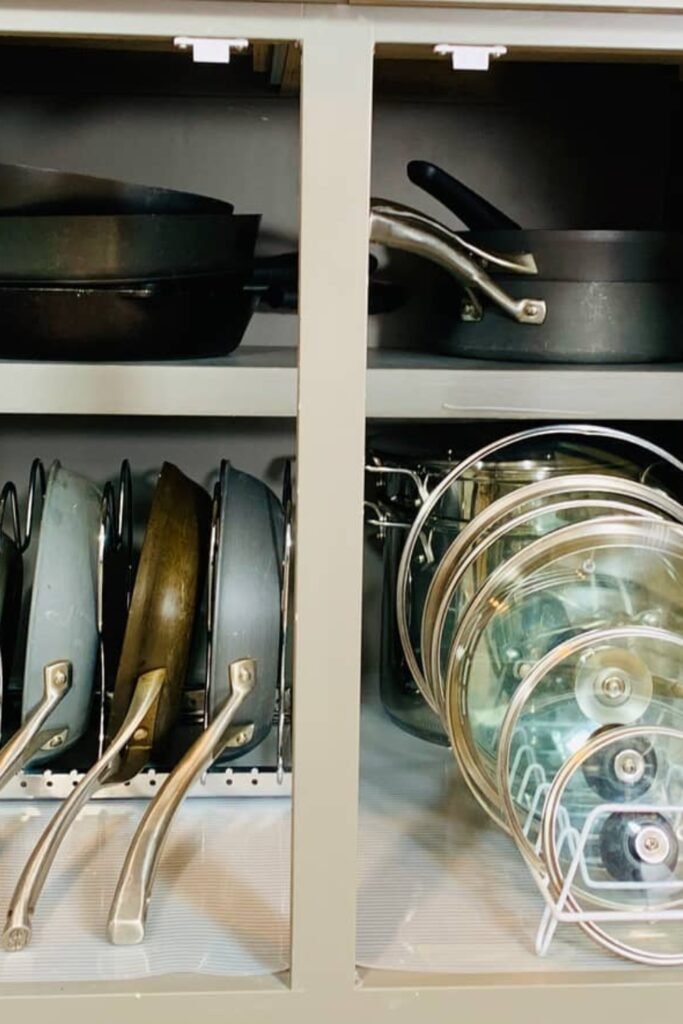
Side-by-Side Sorting
Mixing everything in one spot is what creates the mess in the first place.
Split your cabinet into two clear sides, pans on one, lids on the other, so nothing overlaps or blocks access.
Use simple racks to keep both standing upright.
This works best in double-door cabinets where you can create balance and grab what you need without shifting anything around.
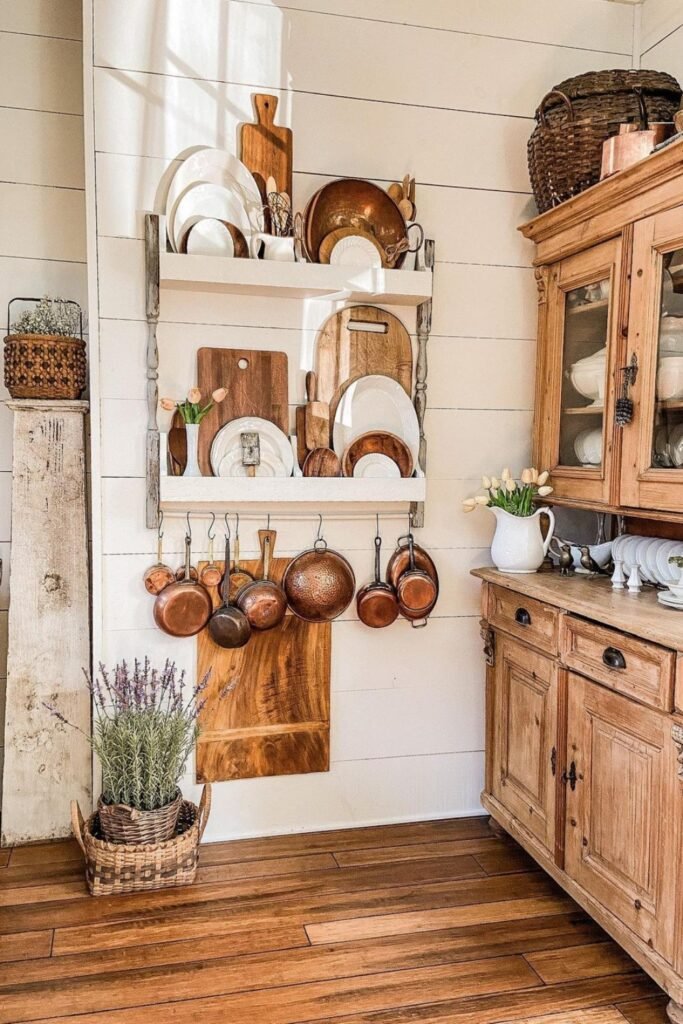
Wall Hanging Display
When cabinets start overflowing, your walls can take the pressure off.
Hang your pans on sturdy hooks or a rail so they stay within reach and don’t fight for space inside.
Keep heavier pieces on stronger hooks and group similar sizes together.
This setup works best in open kitchens where you want both function and a warm, styled look without hiding everything away.
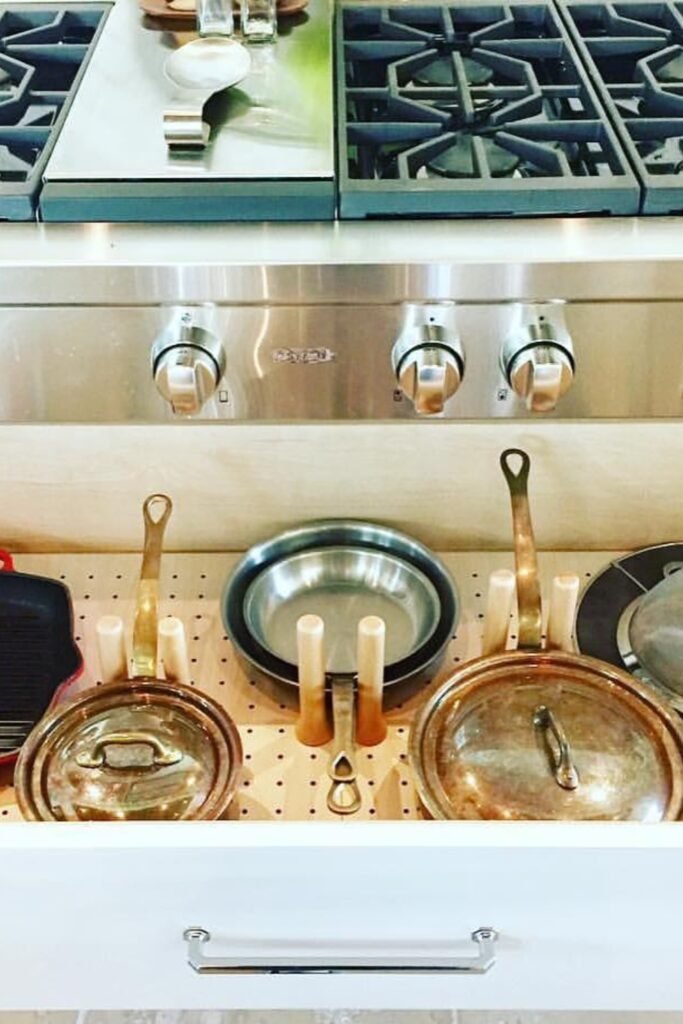
Peg Drawer Layout
Flat drawers don’t have to mean messy piles.
Add peg dividers so each pan has a fixed spot and doesn’t slide around when you open the drawer.
Arrange pegs based on your pan sizes and keep handles facing up for easy grabbing.
This works best in wide drawers near the stove, where quick access matters and everything stays exactly where you left it.
Shelf Rack Combo
Trying to use one shelf for everything usually wastes half the space.
Add a vertical rack for pans on top and a shelf riser below for stacking pots without crushing them.
This setup lets you use both height and width properly.
It works best in standard cabinets where you need to fit more without turning it into a tight, hard-to-reach pile.
Corner Shelf Setup
That corner cabinet usually turns into a black hole where pots disappear.
Fix it by adding a tiered corner shelf so each pot sits on its own level instead of stacking deep.
Place larger pots at the bottom and smaller ones above for balance.
This works best in L-shaped or corner cabinets where space is hard to reach but can hold a lot when organized right.
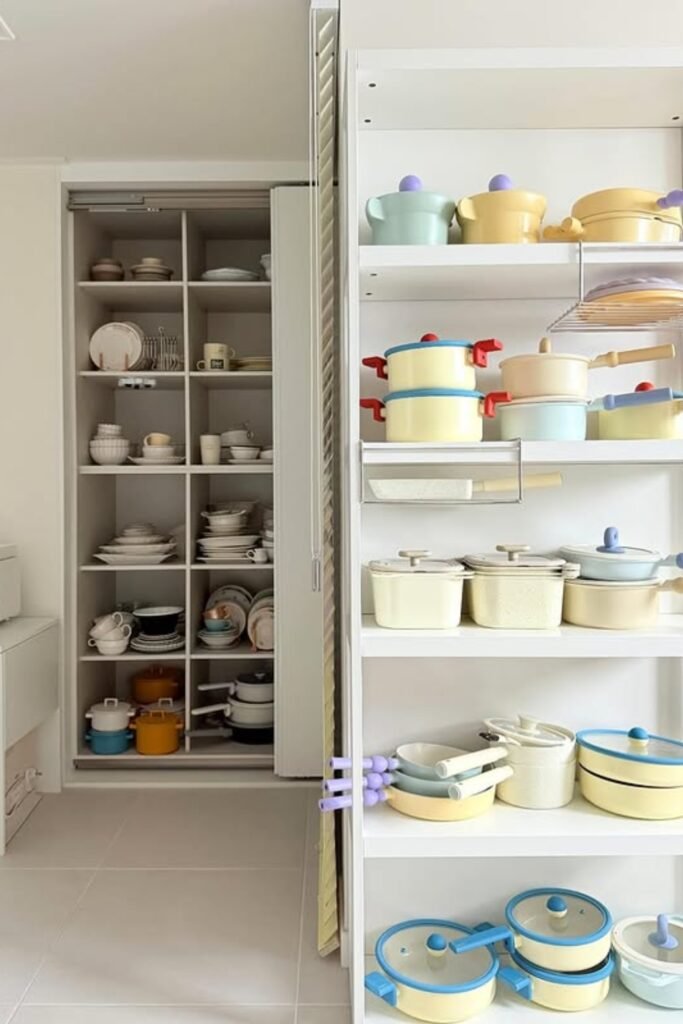
Open Shelf Access
Hiding everything behind doors makes even an organized kitchen feel harder to use.
Keep your pots on open shelves so you can see and grab them instantly without opening anything.
Arrange them by size and frequency, daily-use items at eye level, extras higher or lower.
This works best in spacious kitchens where accessibility matters more than hiding clutter.
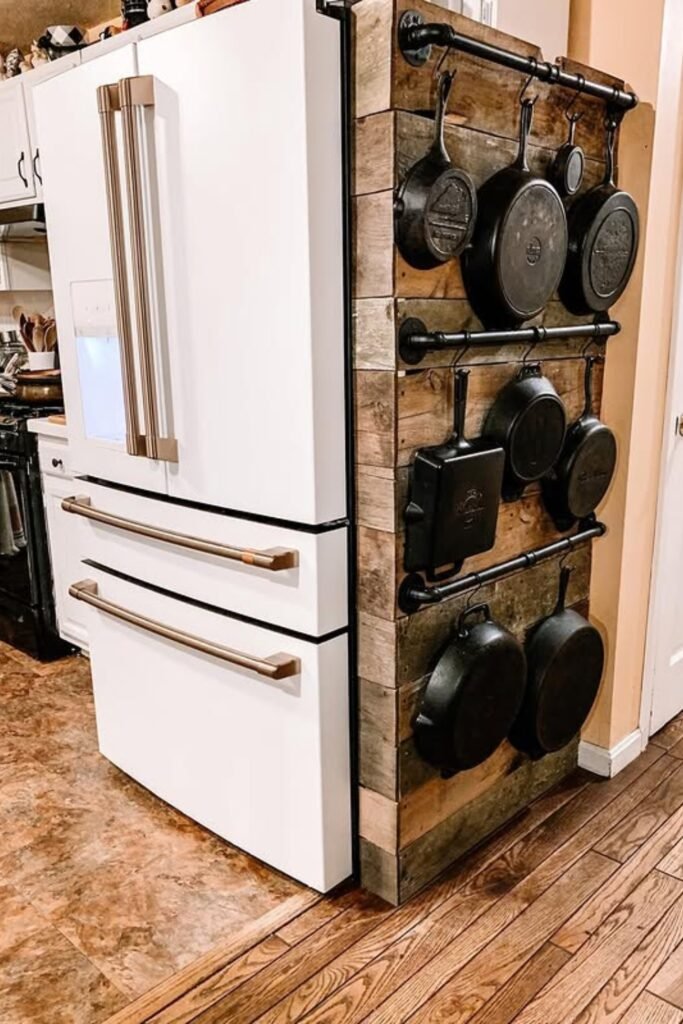
Side Wall Storage
That narrow side space next to your fridge usually goes unused, but it can hold more than you think.
Mount a sturdy pipe rack with hooks and turn it into a vertical hanging zone for your pans.
Keep heavier cast iron on lower hooks and lighter pieces above.
This works best in tight kitchens where you need extra storage without adding bulky cabinets.
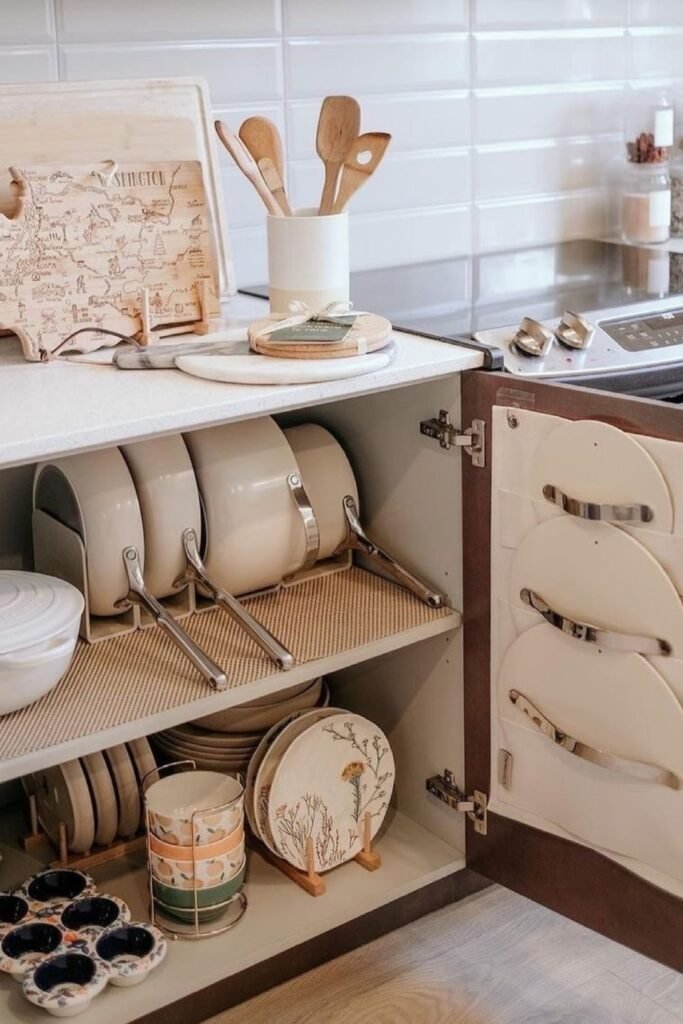
Door Lid Storage
Lids take up the most awkward space, so move them to where space is usually wasted, the cabinet door.
Install simple holders so each lid slides into place without stacking.
Keep your pots inside the cabinet and lids on the door for easy pairing.
This works best in lower cabinets where you want everything visible without crowding the main shelf.
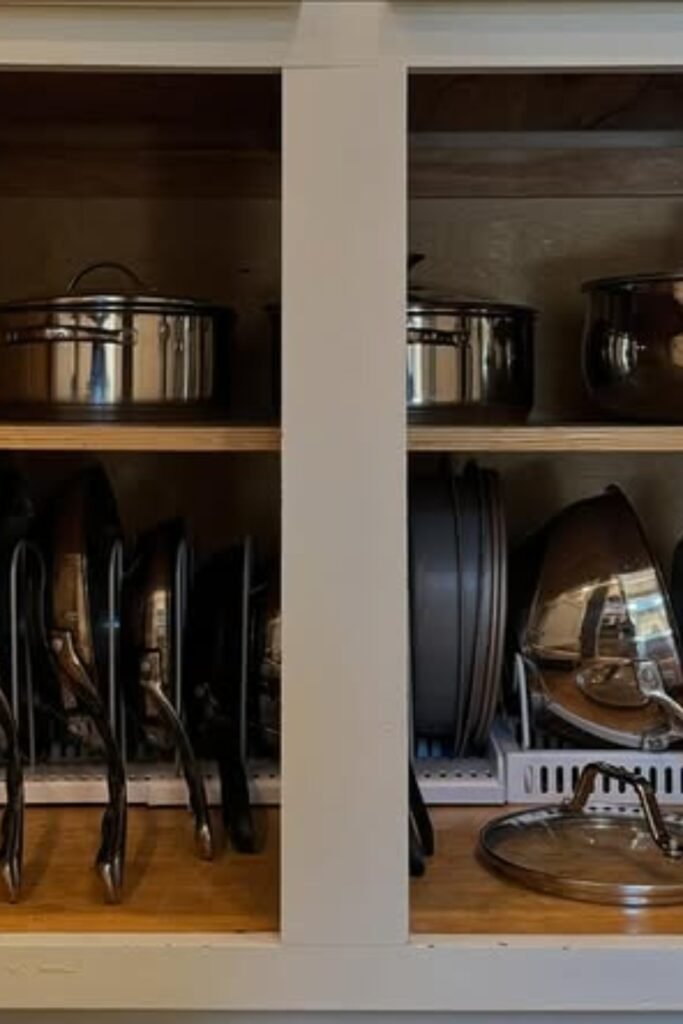
Lower Shelf Filing
Reaching into the back of a cabinet gets frustrating when everything is stacked flat.
Turn the lower shelf into a filing system by standing pans upright in a rack so nothing blocks your reach.
Keep larger pots on the upper shelf and everyday pans below for quick access.
This works best in deep cabinets where visibility and easy pulling matter most.
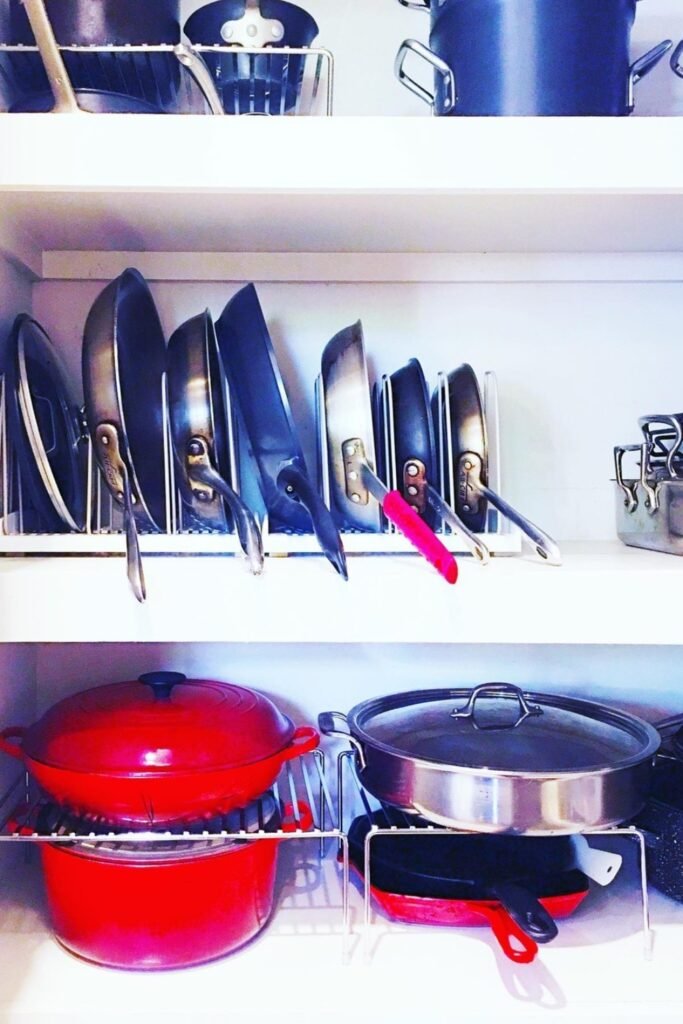
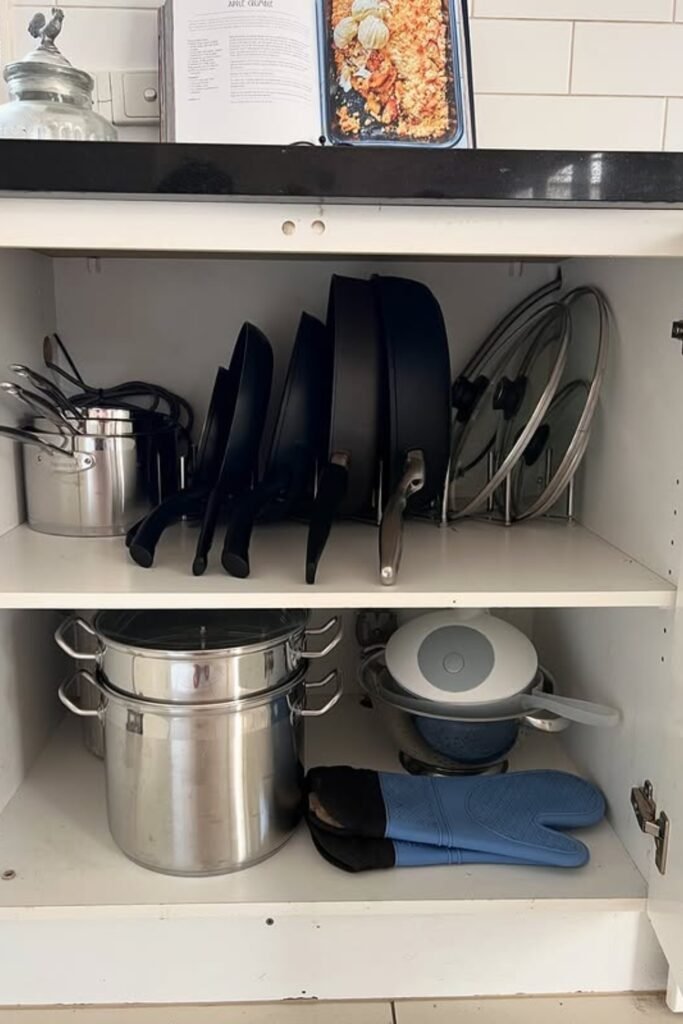
Mixed Shelf Balance
When you try to organize everything the same way, it stops working fast.
Keep pans standing in a rack on one side, lids grouped next to them, and leave the bottom shelf for stacking heavier pots.
This mix keeps each item in the setup that suits it best.
It works well in everyday cabinets where you need flexibility instead of forcing one system on everything.
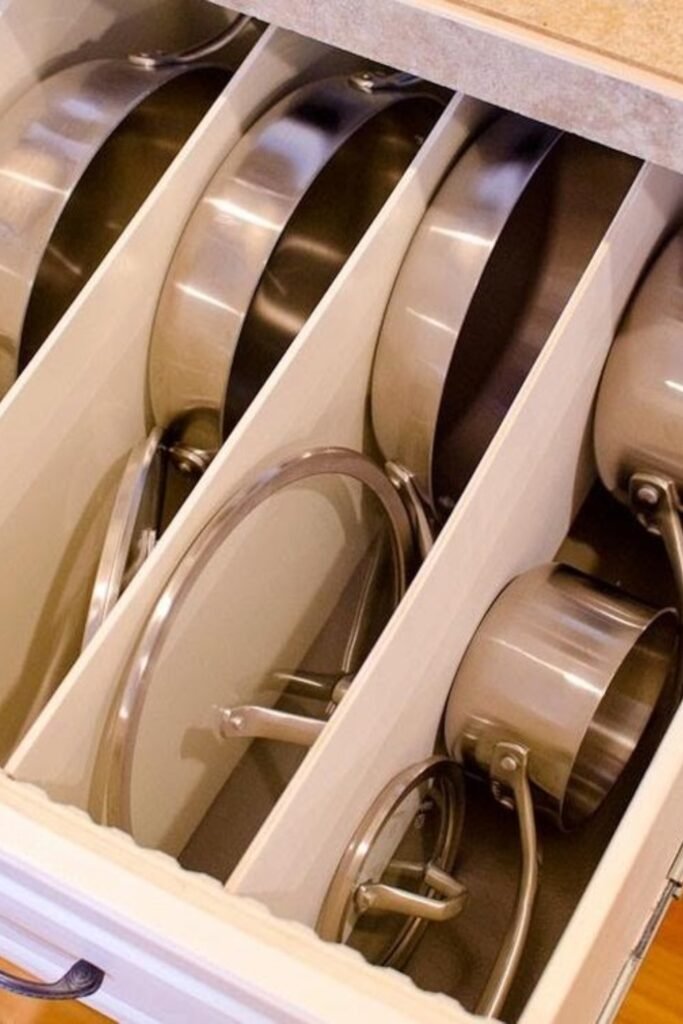
Divided Drawer Slots
When pans slide into each other, scratches and clutter follow.
Give each one its own slot using solid dividers so nothing touches or shifts.
Lay them slightly angled for easy grip and keep lids in a nearby section.
This works best in deep drawers where you want a clean, no-stack setup that protects your cookware and keeps everything easy to pull out.
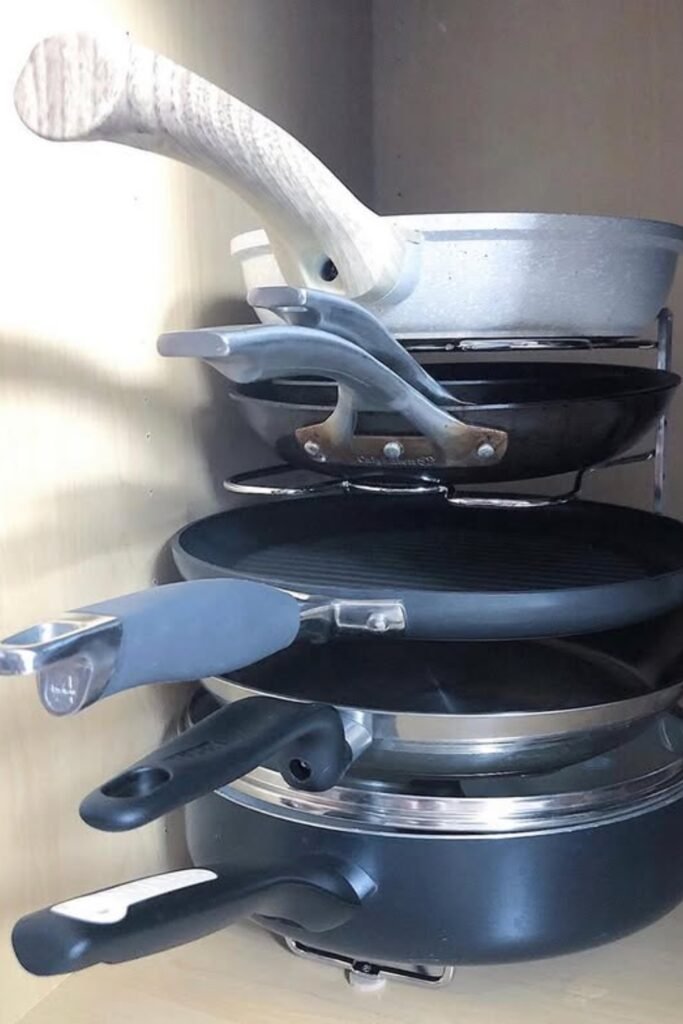
Vertical Stack Rack
Piling pans on top of each other is what creates the daily struggle.
Use a vertical stack rack so each pan slides into its own level without touching the others.
Keep handles facing outward for quick grabbing.
This works best in narrow cabinets where you can’t spread things out but still want easy access without lifting a heavy stack every time.
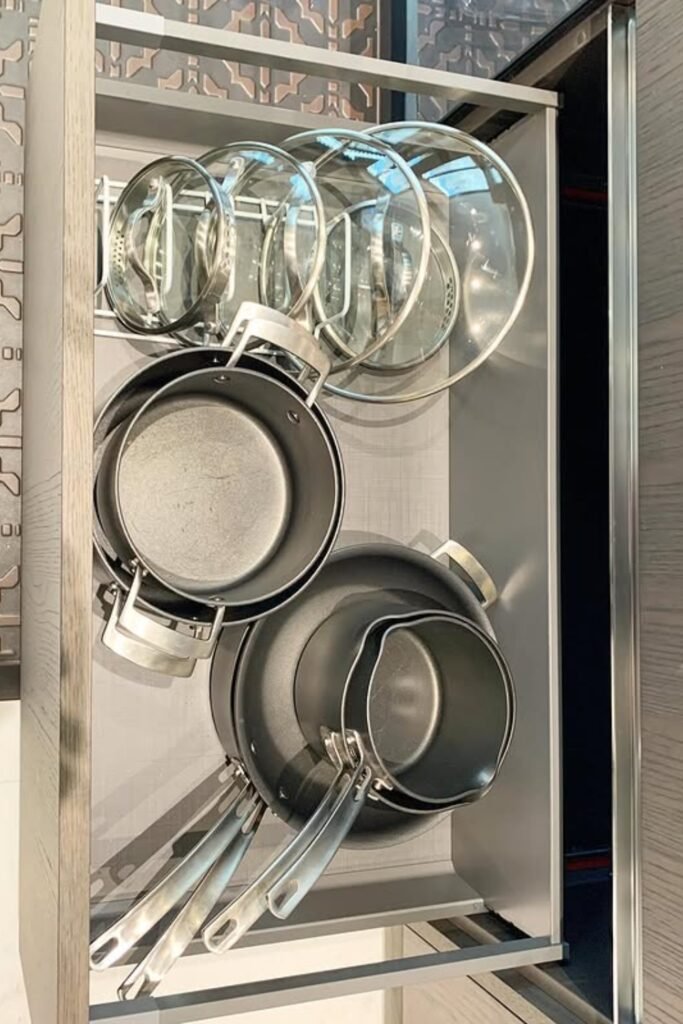
Pull-Out Organizer
Reaching into the back of a deep cabinet is where things get frustrating fast.
A pull-out tray fixes that by bringing everything to you instead of making you dig.
Keep lids standing at the back and pans in front for easy grabbing.
This works best in deep lower cabinets where visibility is low but storage space is high.
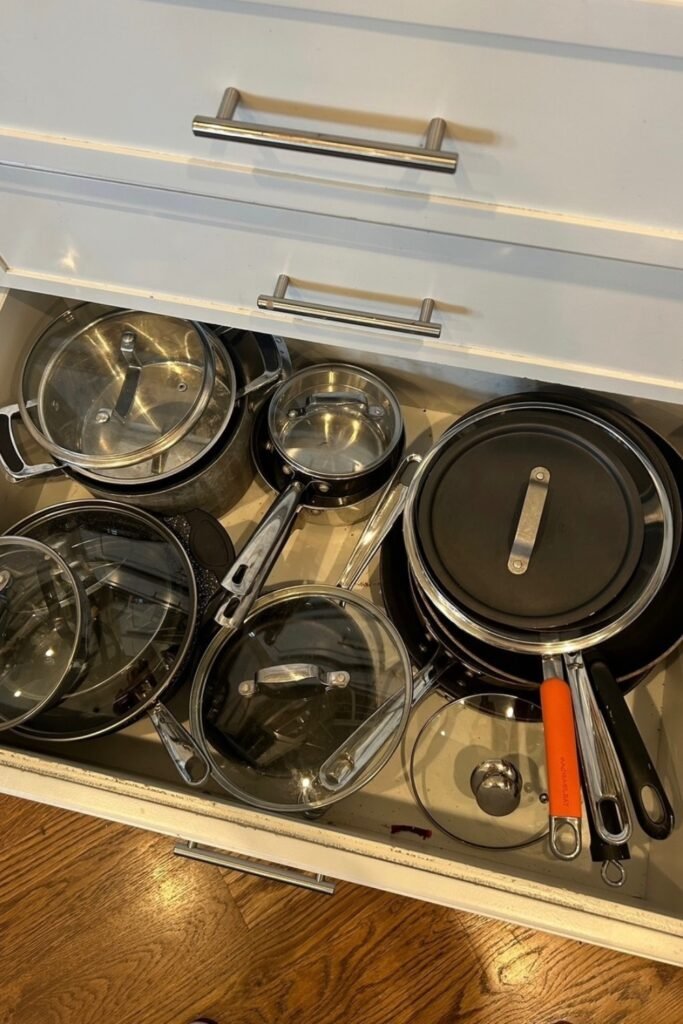
Drawer Declutter Reset
If your drawer looks like this, the problem isn’t space, it’s no system at all.
Stop tossing everything in and start grouping by size, then stack similar items together to reduce the chaos.
Add a few simple dividers or racks so lids and pans don’t mix again.
This works best when you want a quick reset without completely redesigning your storage.
Lid Door Combo
Running out of space inside the cabinet? Split the job between inside and the door.
Keep pots neatly lined up in a rack below, and move lids onto door-mounted holders so they don’t eat shelf space.
This setup keeps everything paired but separate.
It works best in lower cabinets where you want quick access without stacking or overcrowding.
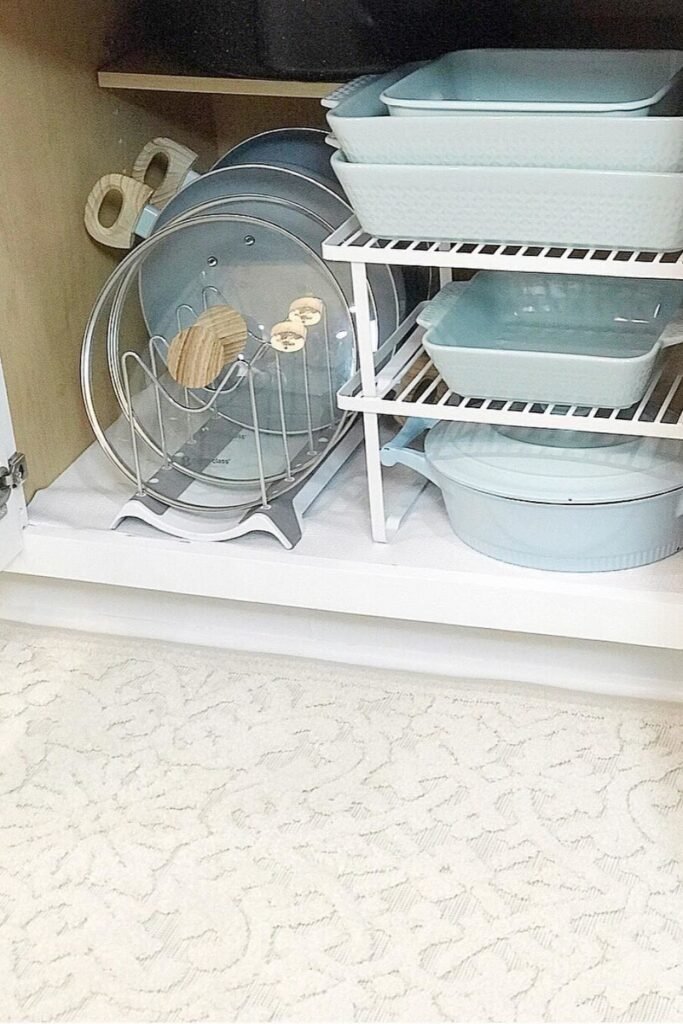
Tiered Shelf Lift
One flat shelf can’t handle different shapes without wasting space.
Add a tiered riser so you can stack dishes on one side while keeping lids standing upright on the other.
This setup lets you use vertical space without crushing anything underneath.
It works best in medium cabinets where you need to fit more without losing visibility or access.
FAQs
How Do You Store Pots and Pans Without Stacking Them?
If you’re tired of lifting heavy stacks every time, switch to vertical storage.
Use a simple rack or divider to stand each pan upright so you can grab one without touching the others.
This works best in cabinets or drawers where you want quick access and less mess.
What is the Best Way to Organize Lids Separately?
Lids become easier to manage when you stop mixing them with pots.
Store them in a lid rack, cabinet door holder, or a simple stand so each one has its own slot.
This keeps them visible and stops them from sliding around or getting lost.

Hi, my name is Zeeshan, and I am the founder of The Crafts Geek. I have been passionate about DIY projects, home organization, and creative problem-solving for years. Over time, I realized that simple storage solutions and practical DIY ideas can make a huge difference in how a home looks and functions.