I learned the hard way that you can’t treat cast iron casually, especially when it comes to storage.
One week, you think you’ve seasoned it perfectly.
The next week, you pull it out and you might find rust staring back at you.
Or worse, you notice your cabinet shelf starting to bend because you didn’t realize how heavy those pans could be.
If you’ve been stacking them wherever you can and hoping you’ll be fine, you’re not alone.
Cast iron is tough, but when you store it the wrong way, you can ruin it fast.
In this article, you’ll see exactly how you should store your cast iron so you can keep it dry, protected, and always ready when you want to cook.
What’s the Best Way to Store Cast Iron?
The best way to store cast iron is actually simple when you think about it: you should keep it completely dry, you should add a light layer of oil, and you should place it where you can get some airflow.
If there’s even a little moisture left on your pan, you can end up with rust. So after you wash it, you should make sure you dry it fully.
Don’t just stop at towel drying when you think it looks dry.
When you put it back on the stove for a few minutes on low heat, you can pull out the moisture you didn’t even know was there.
When it cools, you can rub a very thin layer of oil over the surface.
You don’t need a lot. You just want enough so you can protect the seasoning without taking it greasy.
Now think about air, because you might not realize how much it matters.
You don’t want to trap your cast iron in a damp cabinet or seal it up tight with a lid.
If you’re using a Dutch oven, you should place a paper towel between the lid and the pot so you can let air move through.
When you stack pans, you should always put a paper towel, cloth, or pan protector between them so you can avoid scratches and help absorb moisture.
If you have the space, you should store your most-used skillet where you can grab it easily.
You might hang it on a sturdy hook, place it on a wall rail, or set it on a reinforced shelf.
Just make sure whatever you choose can handle the weight, because you will quickly learn that cast iron is heavy.
When you rely on weak drywall anchors, you can end up with a bigger problem than rust.
When you do this the right way, you can keep your pans rust-free, protected, and ready to cook whenever you need them.
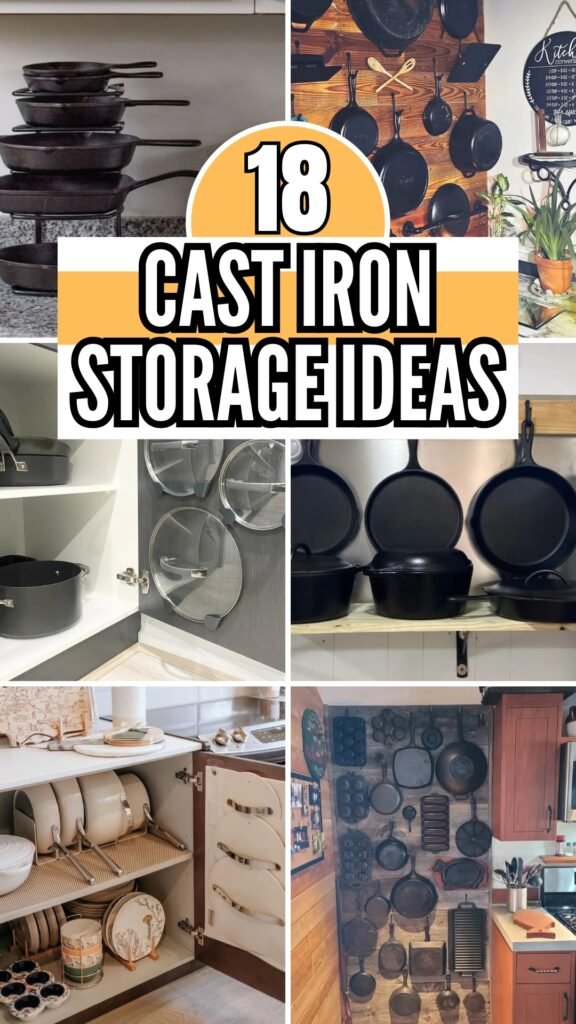
Cabinet Door Lid Rack
Stop letting your lids roll around and crash every time you open the cabinet.
You can mount a slim rack on the inside of the door so you can keep your lids upright, separated, and easy to grab.
You’ll find it works best in lower cabinets near your stove. You should use strong screws, not adhesive, especially if your lids are heavy.
When you do this, you can clear shelf space and keep your cast iron setup organized without adding extra storage.
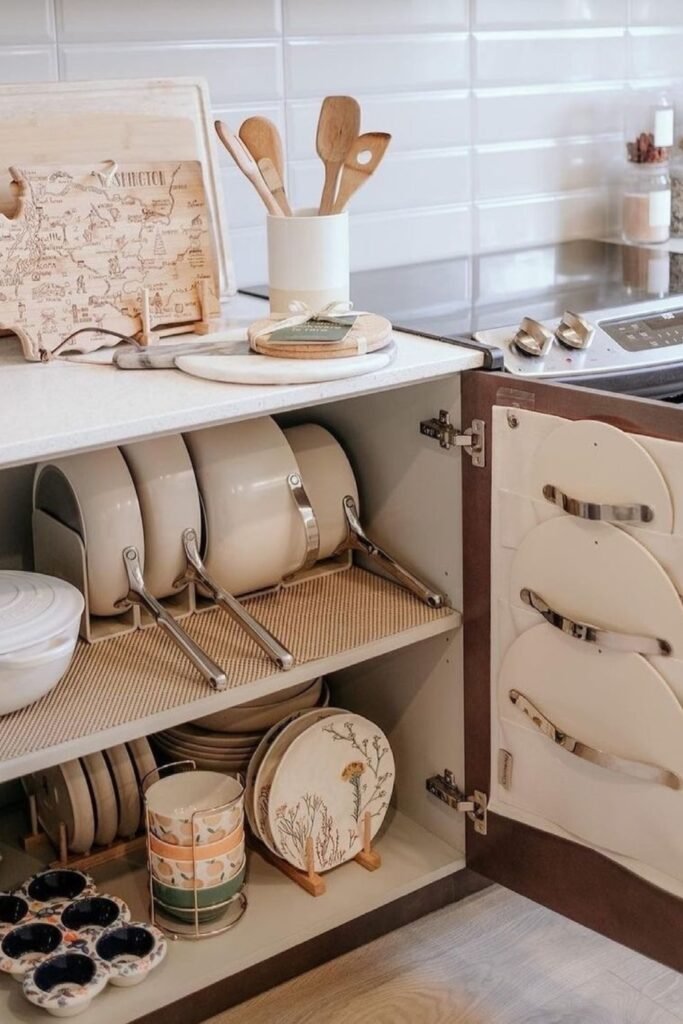
Upright Shelf Dividers
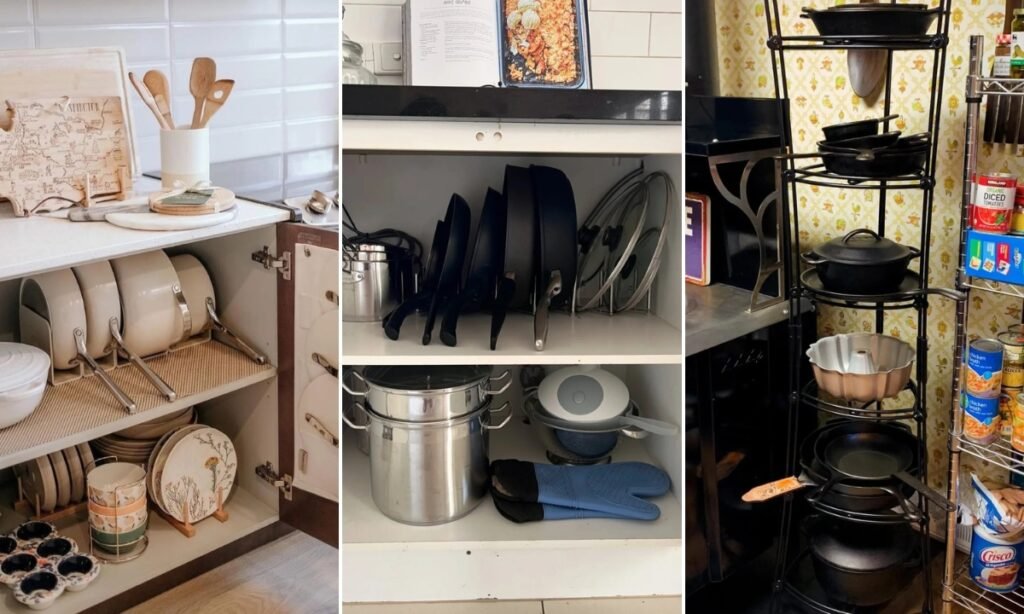
You know how digging through stacked pans gets old fast? You can slide in simple metal or wire dividers and store each skillet upright instead.
You’ll keep the seasoning from scraping, and you’ll let air move around the pans.
You should do this in a wide lower cabinet where you can dedicate one shelf to heavy cookware.
You can measure your tallest pan first, then adjust the slots so you can make sure everything stands straight and stable.
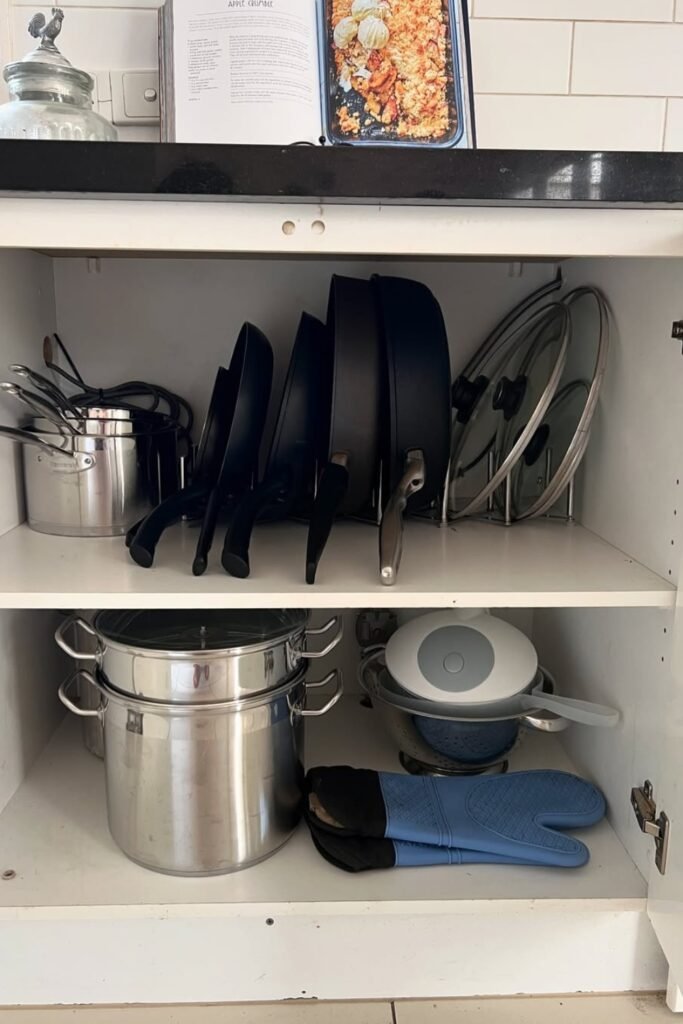
Freestanding Corner Rack
If you’re running out of cabinet space, you might want to move your cast iron into the corner.
You can use a tall, sturdy rack to stack heavy pieces without cramming them onto weak shelves.
You’ll see it works great in pantry corners or beside the stove where vertical space is wasted.
You should choose metal with solid joints so you can be confident it can handle the weight.
You can keep heavier Dutch ovens on the lower levels and lighter skillets higher up for balance and safety.
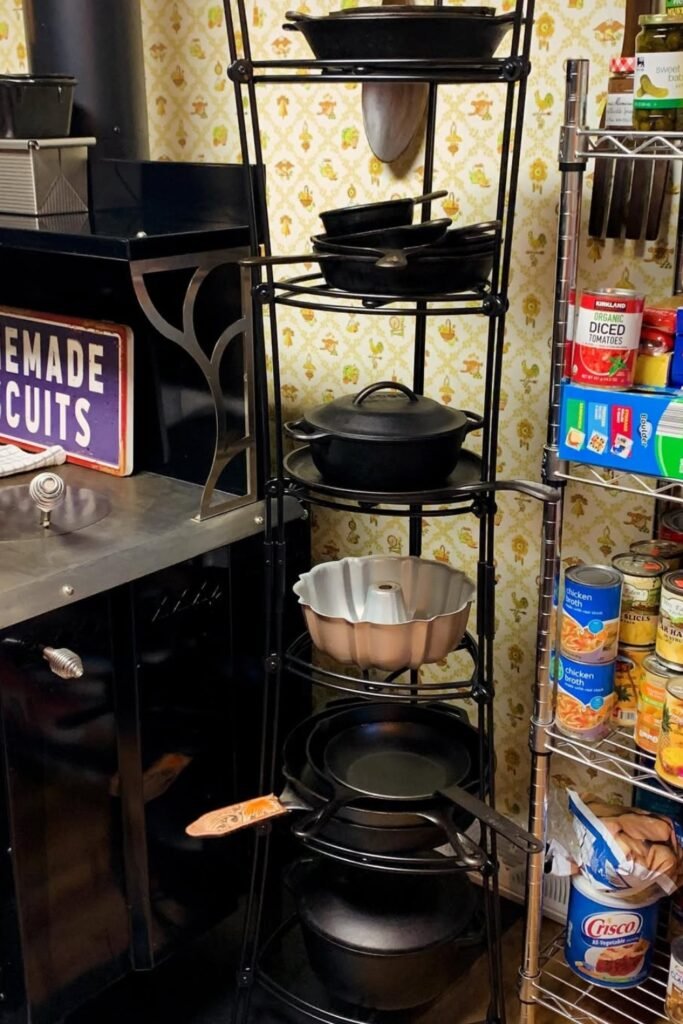
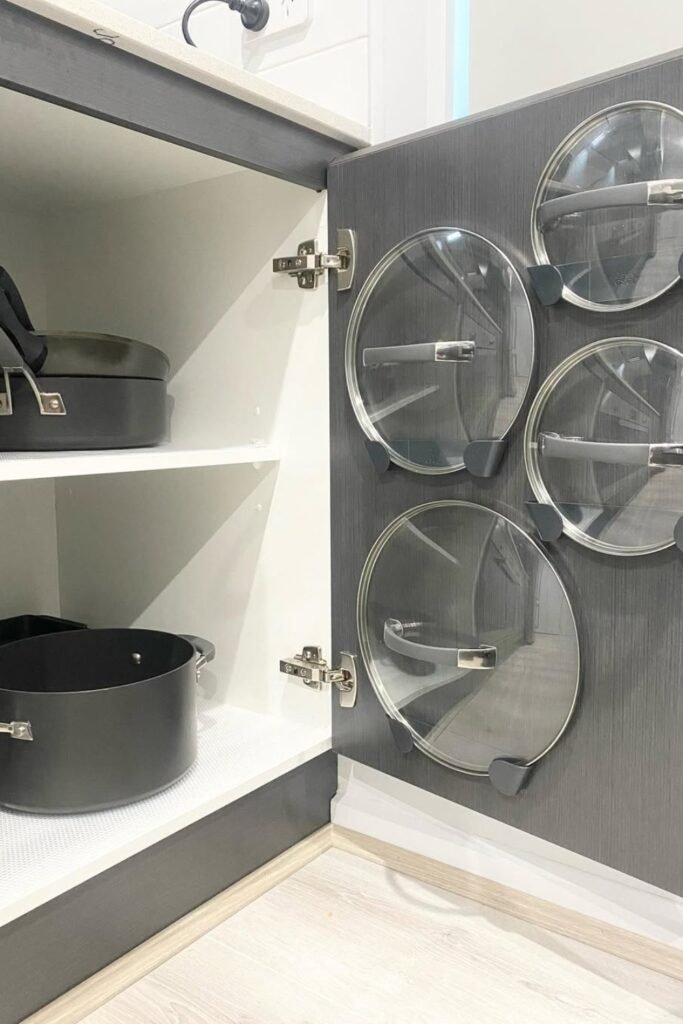
Inside Door Lid Mount
Those heavy glass lids don’t need to eat up shelf space.
You can use the inside of your cabinet door and mount sturdy lid holders to keep them upright and secure.
You’ll instantly free up room for your cast iron pots below.
You should make sure the door hinges are strong enough to handle the added weight, and you can space the holders so the lids don’t knock into each other when you close the cabinet.
Open Wall Grid
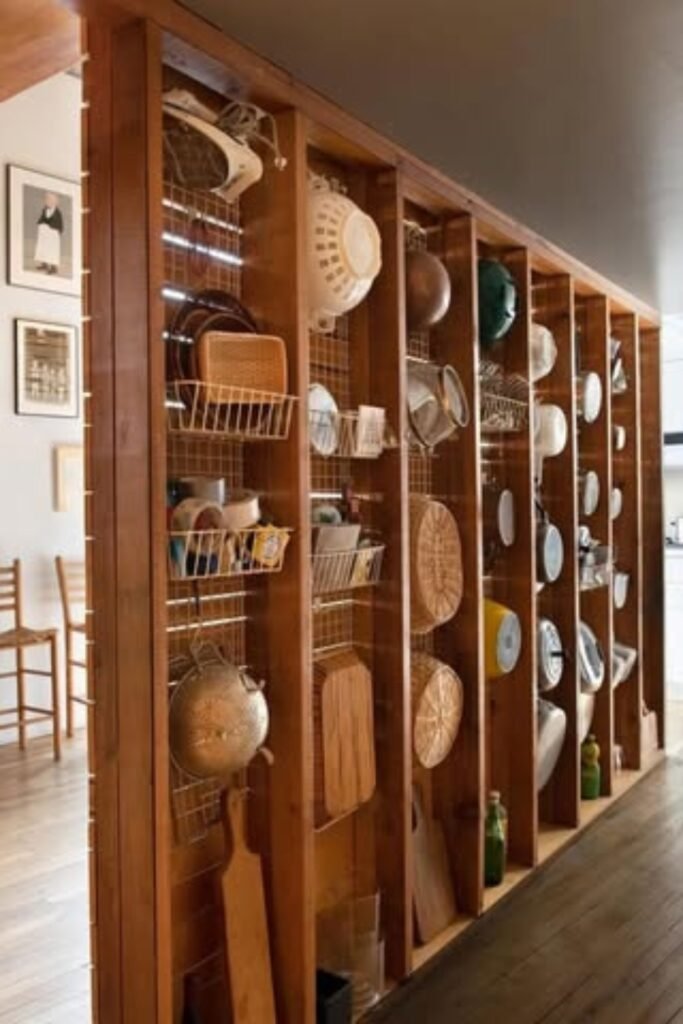
If you’ve got a blank wall, you should use it.
You can mount wire grids between wooden frames and hang your cast iron where you can see it and grab it fast.
You’ll find it works great in open kitchens or behind an island where you want both storage and style.
You should secure the grids into studs so you can trust they’ll handle the weight. You can keep heavier pieces lower and lighter pans higher for balance.
Industrial Open Shelving
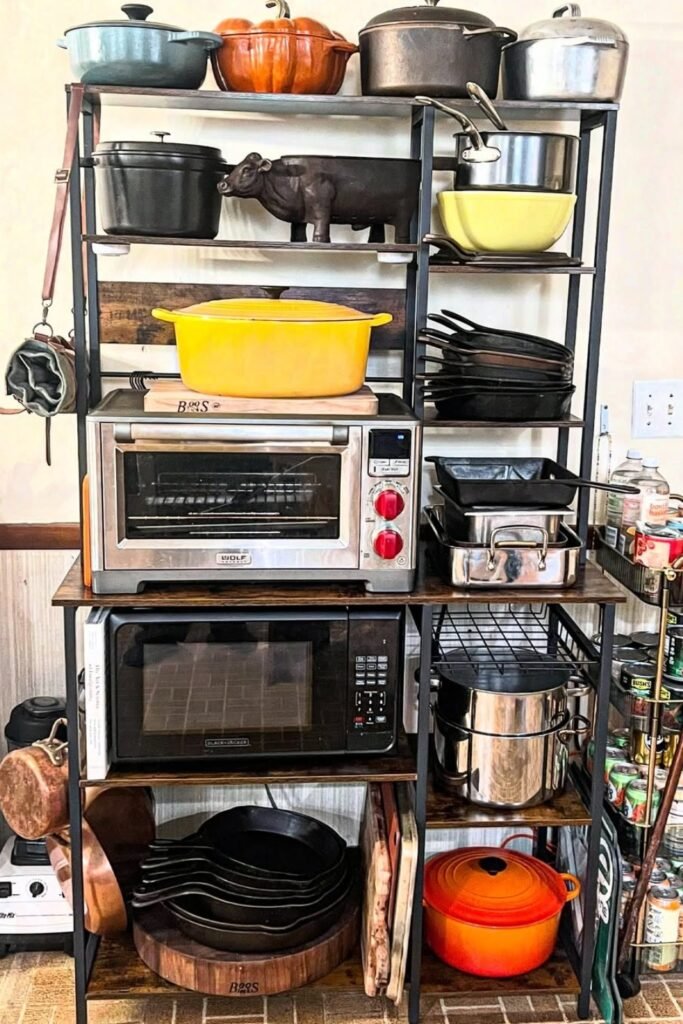
If your cast iron collection keeps growing, you might want to give it its own station.
You can use a heavy duty metal and wood shelving unit to hold Dutch ovens, skillets, and baking pans without stressing your cabinets.
You should keep the heaviest pieces on the bottom shelf for stability.
You can put wooden boards under stacked pans to protect seasoning and add airflow.
You’ll see it’s practical, strong, and even turns your cookware into part of your kitchen style.
Wall Mounted Display
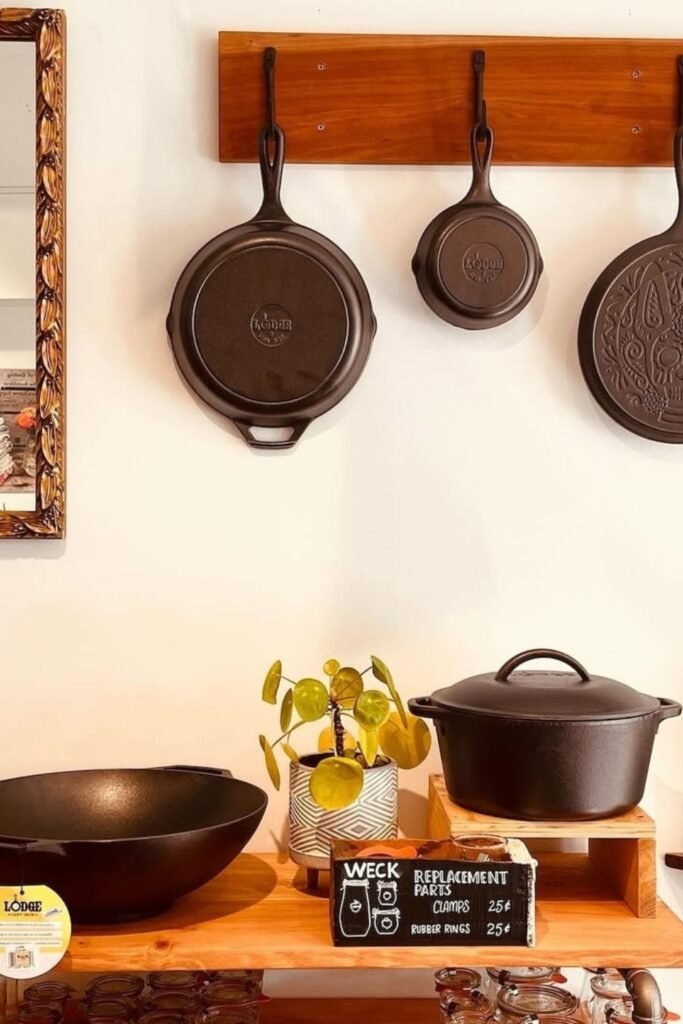
If you love your cast iron, you don’t have to hide it.
You can mount a solid wooden board into wall studs and install heavy duty hooks to hang your skillets.
You’ll keep them dry, easy to grab, and off your cabinets completely.
You should do this especially if you have a farmhouse or rustic kitchen.
You can space the hooks wide enough so your pans don’t bump into each other.
You’ll want strong support, the last thing you need is a heavy pan crashing down.
Slim Vertical Tower
Short on space but heavy on cast iron? You can go up instead of out.
A tall, narrow rack lets you store multiple pieces without taking over your kitchen.
You’ll find it fits perfectly in corners, beside cabinets, or near a pantry wall.
You should place your heaviest Dutch ovens on the bottom to keep it stable.
When you do this, you can keep everything visible, easy to reach, and completely out of your cabinets.s.
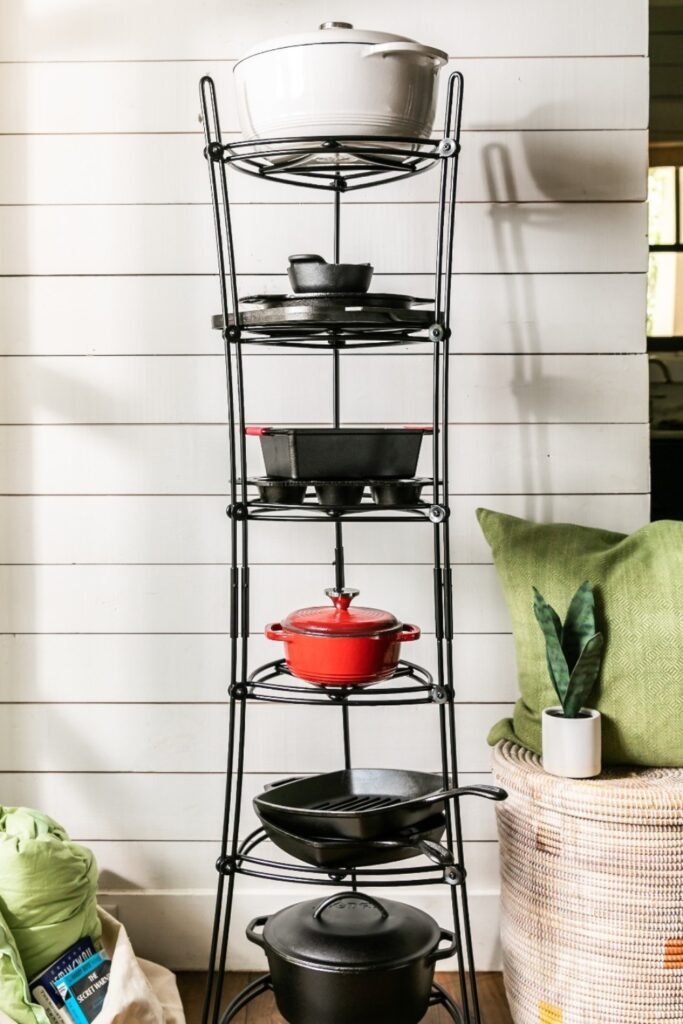
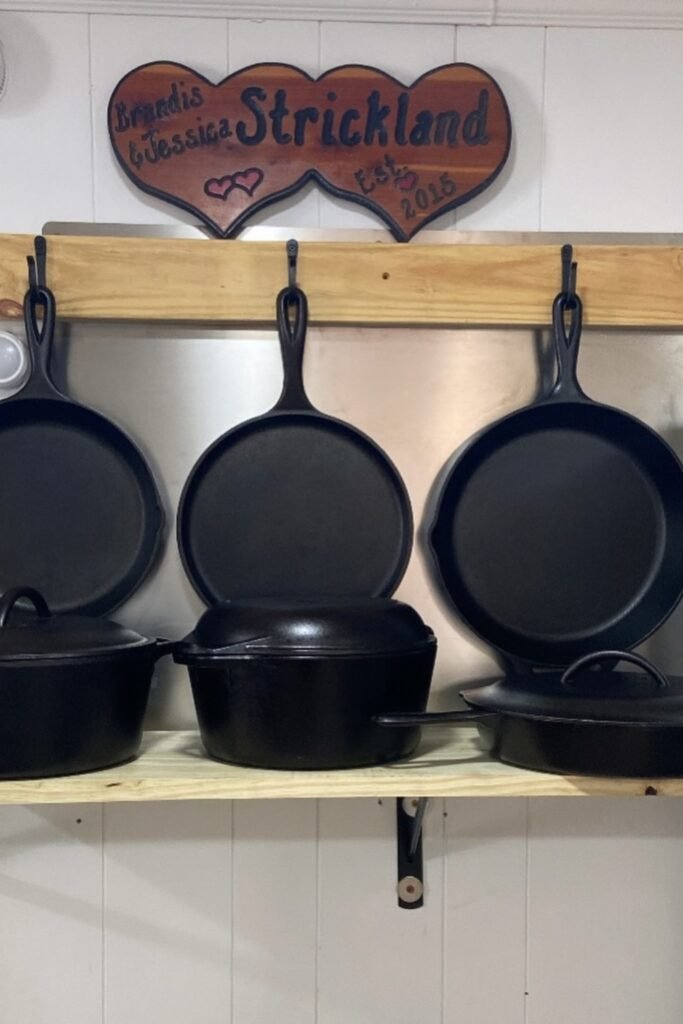
Rustic Hook Shelf
If you want your cast iron to feel like part of your kitchen instead of clutter, you can install a thick wooden shelf with strong iron hooks underneath.
You can hang your skillets up top and place your Dutch ovens right below on the shelf.
You’ll keep everything in one zone near your stove.
You should make sure the board is anchored into studs because these pans are heavy, and drywall alone won’t hold them.
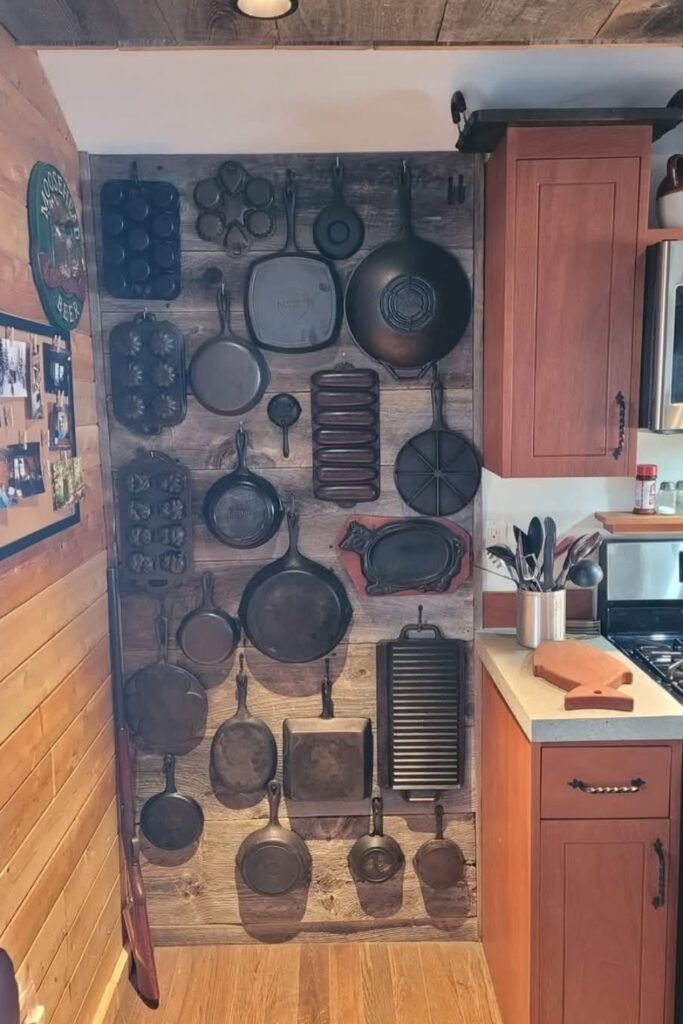
Full Wall Display
When you’ve built a cast iron collection over the years, you might want to turn it into a feature wall.
You can mount sturdy hooks across a solid wood backing and hang each piece where it fits best.
You should keep larger skillets and griddles lower so you can lift them easily.
You’ll find this works especially well in farmhouse or cabin-style kitchens where texture matters.
You have to anchor everything into studs so the wall can carry the weight safely.
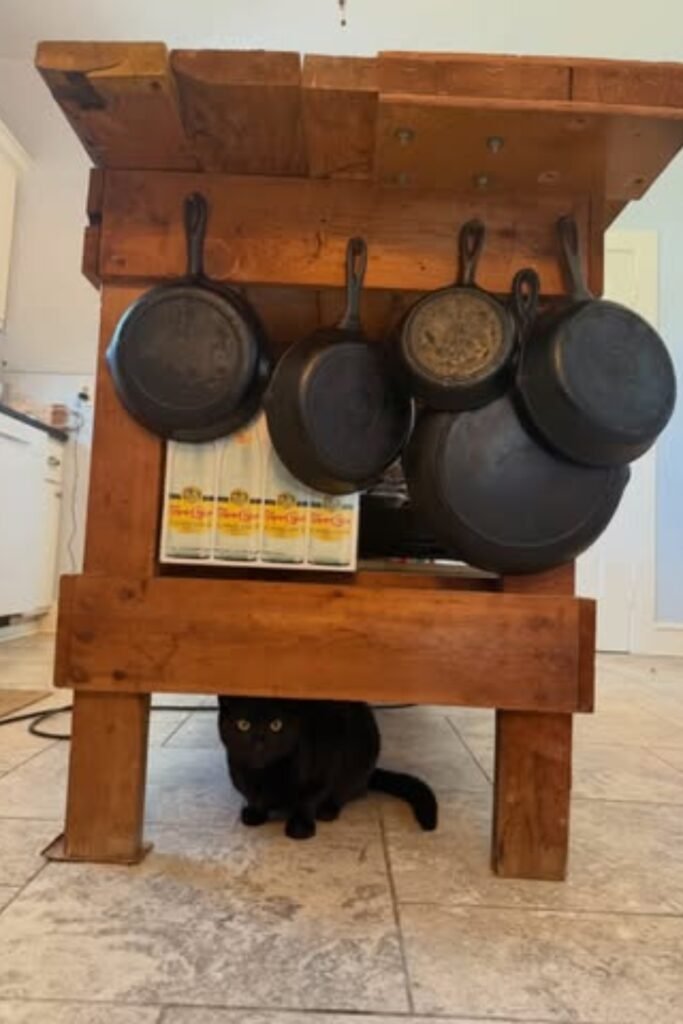
Island Hook Storage
That empty space under your island? You can use it instead of letting it collect dust.
You should add sturdy hooks along the side beams and hang your most-used skillets there.
You’ll keep them close to your prep area and instantly free up cabinet space.
You have to make sure the wood is thick and solid enough to hold the weight, and you should space heavier pans out so they don’t knock into each other.
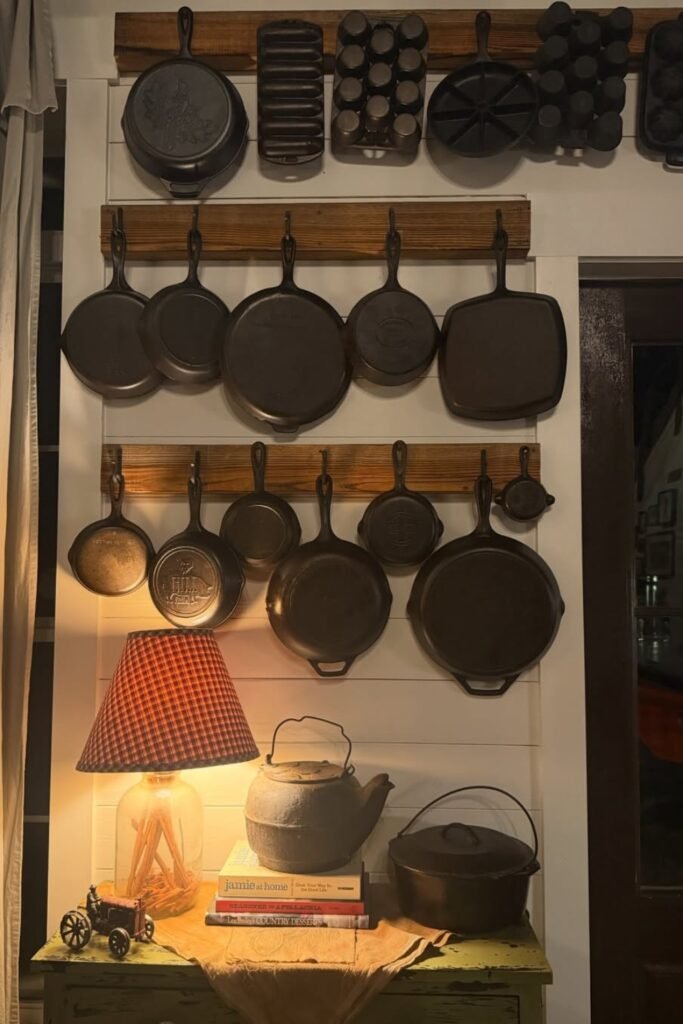
Layered Wall Hooks
When one row of hooks isn’t enough, you can stack them.
You can mount multiple wooden rails across the wall and hang your cast iron in layers.
You’ll keep everything visible and spread the weight evenly instead of crowding one spot.
You should place heavier skillets on the lower rails so lifting feels easier. You’ll want to secure each rail into studs.
You can turn a plain wall into hardworking storage without touching your cabinets.
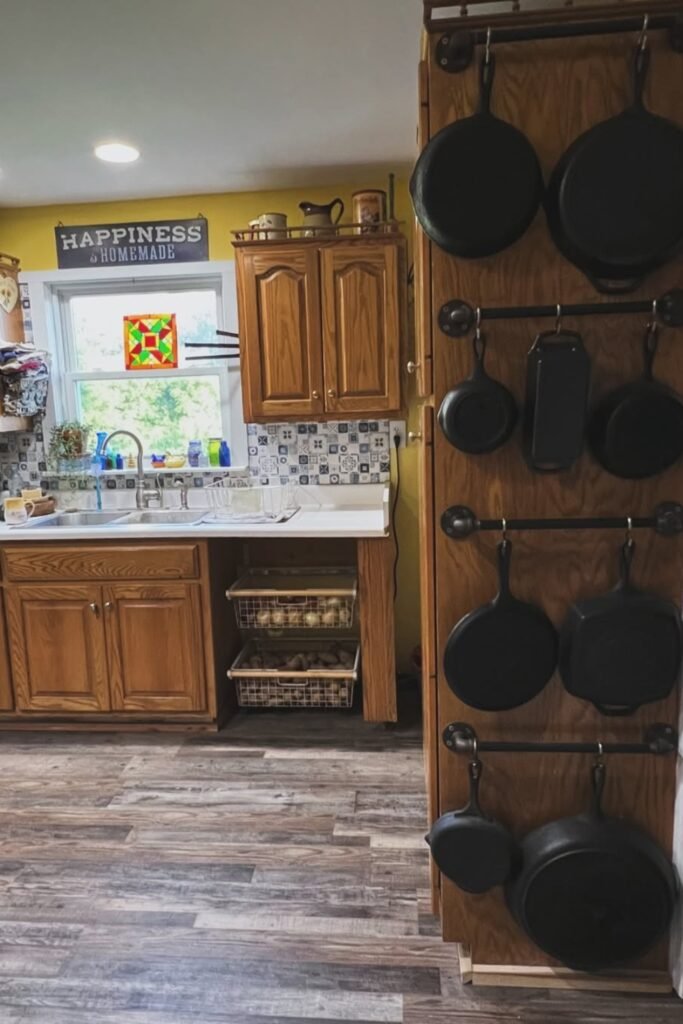
Side Panel Rail System
That narrow cabinet side panel? You can make it useful.
You should install horizontal metal rails with strong hooks and hang your cast iron vertically.
You’ll keep your pans off shelves and right where you cook. You can do this especially near the stove.
You have to anchor the rails into solid wood backing, not thin veneer, and you should leave enough space so handles don’t bump when you lift a pan down.
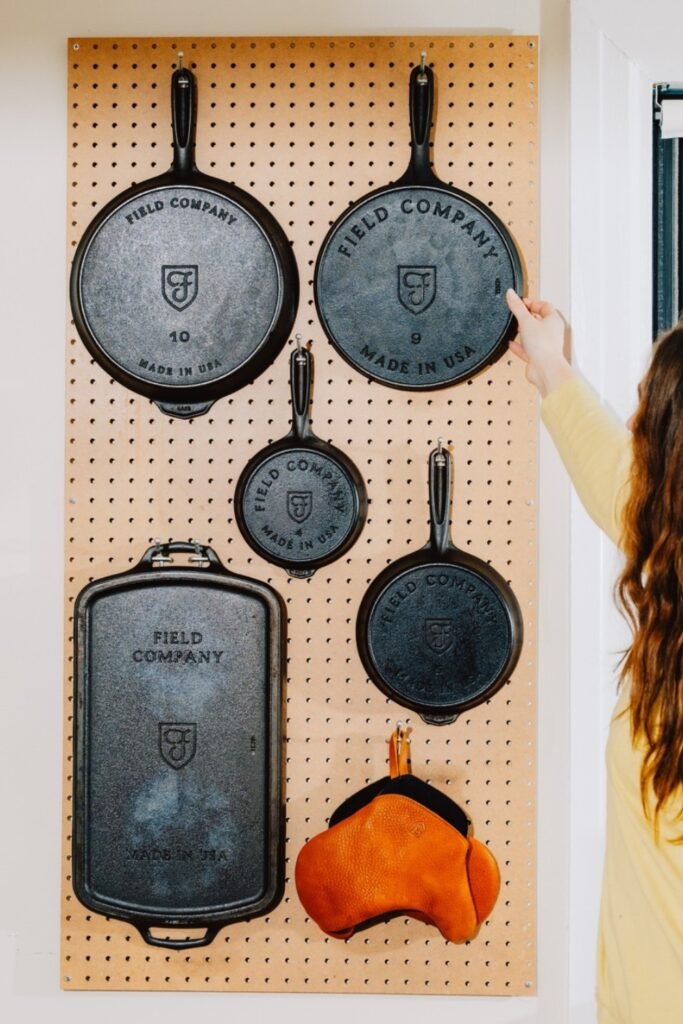
Pegboard Wall System
If you need storage that grows with your collection, you should install a thick pegboard panel and hang your cast iron with heavy duty hooks.
You can move the hooks anytime, which makes it perfect if you add new pans later.
You should mount the board securely into studs so it can hold the weight.
You’ll want to leave space between pieces for airflow and easy grabbing.
You’ll see it’s flexible, simple, and surprisingly strong when done right.
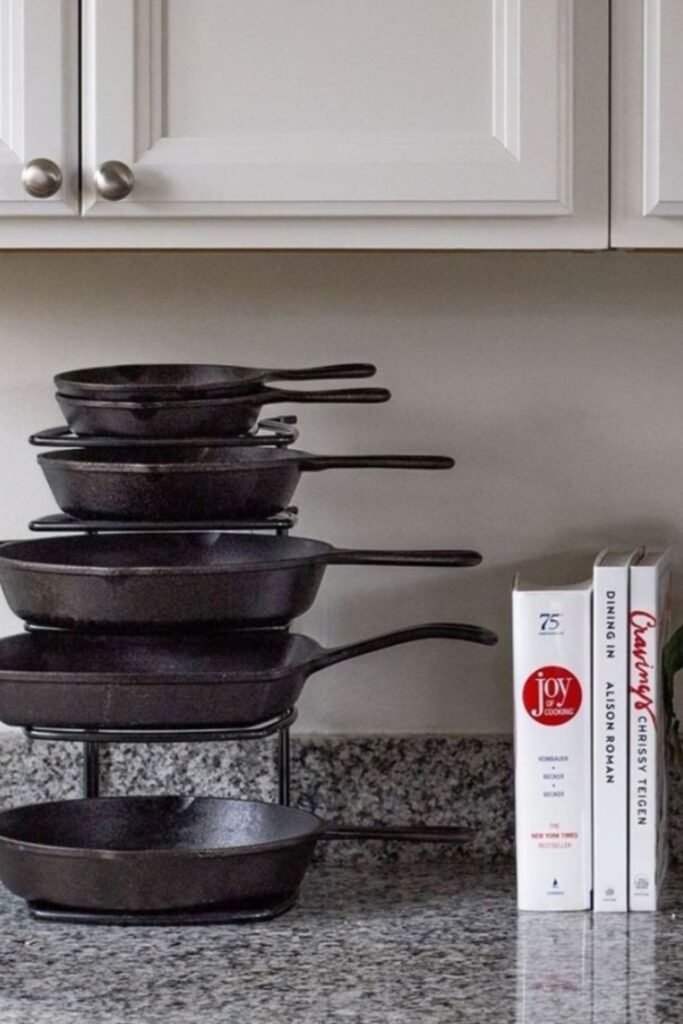
Countertop Pan Stand
When you reach for your skillet every day, you shouldn’t hide it in a cabinet.
You can use a sturdy countertop stand to stack pans vertically without them scraping each other.
You’ll keep air flowing and make grabbing the right size easy.
You should do this if you have some free counter space near the stove.
You have to choose a strong metal rack that can handle the weight without wobbling.
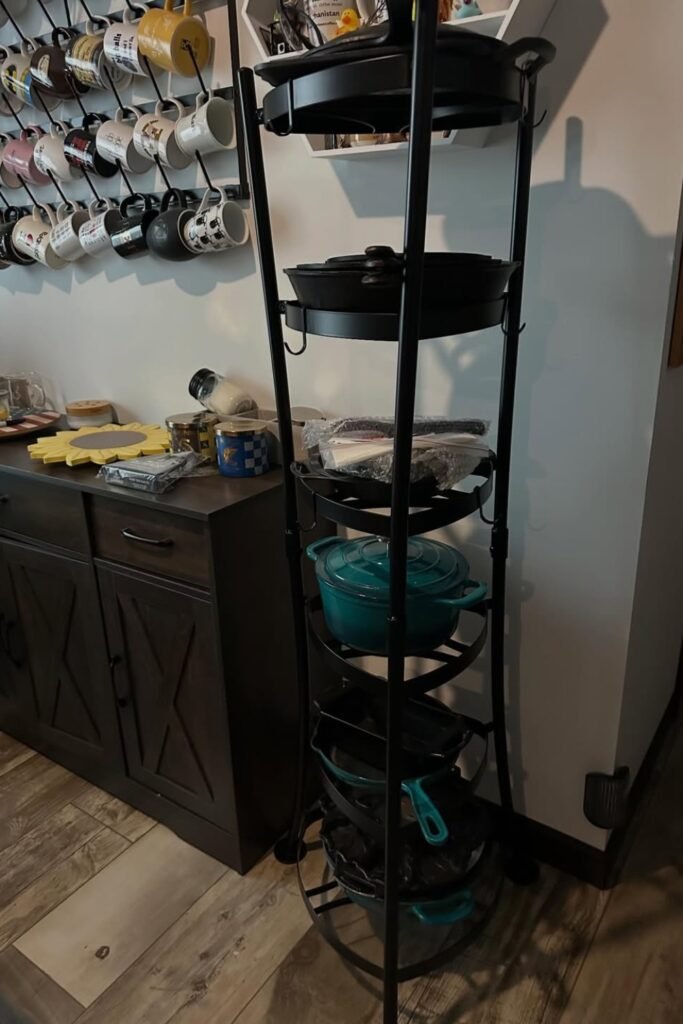
Corner Tower Rack
That empty corner beside your cabinets? You can make it work.
You should use a tall circular rack to stack Dutch ovens and skillets without cramming them into tight shelves.
You’ll find it’s perfect for small kitchens where floor space is limited but vertical space is open.
You should place the heaviest pieces on the bottom tier for balance.
You’ll keep everything organized, visible, and easy to grab.
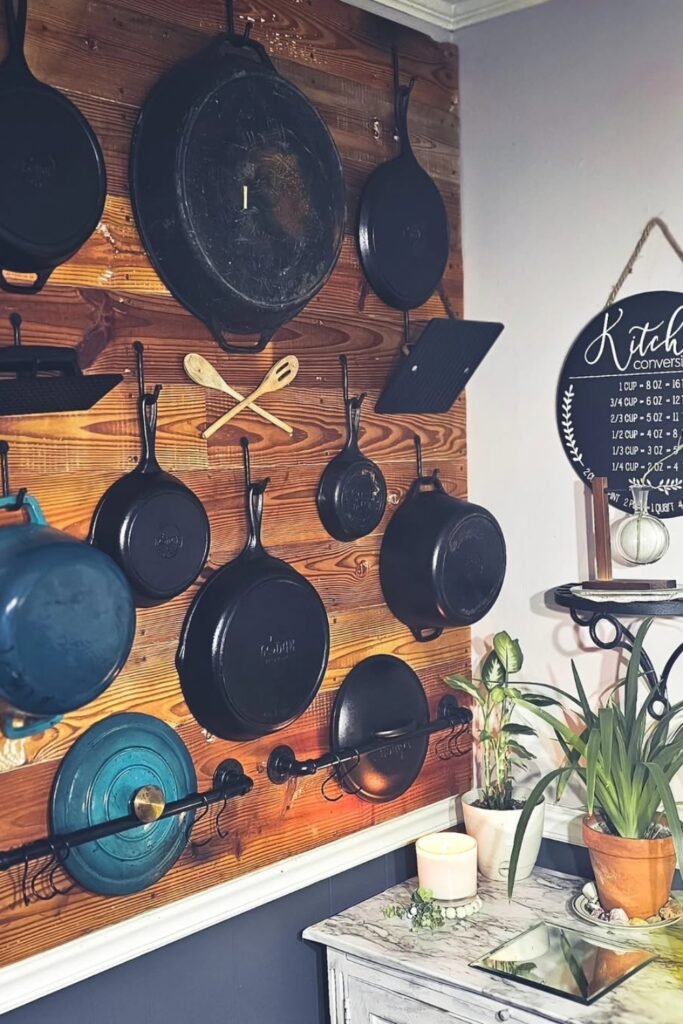
Statement Storage Wall
Why hide something that looks this good? You can create a full wooden accent wall with mounted hooks to make your cast iron the main feature of your kitchen.
You should spread the pieces out so they don’t crowd each other and mount every hook into solid backing.
You’ll see this works especially well in rustic or farmhouse spaces.
You can store heavy cookware safely while turning it into décor you’ll actually use.
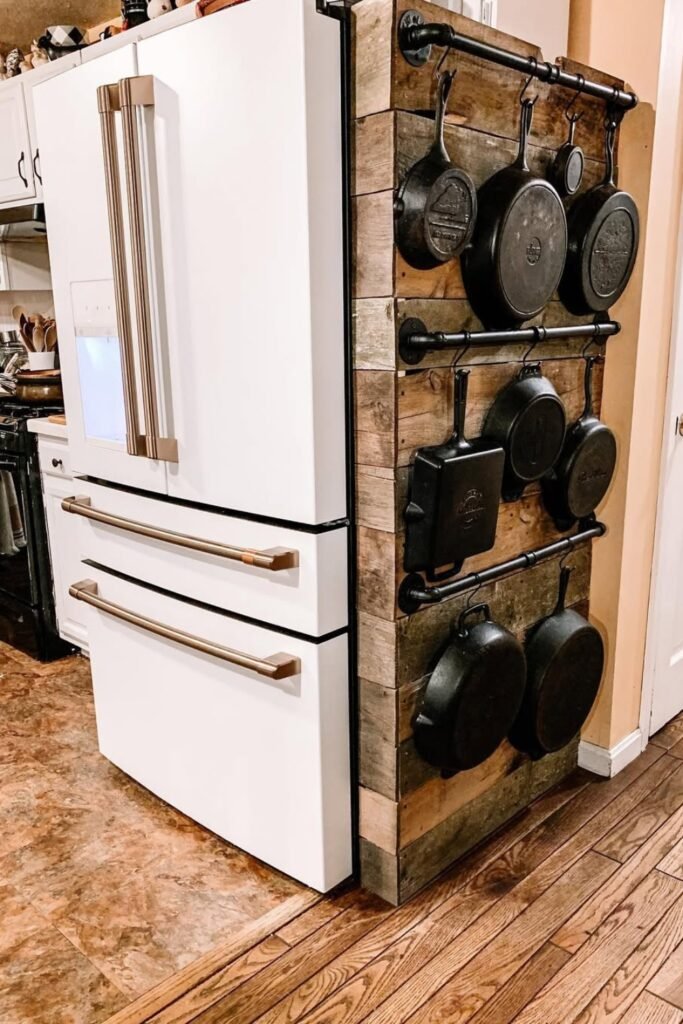
Refrigerator Side Rails
That blank side of your fridge? You can make it carry serious weight if you reinforce it right.
You should install industrial-style pipe rails over a solid wood backing and hang your cast iron vertically.
You’ll keep everything close to your stove without touching your cabinets.
You should space the hooks so pans don’t clash, and you must make sure the backing board is secured properly, not just screwed into thin paneling.
FAQs
Can you stack cast iron pans for storage?
Yes, but you shouldn’t stack them directly on top of each other.
You should always place a paper towel, cloth, or pan protector between each piece.
You’ll prevent scratches and you’ll absorb any leftover moisture this way.
If you stack them while they’re even a little damp, you’ll see rust show up fast.
You have to make sure your pans are fully dry and lightly oiled before you start nesting them.
Is it safe to hang cast iron on the wall?
Yes, as long as you make sure everything is mounted into studs or solid wood backing.
You have to remember that cast iron is heavy, and you shouldn’t rely on drywall anchors alone to hold it safely.
You should use strong hooks or rails that are rated for the weight.
You’ll also want to space your pans out so you don’t knock one into another when you take it down.

Hi, my name is Zeeshan, and I am the founder of The Crafts Geek. I have been passionate about DIY projects, home organization, and creative problem-solving for years. Over time, I realized that simple storage solutions and practical DIY ideas can make a huge difference in how a home looks and functions.