
If you’ve ever opened a storage box and found clothes that smell musty, look yellow, or have mold spots on them, you already know how frustrating long-term clothing storage can be.
A lot of people pack clothes away thinking they’ll stay fine for a few months, only to discover wrinkles, fabric damage, or even moth holes later.
The problem is that clothes can get damaged faster than most people realize when they’re stored the wrong way.
Heat, moisture, dust, trapped odors, and poor airflow slowly ruin fabric over time , especially if the clothes sit untouched for months or years.
The good news is that storing clothes properly is actually simple once you know what causes the damage in the first place.
A few smart packing steps can keep your clothes fresh, clean, and ready to wear no matter how long they stay in storage.
In this guide, you’ll learn exactly how to pack clothes for long-term storage without dealing with mold, bad smells, wrinkles, pests, or fabric damage later.
What Actually Damages Clothes During Long-Term Storage?
Most people think clothes only get damaged if they get wet or dirty. But long-term storage can slowly ruin fabric even when clothes look perfectly fine at first.
The biggest problem is moisture. If there is even a small amount of humidity trapped inside storage bins or bags, clothes can start developing mold and mildew over time.
That is why people often open stored clothes months later and notice a musty smell.
Heat is another major issue. High temperatures slowly weaken fabric fibers, especially natural materials like cotton, wool, and silk.
This damage becomes worse when clothes are stored in hot attics, garages, or storage units without climate control.
Sunlight also damages clothing. Direct light fades colors and weakens fabric over time.
Body oils, sweat, perfume, and invisible stains are another hidden problem. Even if clothes look clean, tiny stains can oxidize during storage and turn yellow later.
This is common with white clothing and delicate fabrics.
Poor airflow can also trap odors inside containers. When clothes stay compressed for too long, deep wrinkles and fabric stress can develop.
Some materials, like wool or down jackets, can lose their shape if stored incorrectly.
Pests are another reason clothes get damaged. Moths and insects are attracted to dirty fabrics, especially wool, fur, and other natural fibers.
Cardboard boxes and damp storage spaces make this problem even worse.
Understanding these risks helps you avoid them before packing your clothes away. Long-term storage is not only about saving space.
It is about protecting your clothes from slow damage that happens when the storage environment is wrong.
Wash and Dry Clothes Before Packing Them Away
One of the biggest mistakes people make is storing clothes without washing them first.
Even if clothes look clean, they may still contain body oils, sweat, food particles, perfume, or dust.
These hidden stains can become permanent during long-term storage. Over time, they may cause yellow spots, bad smells, or attract insects.
Always wash your clothes before packing them away. Follow the care instructions on the clothing label so you do not damage delicate fabrics.
For items like sweaters, jackets, or coats that cannot be machine washed, dry cleaning may be the safer option.
Drying clothes completely is just as important as washing them. Even a small amount of moisture trapped inside fabric can lead to mold and mildew later.
This is especially common when clothes are stored in airtight bins or vacuum bags. If possible, let clothes air dry fully before folding and packing them.
Pay extra attention to thick fabrics like hoodies, towels, jeans, and winter coats because they can hold hidden moisture longer than lightweight clothing.
This is also a good time to inspect your clothes for damage. Repair loose buttons, broken zippers, or small tears before storage.
Small problems often get worse while clothes sit untouched for months.
Clean clothes not only stay fresher during storage, but they are also less likely to attract pests like moths.
Taking the time to properly wash and dry everything before packing can save you from unpleasant surprises later.
Choose the Right Storage Containers
The type of container you use can make a huge difference in how well your clothes survive long-term storage.
Many storage problems start because people use the wrong containers or pack clothes too tightly.
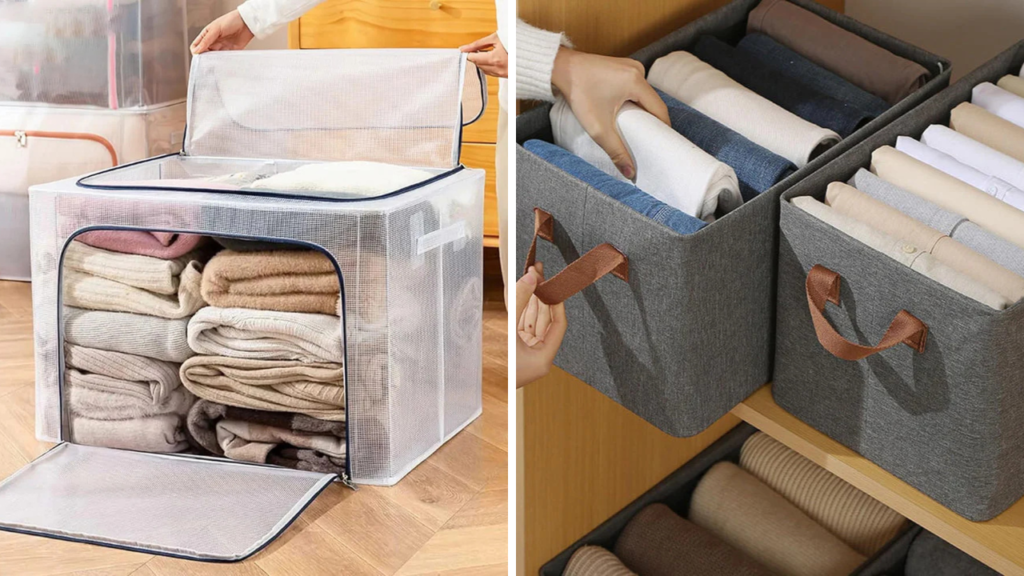
Plastic storage bins are one of the best options for most clothing. They protect clothes from dust, moisture, and insects better than cardboard boxes.
Clear bins work especially well because you can quickly see what is inside without opening every container.
Choose bins with tight-fitting lids to help keep pests and humidity out.
Vacuum-sealed bags are useful for saving space, especially for bulky winter clothing like jackets and sweaters.
However, they are not ideal for delicate fabrics or very long-term storage. Constant compression can damage fabric fibers, flatten down insulation, and create deep wrinkles.
For formal wear, suits, dresses, or expensive garments, breathable fabric garment bags are a better option.
They allow airflow while still protecting clothes from dust. Avoid leaving clothes inside thin plastic dry-cleaning bags because plastic traps moisture and can cause yellowing over time.
Cardboard boxes may seem convenient, but they absorb moisture easily and can attract insects.
If you must use cardboard, place clothes inside sealed bags first and keep boxes away from damp areas.
For valuable or sentimental clothing, acid-free archival boxes and tissue paper offer the best protection. These materials help prevent fabric discoloration and reduce long-term damage.
No matter which container you choose, avoid overpacking. Clothes need some airflow and space to prevent wrinkles, odors, and fabric stress during storage.
Fold or Hang Clothes the Right Way
Not all clothes should be stored the same way. Some items stay in better condition when folded, while others need to hang properly to keep their shape.
Heavy clothing like sweaters, knitwear, jeans, and t-shirts should usually be folded.
Hanging these items for long periods can stretch the fabric and leave shoulder marks. Fold them neatly and place heavier items at the bottom of the container.
Delicate fabrics should be folded carefully with acid-free tissue paper between layers if possible. This helps reduce wrinkles and prevents fabric rubbing during storage.
Structured clothing like suits, dresses, coats, and blazers should usually be hung instead of folded.
Hanging helps these items keep their shape and prevents deep creases. Use padded or sturdy wooden hangers instead of thin wire hangers. Wire hangers can bend fabric and create permanent marks over time.
If you are hanging clothes for long-term storage, use breathable garment bags instead of plastic covers. Breathable fabric bags allow airflow and help reduce trapped moisture.
Avoid cramming too many clothes into one storage bin or closet. Tight packing creates pressure on fabrics and leads to wrinkles that become difficult to remove later.
Some fabrics need extra care. Wool and cashmere should usually be folded to avoid stretching.
Leather items should hang in breathable covers to prevent cracking. Down jackets should not stay compressed for years because the insulation can lose its fluff.
Choosing the right storage method for each type of clothing helps fabrics stay in better condition and saves you time when you finally take them out of storage.
Protect Clothes From Moisture, Mold, and Pests
Moisture is one of the biggest enemies of stored clothing. Even clean clothes can develop mold, mildew, and bad odors if they are exposed to humidity for long periods.
That is why protecting clothes from moisture should always be a priority.
Start by choosing a dry storage area. Avoid damp basements, garages, or sheds whenever possible.
If the room already feels humid, your clothes may absorb that moisture over time.
Adding silica gel packets or moisture absorbers inside storage bins can help control humidity.
These products pull excess moisture from the air and reduce the risk of mold growth. For larger storage spaces, a dehumidifier can help keep the environment dry.
Pests are another major concern. Clothes moths and insects are attracted to natural fibers like wool, cashmere, fur, and silk.
Dirty clothing increases the risk because insects feed on body oils and stains.
Cedar blocks and lavender sachets are popular natural pest repellents. They can help discourage insects without leaving strong chemical smells on your clothes.
Avoid relying completely on mothballs because their odor can stay trapped in fabrics for a long time.
Airtight plastic bins help block insects from reaching clothing. Sealed containers also reduce dust buildup during storage.
Do not place clothing containers directly on concrete floors because concrete can hold moisture. Instead, place bins on shelves, pallets, or other raised surfaces.
Checking stored clothes every few months is also important. Open containers briefly to inspect for moisture, odors, or pest activity before small problems turn into major damage.
A few simple prevention steps can protect your clothes from the most common storage problems and help them stay fresh much longer.
Best Places to Store Clothes Long-Term
Where you store your clothes matters just as much as how you pack them. Even perfectly packed clothes can get damaged if the storage environment is too hot, damp, or unstable.
The best place for long-term clothing storage is a cool, dry, dark area with stable temperatures.
Large temperature changes can weaken fabrics over time and create moisture buildup inside storage containers.
Climate-controlled indoor spaces are usually the safest option. Interior closets, spare rooms, and climate-controlled storage units work well because they protect clothes from humidity and extreme heat.
Basements are risky because they often contain moisture and poor airflow. Even if the basement does not look wet, hidden humidity can still cause mold and mildew.
Attics are another common problem because temperatures can become extremely hot during summer.
Garages and outdoor sheds are also poor choices for long-term clothing storage. These areas usually experience major temperature swings and are more likely to attract insects and rodents.
If you use a storage unit, choosing a climate-controlled facility is worth the extra cost. It helps protect your clothes from heat, moisture, and humidity changes throughout the year.
Keep clothing containers away from direct sunlight because UV rays slowly fade colors and weaken fabric fibers. Dark storage spaces are much safer for long-term preservation.
It also helps to organize clothes by season or category. Label containers clearly so you can find items easily without opening every box.
Frequent opening exposes clothes to air, moisture, and dust.
The right storage location can greatly extend the life of your clothing and reduce the chance of unpleasant surprises when you unpack everything later.
Common Clothing Storage Mistakes That Cause Damage
Many clothing storage problems happen because of simple mistakes people do not think about until the damage is already done.
Avoiding these mistakes can help your clothes stay in much better condition.
One of the most common mistakes is storing dirty clothes. Sweat, body oils, food stains, and perfume can become permanent over time and attract insects.
Even clothes that look clean should usually be washed before storage.
Another major mistake is packing clothes while they are slightly damp. This creates the perfect environment for mold and mildew growth inside storage containers.
Using thin wire hangers is another problem. They can stretch fabrics, leave shoulder marks, and even rust in humid environments.
Sturdy padded or wooden hangers are much safer for long-term hanging storage.
Overpacking storage bins is also harmful. Tight compression traps odors, increases wrinkles, and puts stress on fabric fibers. Clothes need some breathing room.
Many people also leave clothes inside dry-cleaning plastic bags. These bags trap moisture and can cause yellowing during long-term storage.
Storing clothes directly on concrete floors is another mistake. Concrete absorbs moisture and transfers it into containers over time.
Vacuum sealing delicate fabrics for years can also damage materials like wool, silk, leather, and down insulation. While vacuum bags save space, they are not suitable for every fabric.
Ignoring climate conditions is another common issue. Hot attics, damp basements, and garages often ruin clothing faster than people expect.
Finally, many people pack clothes away and never check them again.
Inspecting stored clothing every few months helps you catch moisture, pests, or odors early before serious damage happens.
Avoiding these mistakes can make a huge difference in how well your clothes survive long-term storage.
How to Store Different Types of Fabrics
Different fabrics react differently during long-term storage. Using the same storage method for every type of clothing can lead to damage, stretching, fading, or loss of shape.
Cotton clothing is usually easy to store, but it still needs protection from moisture and dust.
Fold cotton items neatly and keep them in breathable or sealed containers depending on your storage environment.
Wool requires extra care because moths are highly attracted to natural animal fibers.
Always clean wool garments before storage and use cedar blocks or airtight containers for added protection.
Avoid vacuum sealing wool for very long periods because compression can damage fibers.
Silk is delicate and sensitive to heat, light, and moisture. Store silk in cool, dark spaces and use acid-free tissue paper between folds to reduce creasing and fabric stress.
Leather should never be vacuum sealed because it needs airflow to stay in good condition.
Hang leather jackets in breathable garment bags and avoid humid environments that may cause mold or cracking.
Cashmere should usually be folded instead of hung to prevent stretching. Place tissue paper between folds for added protection.
Down jackets and puffer coats should not stay compressed for years because the filling may lose its loft and insulation ability.
Vintage or sentimental clothing needs the highest level of care. Acid-free archival boxes and tissue paper help prevent yellowing and fabric deterioration over time.
Delicate lace or embellished garments should be stored carefully to avoid snagging and pressure damage.
Understanding fabric-specific storage methods helps clothes last much longer.
Some materials are naturally more sensitive than others, so choosing the right storage approach for each fabric can prevent expensive damage later.
Final Checklist Before You Store Clothes Long-Term
Before you place your clothes into storage, it helps to go through a simple checklist to make sure nothing important gets missed.
A few small steps now can prevent mold, odors, wrinkles, and fabric damage later.
Start by washing and drying every item completely. Never store clothes with hidden moisture, stains, or body oils.
Even clean-looking clothes can develop yellow spots or attract pests if they are not properly cleaned.
Next, sort clothes by fabric type and season. Delicate items like silk, wool, or vintage garments may need extra protection such as acid-free tissue paper or breathable garment bags.
Choose the right storage container for your needs. Use sealed plastic bins for general storage, breathable garment bags for formal wear, and avoid damp cardboard boxes whenever possible.
Add moisture protection before closing containers. Silica gel packets or moisture absorbers can help prevent mildew and musty smells.
Use cedar blocks or lavender sachets if you want extra protection against moths and insects.
Do not overpack storage bins. Clothes need some airflow to reduce deep wrinkles and trapped odors.
Label every container clearly. Write down the contents, season, or clothing category so you can find items quickly later.
Store containers in a cool, dry, dark place away from sunlight, humidity, and extreme temperatures. Climate-controlled indoor spaces are usually the safest option.
Finally, check stored clothing every few months if possible. Open containers briefly to inspect for moisture, pests, or odors.
Long-term clothing storage does not need to be complicated.
When you prepare clothes correctly and store them in the right environment, you can keep them fresh, clean, and ready to wear even after months or years in storage.
Conclusion
In the end, long-term clothing storage is not just about putting clothes into boxes and forgetting about them.
The way you clean, pack, and store your clothes directly affects how they look and smell months or even years later.
A little moisture, poor airflow, or the wrong storage container can slowly damage fabric without you noticing it at first.
The good news is that most storage problems are easy to avoid.
Washing clothes before storage, choosing the right containers, keeping moisture away, and storing clothes in a cool, dry place can make a huge difference.
These small steps help protect your clothes from mold, odors, wrinkles, insects, and fabric damage.
Whether you are storing seasonal outfits, moving to a new home, saving space, or protecting sentimental clothing.
The goal is simple: you want your clothes to come out of storage in the same condition they went in.
If you take the time to store them properly now, you can avoid expensive damage and keep your clothes fresh, clean, and ready to wear whenever you need them again.

Hi, my name is Zeeshan, and I am the founder of The Crafts Geek. I have been passionate about DIY projects, home organization, and creative problem-solving for years. Over time, I realized that simple storage solutions and practical DIY ideas can make a huge difference in how a home looks and functions.