Many people use their bedroom closet like a hidden storage space for everything they do not know where to put.
Dirty shoes, old electronics, important papers, snacks, wet towels, and even cleaning products often end up there without a second thought.
At first, it may seem harmless. But over time, these things can create bad smells, mold, clutter, pest problems, and even safety risks inside your bedroom.
You may have already noticed some of these signs without realizing your closet is the reason.
Maybe your clothes smell musty, your closet feels overcrowded, or you can never find what you need.
In some cases, the wrong items can even damage your belongings or affect the air quality in your room.
The truth is, a bedroom closet is not designed to store everything. Some items simply do not belong there.
In this article, you will learn what you should never store in your bedroom closet, why these items can cause problems, and where you should keep them instead to make your space cleaner, safer, and easier to organize.
Why Your Bedroom Closet Might Be Creating Problems
Most people treat their bedroom closet like a hidden storage space for anything they do not want lying around.
Shoes, old chargers, dirty clothes, snacks, and random boxes slowly pile up over time.
At first, this may not seem like a problem, but a crowded closet can create more issues than most people realize.
Closets usually have poor airflow. When you store damp items, dirty shoes, or too many belongings in a small space, moisture and odors get trapped inside.
This can lead to mold, mildew, bad smells, and dust buildup. Over time, your clean clothes may start smelling musty, and the entire bedroom can feel less fresh.
Clutter also affects your daily routine. A packed closet makes it harder to find clothes, organize belongings, and keep the room clean.
Many people even feel stressed when they constantly see overcrowded storage spaces.
Your bedroom should feel relaxing and comfortable, not messy and overwhelming. The good news is that small storage changes can make a huge difference.
Once you remove the wrong items and organize the space properly, your closet becomes cleaner, safer, and much easier to manage.
Things You Should Never Store in Your Bedroom Closet
Not everything belongs inside a bedroom closet. Even though closets seem like easy storage spaces, some items can create long-term problems for your clothes, health, and home.
Many people use closets as dumping areas for random things they do not want visible in the room.
The problem is that closets are usually dark, small, and poorly ventilated. This environment is not suitable for items that create moisture, heat, dust, or strong smells.
Over time, the wrong storage habits can lead to mold growth, bad odors, clutter, and even pest problems.
Some household items can also become safety hazards when stored near clothing and fabric.
Flammable products, old batteries, and damaged electronics may increase fire risks.
Food and snacks can attract insects and rodents, while damp laundry can spread mildew and unpleasant smells.
Another issue is overcrowding. When the closet fills with unnecessary items, it becomes difficult to stay organized.
You waste time searching for things and end up creating even more clutter.
The purpose of your closet is to store clothes and everyday essentials, not everything you own.
Knowing what should stay out of your closet helps keep your bedroom cleaner, healthier, and easier to organize.
Don’t Keep Important Papers and Valuables in Your Closet
Many people hide important papers and valuables inside bedroom closets because they think the space feels safe and private.
Passports, cash, jewelry, family photos, and legal documents often end up stored in drawers or boxes between clothes.
However, a regular closet is not the best place for these valuable items.
Closets can trap humidity and dust, which may slowly damage papers, electronics, and jewelry.
Important documents can wrinkle, fade, or develop mold if moisture builds up inside the space. Jewelry may tarnish over time, especially in humid conditions.
Another major concern is fire risk. Closets contain clothing, cardboard boxes, and other materials that burn quickly.
In an emergency, valuable papers stored in a closet can easily be destroyed.
Theft is another problem. Bedroom closets are one of the first places burglars check when searching for valuables.
Keeping cash and jewelry there may actually make them easier to steal.
A safer option is to store important documents in a fireproof and waterproof safe. You can also keep digital copies of important paperwork as a backup.
Expensive jewelry and large amounts of cash are safer in a secure lockbox or bank safety deposit box.
Avoid Storing Wet Towels and Dirty Clothes
Throwing wet towels or dirty clothes into the closet may seem harmless, especially when you are busy or tired.
But this habit can quickly create bad smells, mold, and bacteria inside your bedroom closet.
Closets usually have very little airflow. When damp fabrics sit in a closed space, moisture gets trapped inside.
This creates the perfect environment for mildew and mold to grow. Over time, the smell spreads into clean clothes, bedding, and even the bedroom itself.
Dirty laundry creates another problem. Sweaty gym clothes, socks, and worn outfits carry bacteria and odors that build up quickly in small spaces.
If these items stay in the closet too long, the smell becomes harder to remove.
Moisture can also damage the closet itself. Wooden shelves may warp, walls can develop mold, and paint may begin peeling in humid conditions.
Many people use the closet to hide laundry temporarily, but temporary clutter often turns into permanent clutter.
Piles of dirty clothes make the space feel overcrowded and difficult to organize.
The best solution is simple. Let towels dry completely before storing them and keep dirty clothes in a laundry basket outside the closet.
Keeping moisture out helps your closet stay fresh, clean, and odor-free.
Don’t Store Food or Snacks in Your Closet
Keeping snacks in your bedroom closet may seem convenient, but it can create bigger problems than you expect.
Food attracts pests, creates odors, and makes your closet less clean and healthy.
Even sealed snacks can release smells that attract ants, cockroaches, and mice. Closets are dark and quiet spaces, which pests often prefer.
Once insects or rodents enter the closet, they can spread into other parts of the bedroom and home.
Food crumbs and spills make the situation worse. Small messes hidden in corners or drawers often go unnoticed for weeks.
Over time, forgotten snacks may expire, leak, or grow mold.
Another issue is odor. Strong food smells can get trapped in small spaces with poor airflow.
Your clothes and fabrics may begin absorbing those odors, leaving your closet smelling unpleasant.
Some people also keep drinks inside the closet, which can lead to leaks and sticky messes that damage clothes and shoes nearby.
The safest place for food is the kitchen pantry or refrigerator. If you like keeping snacks in your bedroom, use airtight containers and avoid storing them long term.
Your closet should stay dry, clean, and free from anything that can attract pests or create strong smells.
Removing food from the closet helps protect your clothes and keeps the space healthier.
Keep Cleaning Products and Flammable Items Out
Many people store cleaning supplies, aerosol sprays, candles, and household chemicals inside bedroom closets to save space.
While this may seem practical, these items can create serious safety risks.
Most closets are small and poorly ventilated. Cleaning products may release strong fumes that affect indoor air quality.
Leaks or spills can also damage clothing, shoes, and storage boxes nearby.
Flammable items are an even bigger concern. Products like aerosol sprays, nail polish remover, paint thinner, and certain cleaners can become dangerous when exposed to heat.
Since closets trap warm air, storing these products near fabric and cardboard increases fire risks.
Old candles and damaged battery-powered devices may also become hazards if they overheat while sitting unused for long periods.
Another issue is odor absorption. Clothes and bedding can absorb chemical smells from nearby products, leaving your closet smelling unpleasant.
A safer option is to store cleaning products and flammable materials in a garage, utility room, or ventilated storage cabinet away from sleeping areas.
If you must keep them indoors, make sure containers are sealed tightly and stored away from heat.
Keeping hazardous items out of your bedroom closet helps improve safety, air quality, and overall cleanliness.
Remove Old Electronics and Batteries
Old phones, chargers, headphones, batteries, and unused electronics often end up forgotten inside bedroom closets.
Many people keep these items because they think they may need them someday.
However, storing old electronics in a crowded closet creates unnecessary clutter and possible safety risks.
Electronics collect dust quickly when left untouched for long periods. Old batteries can also leak chemicals that damage nearby belongings and create unpleasant smells.
Lithium-ion batteries found in phones and laptops may become dangerous if damaged or overheated.
While serious problems are rare, storing broken electronics in warm and poorly ventilated spaces increases the risk.
Another issue is wasted storage space. Closets are already limited in size, and unused electronics take up room that could be used for clothes and daily essentials.
Many people also forget what they actually own because gadgets get buried under boxes and clothing.
Over time, these devices lose value instead of becoming useful again.
The best solution is to sort through electronics regularly. Recycle broken devices properly and donate working items you no longer use.
Store important electronics in cool, dry containers away from moisture.
Removing old electronics makes your closet easier to organize and reduces unnecessary clutter.
Don’t Pile Up Shoes You Wear Every Day
Shoes are one of the main reasons bedroom closets become messy and smelly.
Many people throw shoes directly into the closet after wearing them outside all day without thinking about the dirt and moisture they bring inside.
Shoes collect mud, dust, sweat, and bacteria from sidewalks, public spaces, and outdoor surfaces.
When you place them inside a closed closet, all of those odors get trapped in a small area with little airflow.
Over time, this can create strong smells that spread into clothes and fabrics nearby. Damp shoes may also encourage mold growth, especially during rainy seasons or humid weather.
Another common problem is overcrowding. Shoes often end up scattered across the closet floor, making it difficult to clean the space or find the pair you need quickly.
Many people also keep old shoes they no longer wear. These shoes collect dust and waste valuable storage space.
Instead of piling shoes in the closet, let them air out after use. Use a shoe rack or ventilated organizer to improve airflow and reduce odors.
Keep only the pairs you wear regularly and donate the rest.
Proper shoe storage keeps your closet cleaner, fresher, and easier to organize every day.
Throw Away Expired Medicine and Old Beauty Products
Many people keep old medicine, makeup, skincare products, and beauty supplies inside bedroom closets for years without checking expiration dates.
While this may seem convenient, closets are not always the best place for these items.
Closets can become warm and stuffy because of poor airflow. Heat and humidity may reduce the effectiveness of medications and damage beauty products over time.
Expired medicine may not work properly when you actually need it. Old makeup and skincare products can also collect bacteria, which may irritate your skin or cause infections.
Another problem is clutter. Half-used lotions, empty bottles, and expired products quickly fill shelves and drawers, making the closet harder to organize.
Strong smells from perfumes, nail products, and beauty supplies may also spread into clothes and fabrics nearby.
A better habit is to check expiration dates regularly and throw away products you no longer use. Store medicines in a cool, dry place away from moisture and heat.
You can also use small storage bins or organizers to keep daily products neat and easy to find.
Cleaning out expired medicine and beauty products creates more space, improves organization, and helps keep your closet cleaner and healthier.
Common Closet Storage Mistakes Most People Make
Most closet problems happen because of poor storage habits, not because the closet is too small.
Many people slowly turn their closet into a dumping area for random belongings they do not want visible in the room.
One common mistake is overpacking shelves and hanging rods. Stuffing too many clothes into a small space blocks airflow and makes the closet feel crowded and disorganized.
Another mistake is storing items you never use. Old clothes, empty boxes, broken electronics, and random household items often stay in closets for years without any purpose.
Ignoring moisture is another major problem. Damp towels, wet shoes, and poor ventilation can quickly create mold and mildew.
Many people also avoid cleaning the closet regularly. Dust, expired products, and hidden clutter slowly build up in corners and storage bins.
Some people buy more storage containers without actually removing unnecessary items. This often creates even more clutter instead of solving the problem.
The best way to avoid these mistakes is to organize your closet with intention. Keep only what you use regularly and create separate spaces for clothes, shoes, and accessories.
Small storage changes can make your closet feel cleaner, more organized, and easier to manage every day.
Where You Should Store These Things Instead
Removing the wrong items from your bedroom closet is important, but you also need to know where those items should go instead.
Better storage choices help keep your home cleaner and more organized.
Important documents and valuables should stay in a fireproof safe or secure lockbox. For expensive jewelry or highly valuable items, a bank safety deposit box offers better protection
Dirty clothes belong in a laundry basket outside the closet, while wet towels should dry fully before storage.
Food and snacks should stay in kitchen cabinets, pantry containers, or the refrigerator to avoid pests and odors.
Cleaning products and flammable materials are safer in a utility room, garage, or ventilated cabinet away from sleeping areas.
Shoes work best on open shoe racks or ventilated shelves. Frequently used outdoor shoes should stay near the entrance of your home instead of inside the bedroom closet.
Old electronics and batteries should either be recycled or stored safely in cool and dry containers.
Medicines should stay in a cool, dry location away from heat and humidity.
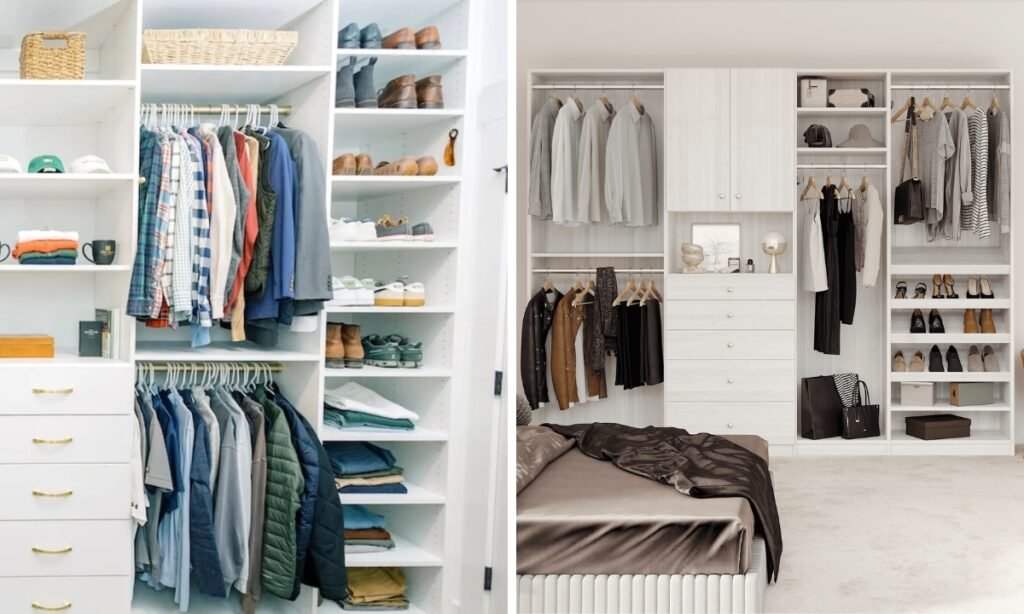
Your bedroom closet should mainly store clothing, accessories, and daily essentials. When every item has a proper place, your space becomes easier to clean, organize, and maintain.
Simple Tips to Keep Your Closet Clean and Organized
Keeping your closet clean and organized does not need expensive systems or complicated methods. Small daily habits make the biggest difference.
Start by removing anything that does not belong in the closet. If you have not used something in over a year, consider donating, recycling, or throwing it away.
Avoid overpacking shelves and clothing rods because crowded spaces trap odors and dust. Leave small gaps between clothes to improve airflow.
Use baskets, bins, and shelf dividers to separate different categories of items. Labeling containers also helps you find things faster.
Clean your closet regularly instead of waiting for clutter to build up. Vacuum the floor, wipe shelves, and check corners for moisture or mold.
Rotate seasonal clothing to free up extra space during different times of the year. Heavy jackets and blankets do not need to stay in the closet year-round.
Another helpful rule is “one in, one out.” When you buy something new, remove an old item you no longer use.
Avoid throwing random items into the closet just to hide them quickly. Temporary clutter often becomes permanent clutter.
A clean closet saves time, reduces stress, and helps your entire bedroom feel calmer and more organized
Conclusion
Your bedroom closet should help keep your room organized, not create hidden problems behind closed doors.
Many people unknowingly fill their closets with items that attract pests, trap moisture, create clutter, or increase safety risks.
Wet towels, dirty shoes, expired products, old electronics, food, and flammable materials can slowly damage your closet and affect the comfort of your bedroom.
Even valuable papers and jewelry may become damaged if stored in poor conditions.
The good news is that most of these problems are easy to fix.
Once you remove the wrong items and improve your storage habits, your closet becomes cleaner, safer, and easier to manage.
You do not need expensive organizers or a huge bedroom to stay organized.
The key is to keep only what truly belongs in the closet and avoid turning the space into a hidden dumping area.
A clean and organized closet makes daily life easier. Your clothes stay fresher, your room feels calmer, and you spend less time dealing with clutter.
Small storage habits may seem unimportant at first, but they have a big impact on the cleanliness, safety, and comfort of your home over time.

Hi, my name is Zeeshan, and I am the founder of The Crafts Geek. I have been passionate about DIY projects, home organization, and creative problem-solving for years. Over time, I realized that simple storage solutions and practical DIY ideas can make a huge difference in how a home looks and functions.