
What Are Common Kitchen Island Mistakes?
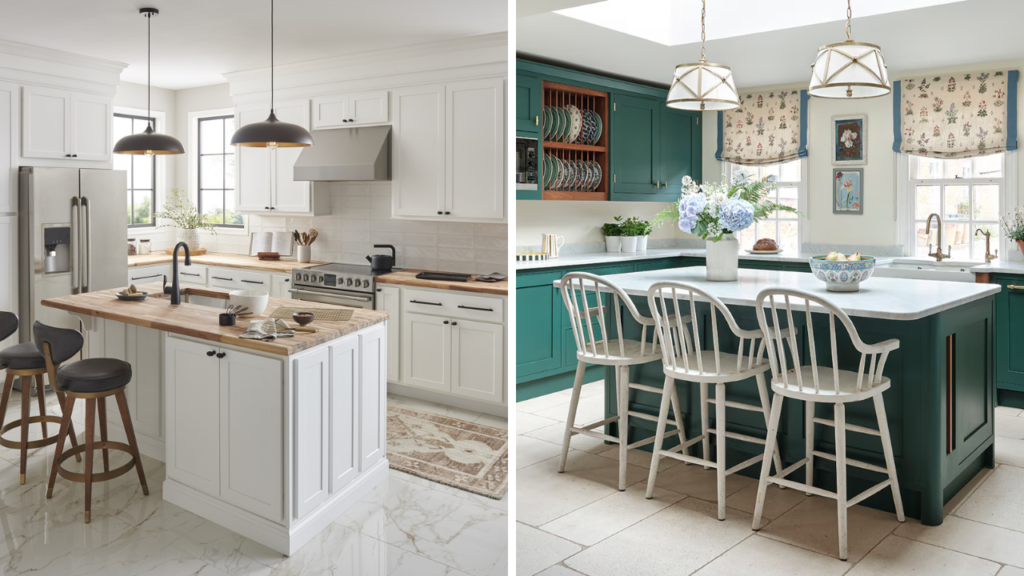
You probably love the idea of a kitchen island until you actually start using it.
You might think it looks perfect in pictures, but when you try to move around, you’ll bump into corners, you can’t open cabinets properly, and you’ll notice there’s nowhere comfortable to sit.
And the worst part? You’ll realize that fixing these mistakes later could cost you a lot of time and money.
The problem is, you often design your kitchen island based on looks or trends, not on how you actually cook, move, and live in your space.
If you’re planning to add a kitchen island or if you’re already feeling like something’s off with yours.
In this article, you’ll want to use this guide to spot the most common mistakes before you end up regretting them.
Why Most Kitchen Island Designs Go Wrong?
Most kitchen islands don’t fail because of bad materials or poor construction, you’ll see they fail because of poor planning.
You might make the biggest mistake by designing the island based on how it looks, not how it actually works for you.
You see a nice design online or in a showroom, you copy it, and you assume it will fit your kitchen the same way.
But you’ll quickly realize that every kitchen layout is different, and what works in one space might feel completely wrong in yours.
You might also ignore your daily habits. You probably don’t think about how many people use the kitchen at once, where you stand while cooking, or how often you move between the sink, stove, and fridge.
And when you ignore these small things, you’ll find the island getting in your way instead of helping you. You can underestimate how important spacing is, too.
Even a small miscalculation can make your kitchen feel cramped, especially when you have to juggle cabinet doors, appliances, and people all at the same time.
You’ll usually notice the regret after everything is installed.
You start feeling that movement is awkward, that seating isn’t comfortable, or that the island just doesn’t get used the way you expected.
And by then, you know fixing it will be expensive and difficult.
In simple terms, you’ll see that most kitchen island problems happen when you plan for appearance instead of how you actually use your kitchen every day.
Mistake #1: Make Too Big for Your Space
Most kitchen islands don’t fail because of bad materials or poor construction, you’ll see they fail because of poor planning.
You might make the biggest mistake by designing the island based on how it looks, not how it actually works for you.
You see a nice design online or in a showroom, you copy it, and you assume it will fit your kitchen the same way.
But you’ll quickly realize that every kitchen layout is different, and what works in one space might feel completely wrong in yours. You might also ignore your daily habits.
You probably don’t think about how many people use the kitchen at once, where you stand while cooking, or how often you move between the sink, stove, and fridge.
And when you ignore these small things, you’ll find the island getting in your way instead of helping you.
You can underestimate how important spacing is, too. Even a small miscalculation can make your kitchen feel cramped, especially when you have to juggle cabinet doors, appliances, and people all at the same time.
You’ll usually notice the regret after everything is installed.
You start feeling that movement is awkward, that seating isn’t comfortable, or that the island just doesn’t get used the way you expected.
And by then, you know fixing it will be expensive and difficult.
In simple terms, you’ll see that most kitchen island problems happen when you plan for appearance instead of how you actually use your kitchen every day.
Mistake #2: Don’t Leave Walking Space
Even if your island size is right, you can still run into problems if you don’t leave enough space around it.
You’ll notice most kitchens start feeling cramped exactly here. You try to walk through while someone is cooking, and suddenly you realize there’s no room.
You’ll bump into cabinet doors, the dishwasher might block your path, and you end up feeling stressed instead of moving smoothly.
You might underestimate how much space you actually need. On paper, a few inches may not seem like a big deal, but in real life, you’ll see it makes a huge difference for you.
The problem gets worse when your home is busy. If more than one person is using the kitchen, you’ll find tight spacing quickly turns into daily frustration.
You might end up waiting for others to move instead of working freely yourself.
Make sure you leave enough space around all sides of your island so you can move easily. You should be able to walk, turn, and open appliances without any struggle.
If you feel even slightly tight while planning, you’ll discover it will feel much worse once everything is installed.
Mistake #3: Design It for Looks
A lot of people design their kitchen island based on what looks good in photos or showrooms.
But you’ll quickly realize the problem: your kitchen isn’t just for display, it’s something you use every single day.
You might pick a clean, minimal design, but then you’ll find there’s no space for food prep.
Or you may choose a trendy layout that doesn’t match how you actually cook, store things, or move around your kitchen.
This mistake happens when you don’t think about your daily routine. You have to ask yourself: where do you chop vegetables? Where do you place hot pans?
How often do you move between the sink, stove, and fridge? If your island doesn’t support these habits, you’ll notice it becomes more of an obstacle than a help.
Over time, you might feel frustrated. You could stop using the island altogether, or only use a small part of it, and you’ll see that defeats the whole purpose.
You should design your island around how you use it every day, not just how it looks. You’ll want to think about how you cook, prep, and move.
You’ll find a simple, practical design that fits your routine will always feel better than something that only looks good.
Mistake #4: Add Seating Without Comfort
Adding seating sounds like a great idea until you actually try to use it.
You might just place a few stools and assume it will work, but then you’ll notice there’s not enough legroom, your knees hit the counter, or there’s barely any space behind the chairs to move.
You’ll find sitting uncomfortable, and getting in and out becomes awkward for you.
This usually happens because you treat seating like an extra feature, not something that needs proper planning.
You probably don’t think about how much space each person needs, or how others will move behind you while you sit.
Over time, you’ll see this area goes unused. Instead of becoming a social spot, you’ll notice the stools just sit there, doing nothing.
You should plan seating properly. You’ll want to make sure there’s enough legroom and space between each seat.
You should also check that you and others can move behind the chairs easily. If it doesn’t feel comfortable for you, you won’t use it.
Mistake #5: Try to Fit Too Many Appliances
It’s tempting for you to turn your island into a “do everything” station, sink, cooktop, maybe even a dishwasher but you’ll often see this backfire.
When you add too many appliances, you’ll lose the one thing an island is best for: open workspace.
You’ll notice there’s suddenly no room for you to prep food, place dishes, or work comfortably.
You’ll also feel the island gets crowded and harder to clean. Plus, if you add plumbing or wiring, you’ll see costs rise and your future options get limited.
You should keep your island simple. You’ll want to only add appliances if they truly improve how you work in your kitchen.
Otherwise, you can use the space for prep and flexibility, and you’ll thank yourself later.
Mistake #6: Don’t Use for Storage
An island takes up valuable space, so if it doesn’t give you storage, you’ll be missing a big opportunity.
You might see many islands designed with empty space underneath or cabinets that don’t actually help, and you’ll notice later that your kitchen still feels cluttered.
This usually happens when you don’t plan storage based on your real needs. You could end up with shelves that don’t fit your items or drawers that are too small for you.
You should think about what you actually need to store, utensils, pots, small appliances, and design your storage around that.
You’ll see that smart storage can make your kitchen feel much more organized for you.
Mistake #7: Ignore Proper Lighting
Lighting is often treated as decoration, but you’ll quickly see it directly affects how useful your island is.
Without proper lighting, you might struggle with tasks like chopping, cooking, or even reading recipes.
You’ll notice shadows falling right where you’re working, making the space uncomfortable, and even less safe for you.
You can’t rely only on general kitchen lighting, because it’s usually not enough for a work area like your island.
You should add focused lighting above your island, like pendant lights. You’ll want the light to be bright enough for tasks but still comfortable for you during everyday use.
Mistake #8: Force an Island Into a Kitchen
Not every kitchen is meant to have an island, but you might try to fit one anyway.
You’ll quickly notice this can lead to a cramped layout where everything feels too close.
You might lose movement space, and your kitchen can become harder for you to use instead of easier.
This mistake usually happens when you follow trends instead of thinking about your actual space. You should be honest about your kitchen size.
If you don’t have enough room for comfortable movement, you might want to consider other options, like a peninsula or extra counter space.
You’ll see that a well-planned kitchen without an island is always better than a cramped one with it.
Mistake #9: Forget About Power Outlets
Small details might not seem important when you’re planning—but you’ll quickly see they matter a lot in your daily use.
Without power outlets, you might struggle with appliances like blenders or mixers. You could end up running extension cords, which will look messy and feel unsafe for you.
Other small things like where you place the trash, how edges are designed, or even where you stand while working can also affect how useful your island is for you.
You should think about your everyday use. You’ll want to plan for outlets, easy access to tools, and simple comfort details.
You’ll notice that these small things make a big difference for you over time.
The Kitchen Island Mistakes That Cost the Most to Fix
Some kitchen island mistakes aren’t just annoying, you’ll find they can be expensive to fix later. The biggest one is getting the size or layout wrong.
If your island is too big or placed badly, you’ll see that fixing it often means removing countertops, adjusting cabinets, and sometimes even changing the flooring.
That’s not a small fix, you could end up in a full renovation. You might also make a costly mistake by adding plumbing or appliances in the wrong place.
Moving a sink, dishwasher, or cooktop later means you’ll have to redo plumbing lines, electrical work, and sometimes ventilation.
You’ll notice how quickly this adds up in both time and money.
Poor electrical planning can cost you too. If you forget outlets or place them badly, you’ll find fixing it later means opening walls or cutting into finished surfaces.
These mistakes usually happen when you rush the planning stage or copy designs without thinking about your own space.
You should take extra time before building. You’ll want to double-check the layout, size, and placement of everything.
You’ll see that it’s always cheaper and easier to fix mistakes on paper than after installation.
Conclusion
A kitchen island can make your space more useful, more social, and easier for you to work in—but only if you plan it the right way.
Most of the problems you’ll face don’t come from big design failures.
You’ll notice they come from small decisions you ignored during planning, spacing, comfort, daily use, and simple details.
These things might not seem important at first, but you’ll see how much they affect your kitchen every single day.
If you focus on how you actually use your kitchen instead of just how it looks, you’ll avoid most of these mistakes.
You should think about movement, comfort, and practicality before anything else.
In the end, you’ll realize that a good kitchen island isn’t the one that looks the best, it’s the one that works best for you.