Preschoolers can get bored quickly when five senses lessons turn into the same old worksheets and coloring pages.
You want crafts that are easy to set up, fun to make, and actually help kids understand what they see, hear, smell, taste, and touch.
The good news is, you don’t need fancy supplies or complicated projects to make that happen.
In this article, you’ll find simple five senses crafts preschoolers can make, explore, and learn from.
Five Senses Crafts for Preschool
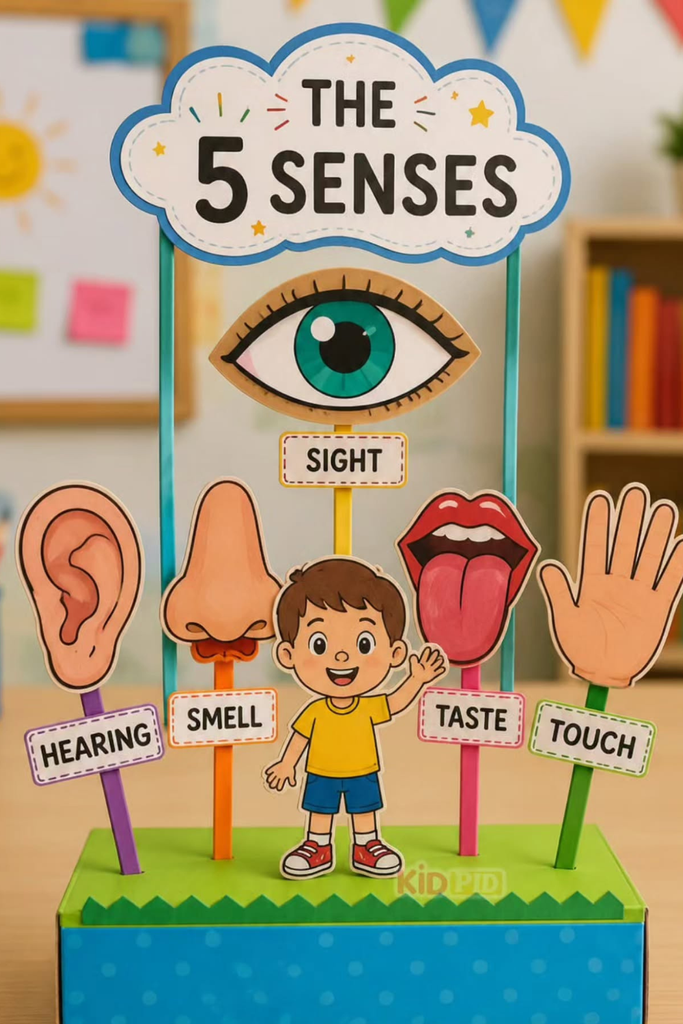
Five Senses Stand
Turn this into a simple classroom display by mounting five labeled sense shapes on colorful sticks around a cheerful child figure.
Use cardboard, craft sticks, markers, and a recycled box base, then let preschoolers help decorate each eye, ear, nose, tongue, and hand.
Place it near your science corner so children can point, name each sense, and connect the display with daily sensory discoveries.
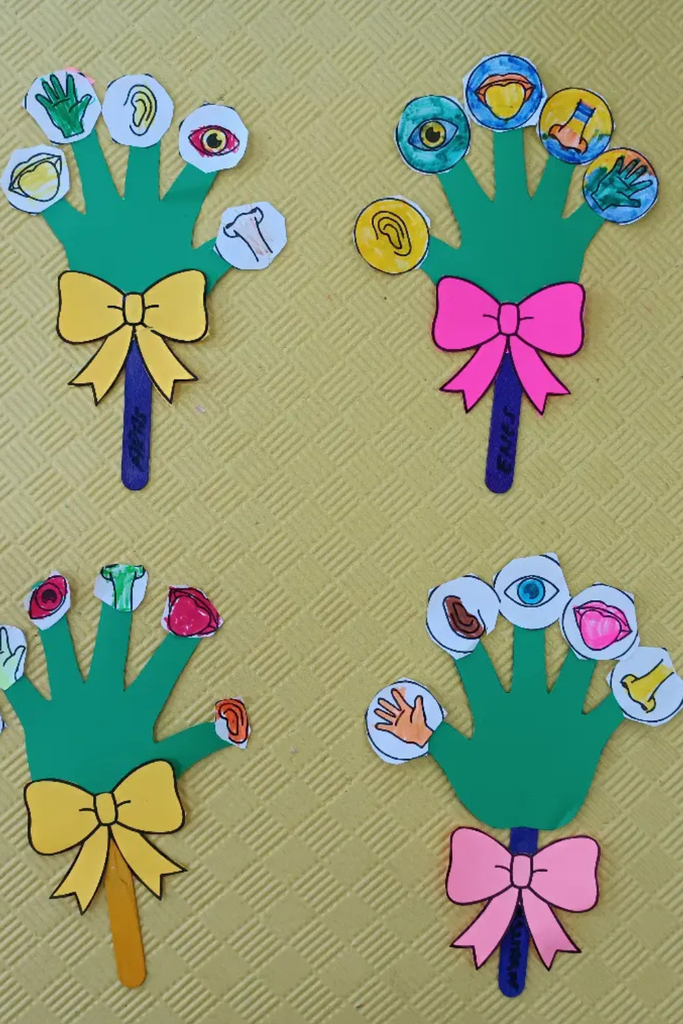
Sense Fingers
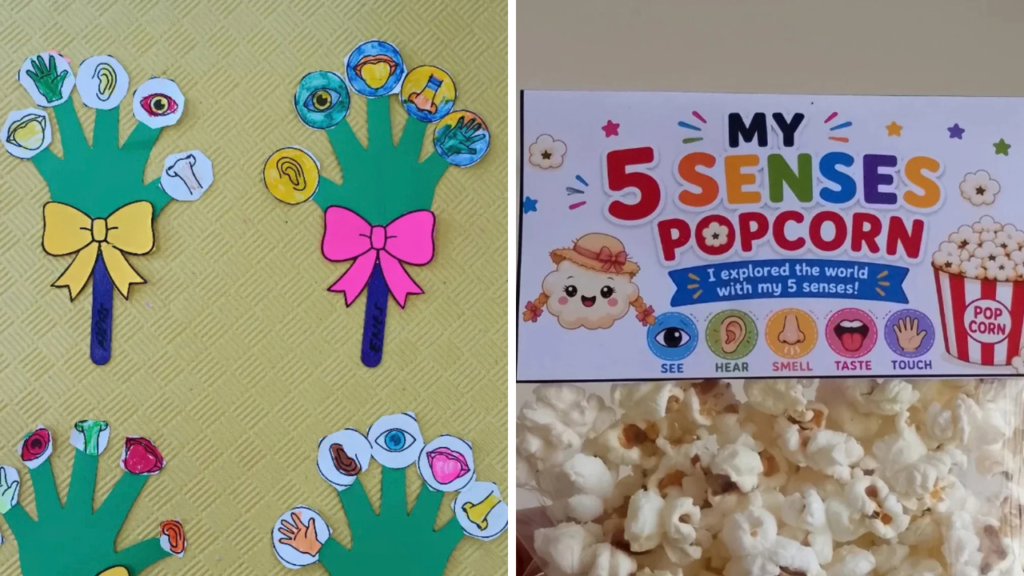
Give each finger a job by turning a painted handprint into a colorful five-senses craft with small picture clues on the fingertips.
Have preschoolers draw or cut out eyes, ears, noses, tongues, and hands, then glue matching symbols onto each finger.
Add a craft-stick handle and display these personalized sense hands during circle time, making review more playful and hands-on.
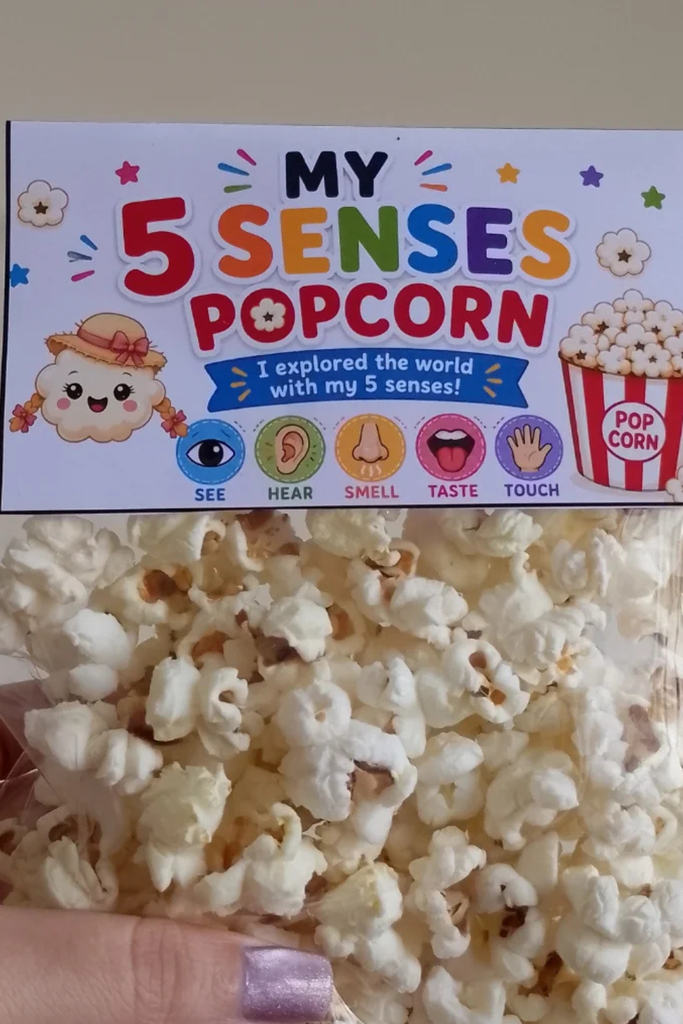
Popcorn Senses
Turn snack time into a five-senses lesson by pairing a small popcorn bag with simple see, hear, smell, taste, and touch prompts.
Add a colorful label showing the five senses, then let children look, listen, smell, taste, and feel the popcorn safely.
Use this idea for classroom take-home favors or a sensory station, while checking allergies and age-appropriate eating needs before serving.
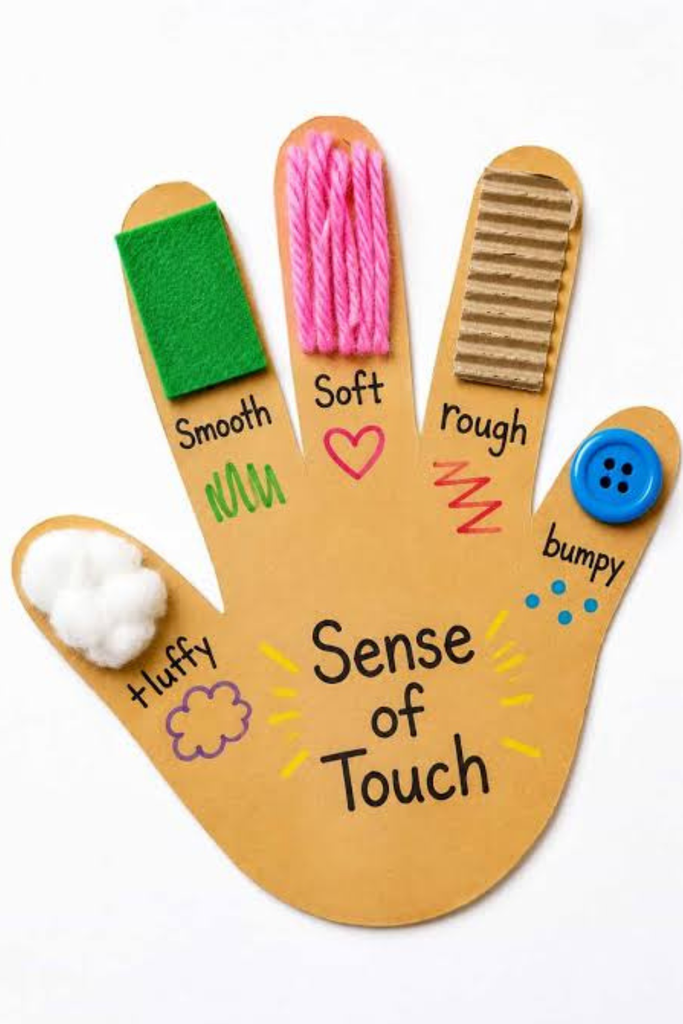
Texture Hand
Let children turn a simple handprint into a texture sampler, giving each finger a different material they can gently feel and describe.
Glue felt, yarn, cardboard, cotton, and a button onto separate fingers, then label them smooth, soft, rough, fluffy, and bumpy.
Keep this craft on a sensory table so preschoolers can compare textures while building touch vocabulary through simple hands-on exploration.
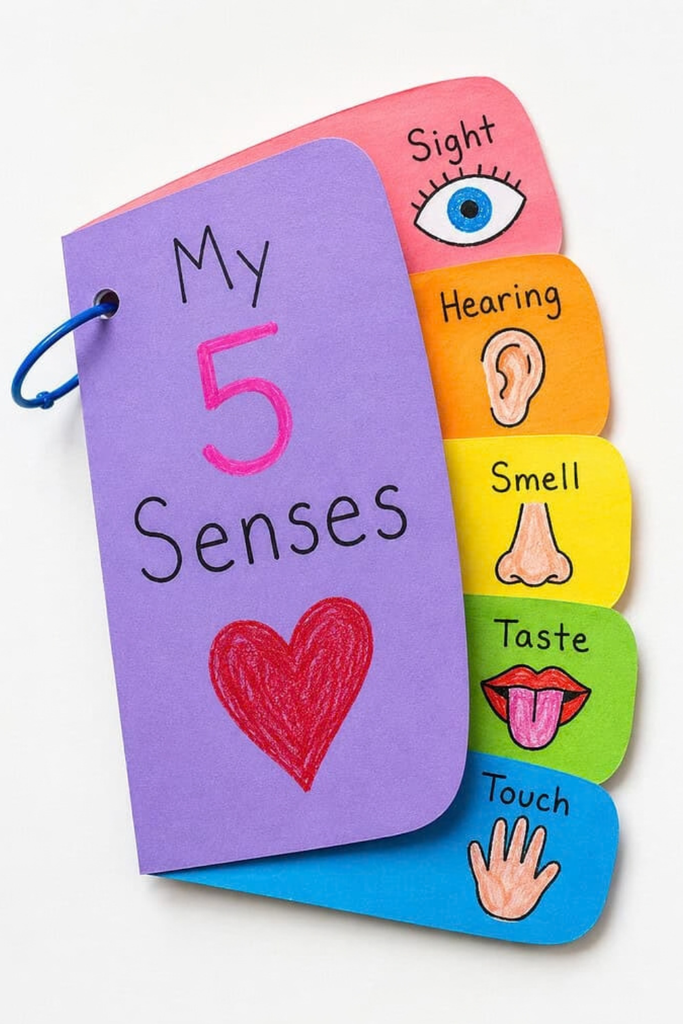
Sense Mini Book
A small flip book gives preschoolers a portable five-senses guide they can make themselves and revisit during lessons or free time.
Cut colorful cardstock into pages, add one sense to each tab, then let children draw the matching body part and clues.
Punch a hole through the pages and secure them with a ring, keeping this little book ready for quick sensory reviews.
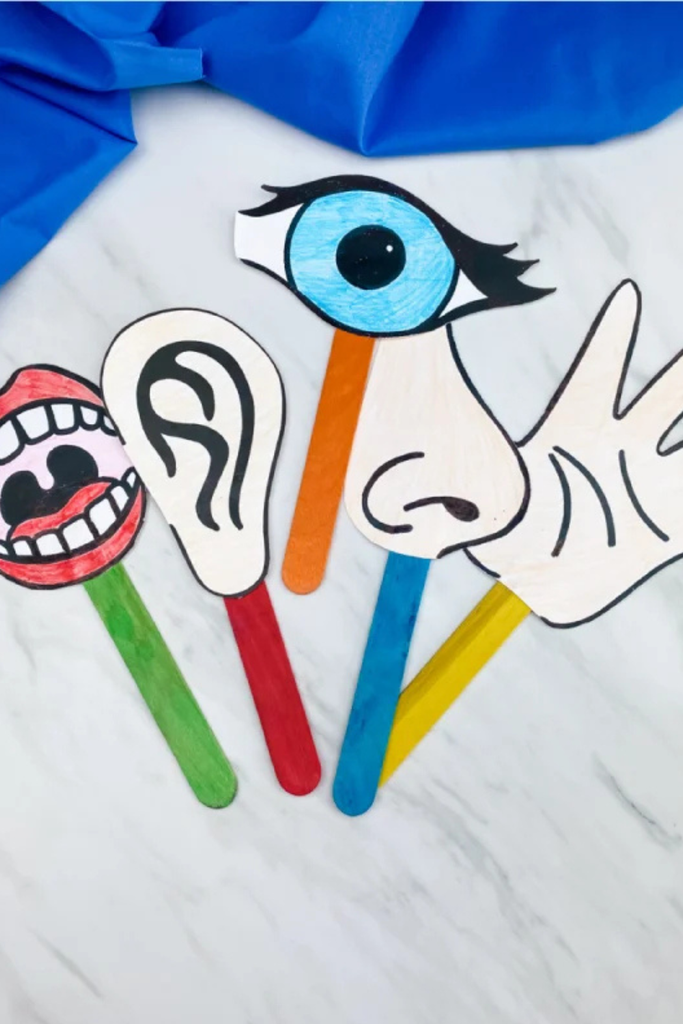
Sense Puppets
Turn each eye, ear, nose, mouth, and hand into a stick puppet for an easy five-senses lesson children can act out.
Let preschoolers color the paper shapes, attach them to craft sticks, then hold each puppet while naming its matching sense.
Use them during circle time or storytelling, asking children to raise the correct puppet whenever you mention something they can see, hear, smell, taste, or touch.
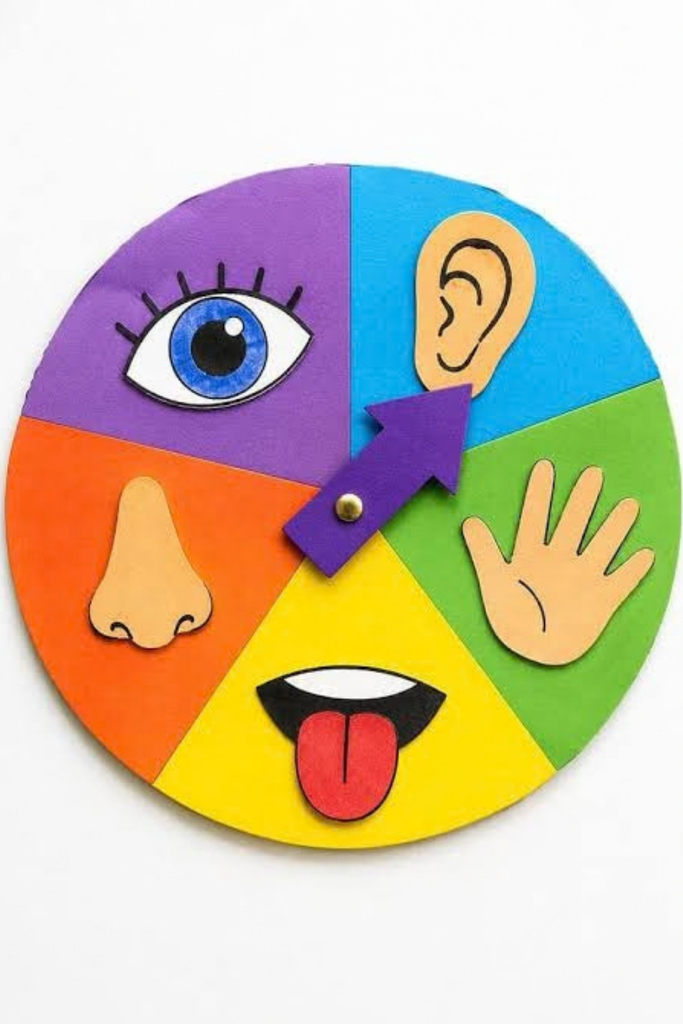
Sense Spinner
Make the review more interactive with a five-section spinner, giving children a chance to identify one sense at a time.
Divide a paper plate into five colored sections, add a matching eye, ear, nose, tongue, and hand, then attach a movable arrow.
During circle time, let each child spin and name an object that connects with the sense the arrow lands on.
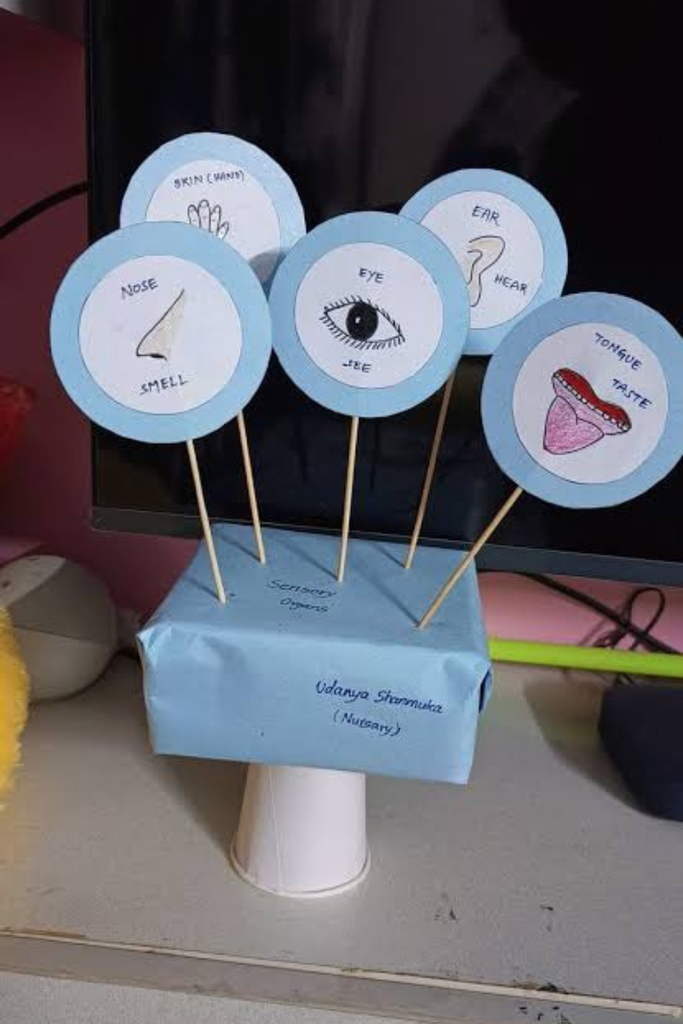
Sense Bouquet
A paper cup can become a five-senses bouquet, turning individual sense cards into a bright classroom display children can help assemble.
Draw each body part on a round card, label its sense, attach wooden sticks, and arrange them inside an upside-down cup.
Place this display on a science table or shelf, then pull out one card whenever you review how each sense works.
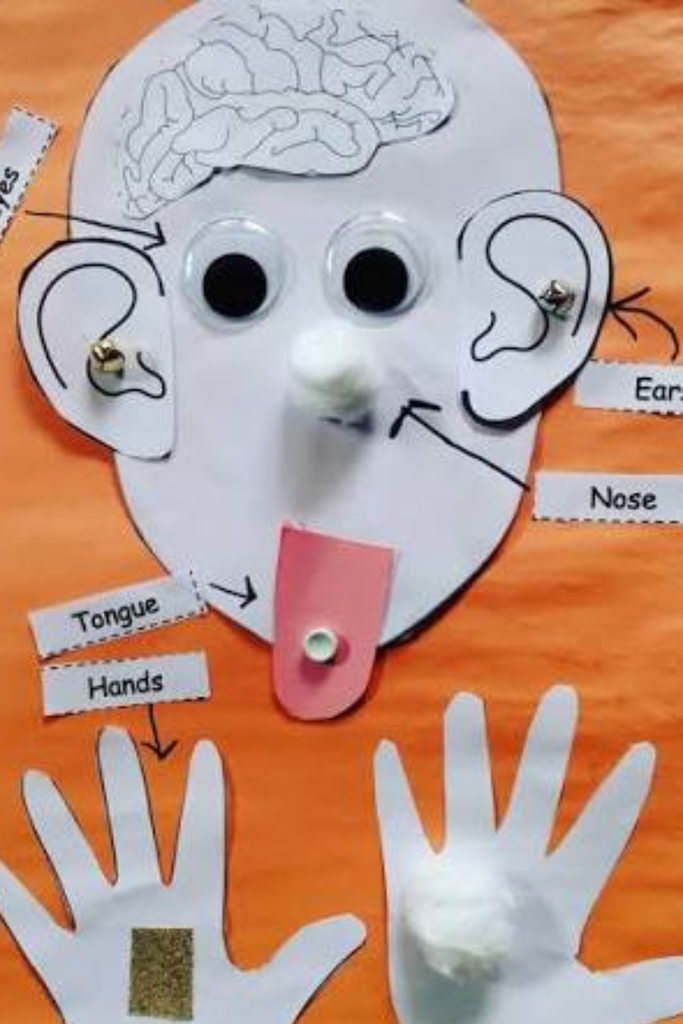
Sensory Face
Give the five senses a face by building the features from mixed textures, making the lesson something children can see and feel.
Use paper for the face, oversized eyes, cotton for the nose, textured scraps for hands, and a movable tongue for extra interest.
Hang it at child height so preschoolers can touch each labeled feature while discussing what their eyes, ears, nose, tongue, and skin do.
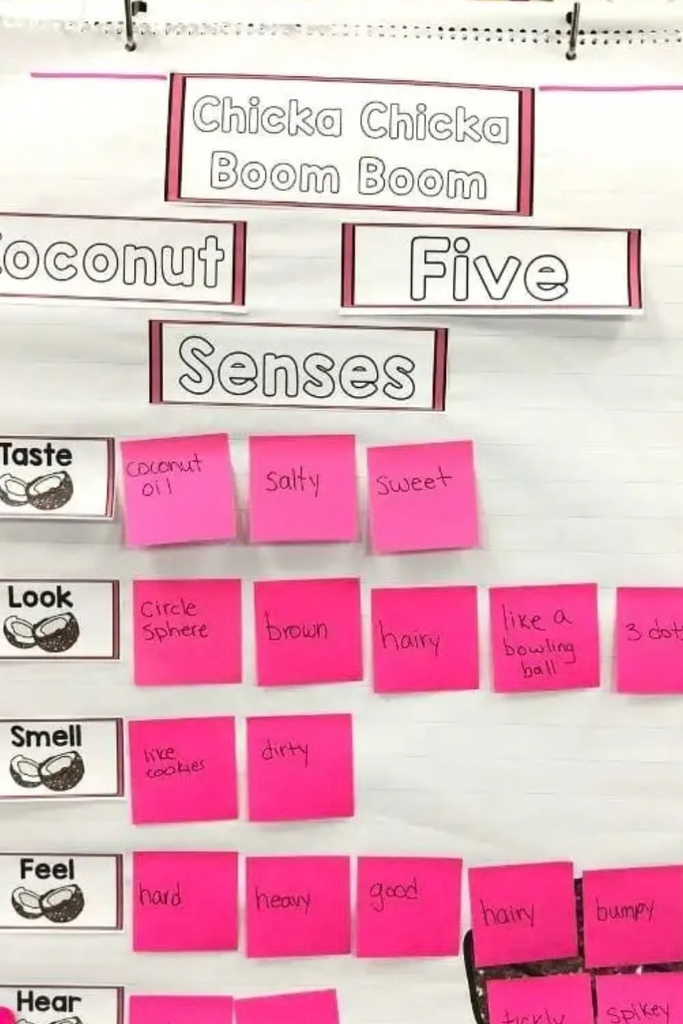
Sense Word Wall
Give your five-senses lesson more conversation by creating a word wall where children add describing words under each sense.
Choose a familiar object, such as coconut, then invite preschoolers to suggest words describing its taste, look, smell, feel, and sound.
Write their answers on colorful sticky notes and keep adding new words throughout the week to build sensory vocabulary naturally.
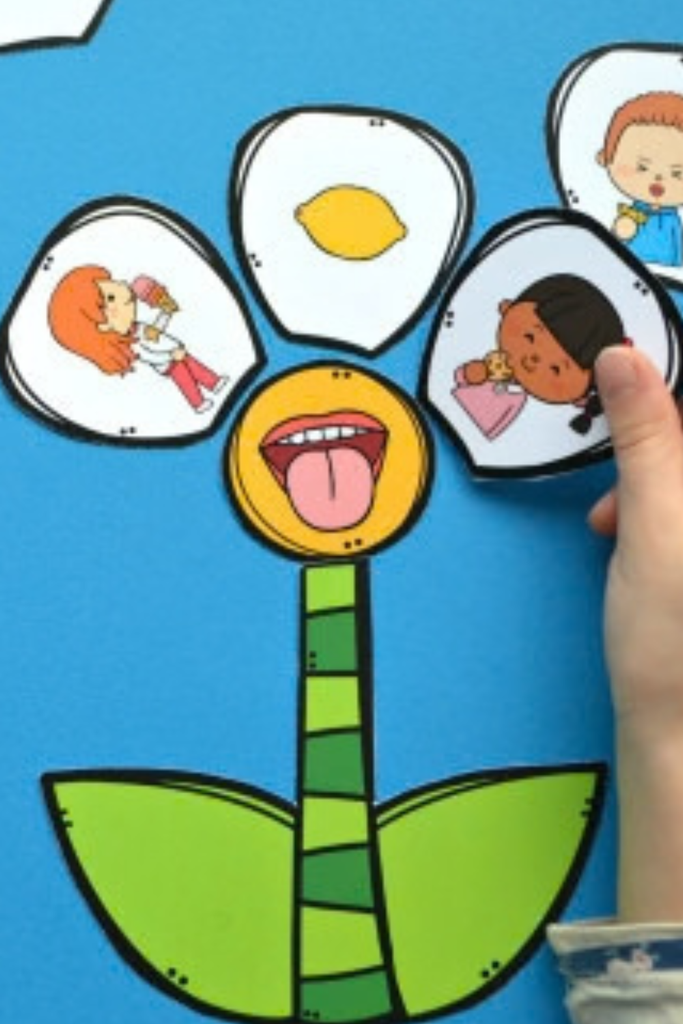
Sense Flowers
Make learning feel like a garden by creating five-sense flowers, with each flower centered around one sense and surrounded by matching picture petals.
Cut flower stems and petals from cardstock, then let children sort and attach pictures of foods, sounds, textures, scents, or sights.
Use these flowers on a classroom wall or activity board, changing the picture petals regularly to keep the matching game fresh.
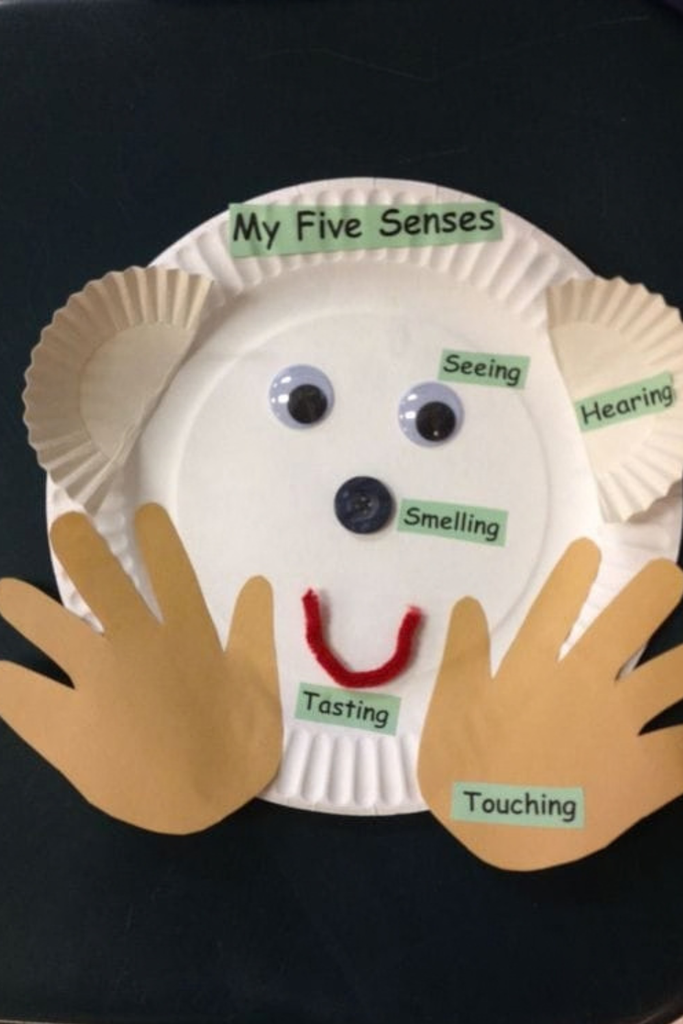
Sense Plate
Turn an ordinary paper plate into a friendly five-senses face, using simple craft materials that preschoolers can easily handle and decorate.
Add googly eyes, a button nose, yarn mouth, and paper hands, then label each feature with its matching sense.
Display it during science lessons or circle time, using each feature to start quick conversations about how children explore their world.
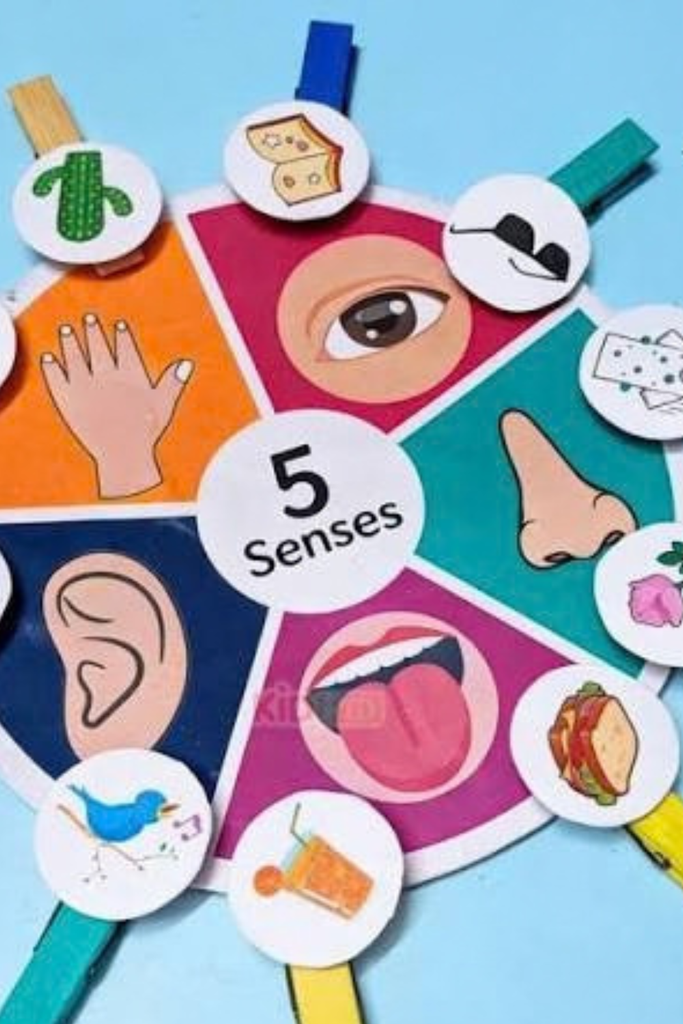
Sense Sorting
Make review time more playful with a five-senses sorting wheel where children match familiar objects to the sense they use.
Divide a paper plate into five sections, add matching sense symbols, and attach clothespins carrying small pictures of foods, sounds, textures, or sights.
Use it for quick classroom challenges, asking children to clip each picture beside the correct sense and explain their choice aloud.
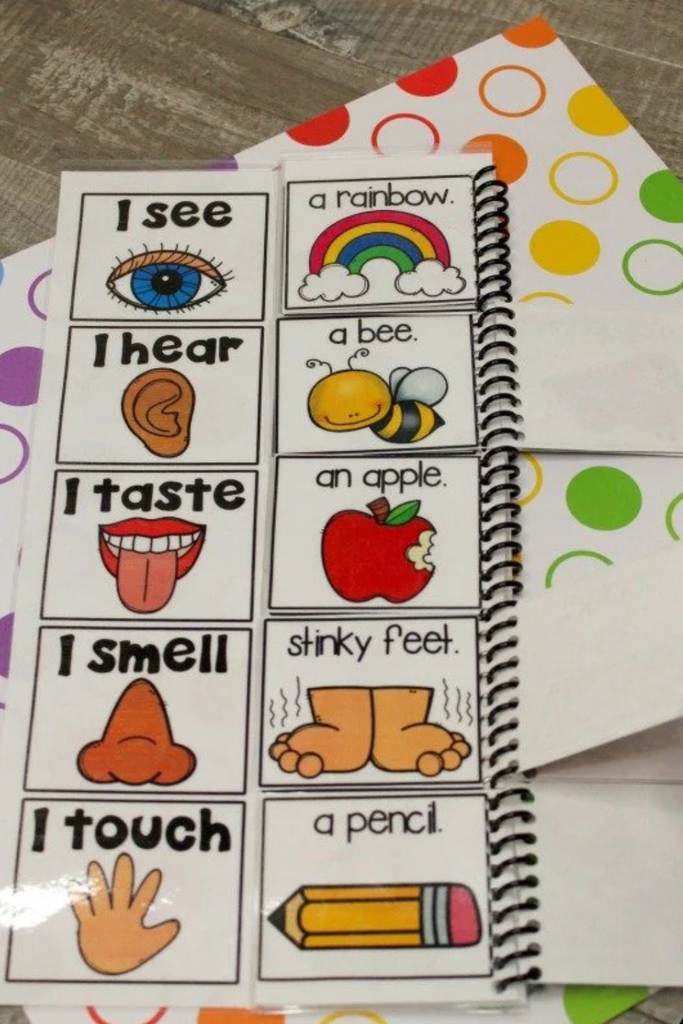
Sense Flipbook
Turn a simple flip book into a five-senses matching activity, giving preschoolers a clear way to connect senses with familiar objects.
Create page for each sense, then add picture cards such as a rainbow for sight, a bee for hearing, or an apple for taste.
Keep it in a classroom reading corner for quick matching practice, encouraging children to explain why each object belongs with its chosen sense.
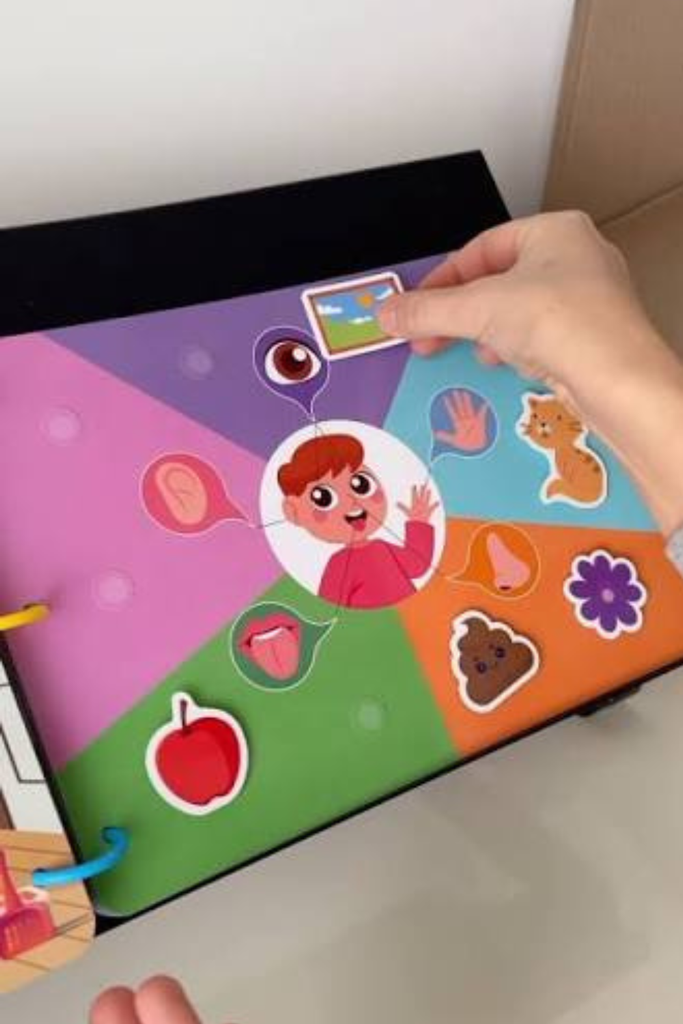
Sense Matching
Turn a colorful five-senses board into a matching game where children place familiar pictures beside the sense they use.
Divide cardstock into five sections, add body-part symbols, then prepare removable pictures such as apples, flowers, cats, hands, and scenery.
Use it during small-group learning, letting each child move one picture while explaining why that sense helps them experience the object.
Sense Flowers
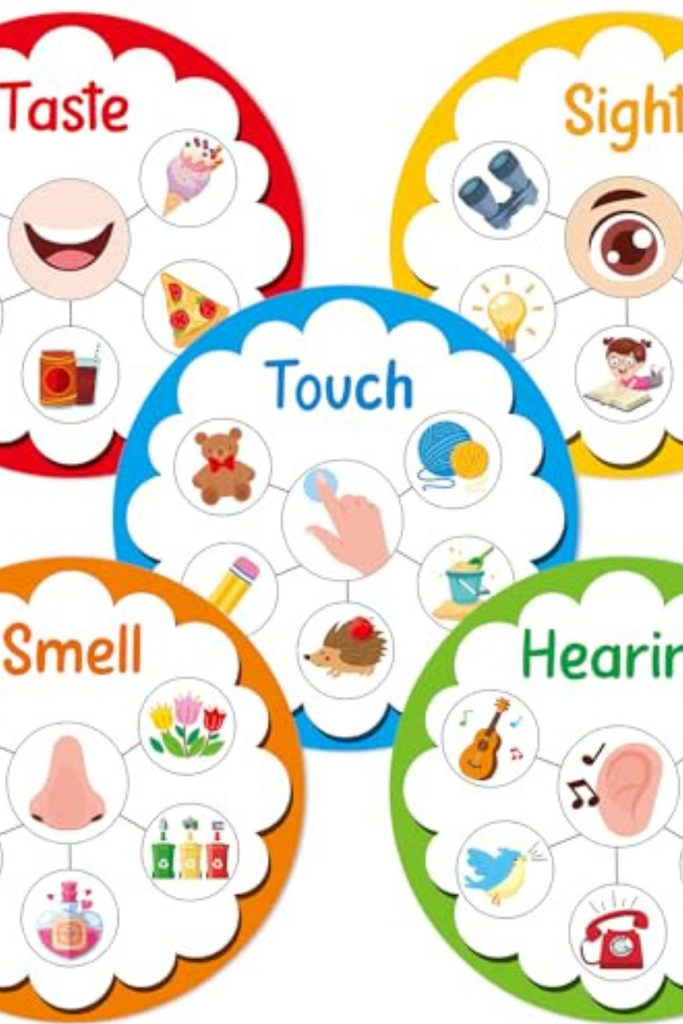
Instead of teaching each sense separately, bring them together with five colorful flower charts that make matching objects quick and visual.
Create one flower for each sense, place the matching body part in the center, then surround it with familiar picture examples.
Use these wall displays or learning cards during review time, asking children to name why each object belongs to its particular sense.
Classroom Easel
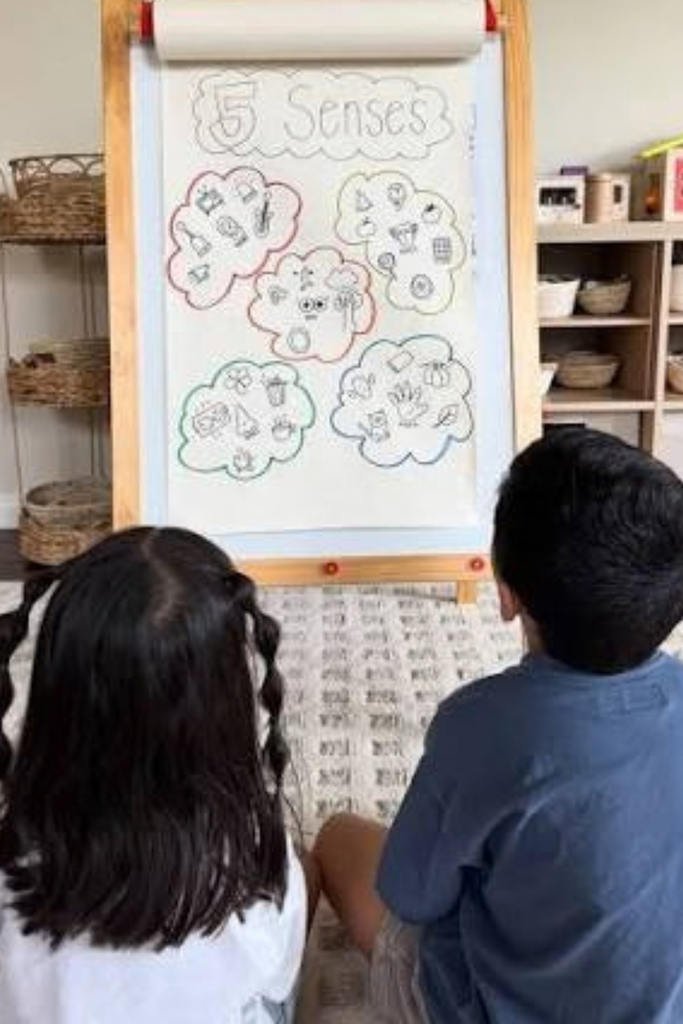
Put the five senses on a classroom easel when you want one clear visual guide for group learning sessions together.
Draw each sense as a simple flower, then invite children to add pictures or words showing what that sense helps them experience.
Keep the chart at child height so preschoolers can point, answer questions, and connect everyday experiences with each sense naturally.
FAQs
How Can I Make Five Senses Crafts More Interactive?
Let children touch, listen, smell, look, and safely taste while making the craft instead of only coloring or gluing paper pieces.
Use familiar objects such as fabric, bells, flowers, colorful toys, or age-appropriate foods to connect each craft with real experiences.
Ask simple questions like “What do you notice?” or “Which sense are you using?” to turn the craft into a learning activity.
What Materials Work Best?
Keep your supplies simple with construction paper, paper plates, cardboard, craft sticks, glue, crayons, yarn, cotton, and fabric scraps.
Add safe texture materials such as felt, smooth paper, corrugated cardboard, or cotton to make touch-based crafts more meaningful.
For smell or taste activities, choose familiar, age-appropriate materials, supervise children closely, and consider allergies before introducing anything new.

Hi, my name is Zeeshan, and I am the founder of The Crafts Geek. I have been passionate about DIY projects, home organization, and creative problem-solving for years. Over time, I realized that simple storage solutions and practical DIY ideas can make a huge difference in how a home looks and functions.