Every time you walk into your garage, you might find yourself wasting a few minutes just looking for one tool and you might notice it quickly turns into 15.
You might not find the screwdriver where you left it, you might see the drill battery dead, and everything might feel piled up like you have no system at all.
If this is happening, it’s not really that you have too many tools, it’s more like you don’t have a setup that can actually work for you.
The good thing is, once you fix your system, you can make your garage easier for you to use instead of avoiding it.
In this article, you will exactly know how you can organize your garage tools the right way.
How To Organize Garage Tools?
If your garage feels messy right now, you shouldn’t start by buying storage, because that’s where you might go wrong.
You should first take everything out. Yes, you should take everything out.
When you see all your tools in one place, you will quickly notice what you actually use and what is just taking up your space.
Next, you should sort your tools into simple groups.
You should keep hand tools together, you should keep power tools in one place, and you should place long tools like rakes or shovels in another section.
If you skip this step, you will end up mixing things again, and the mess can come back fast.
Now you should think about access. The tools you use the most should be the easiest for you to grab.
You can mount them on a wall, you can hang them on a pegboard, or you might keep them in an open rack.
If you hide everything in boxes, you will keep digging through them every time, and it will waste your time.
You should use vertical space as much as you can. Walls can be your best friend in a garage.
You can install hooks, you can add shelves, or you can use racks so your floor stays clear. When your floor stays clean, your garage will instantly feel more organized.
Finally, you should give everything a fixed spot. If a tool doesn’t have a home, it will end up anywhere in your garage.
Once you decide where things should go, you must stick to it. That’s how you can keep your garage organized for the long term.
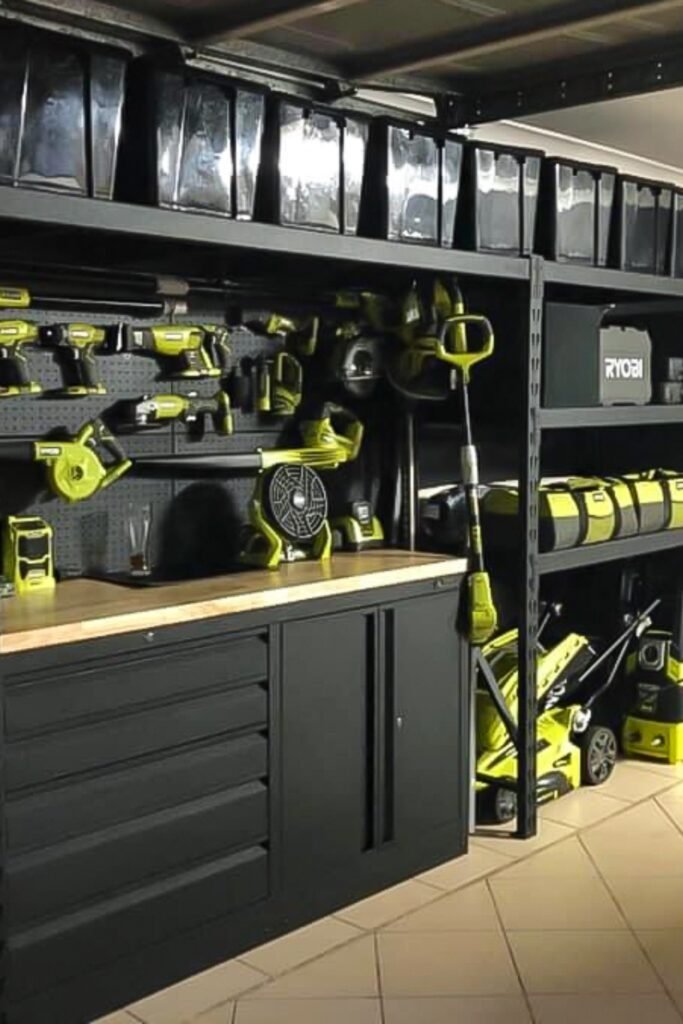
Modular Tool Wall
If your tools keep spreading all over your garage, you can fix that by creating a dedicated zone for everything.
You should use a strong rack with a pegboard for daily tools, cabinets below to hide clutter, and labeled bins on top for items you rarely use.
If you keep heavy machines on lower shelves, you can grab them easily and store them safely without effort.
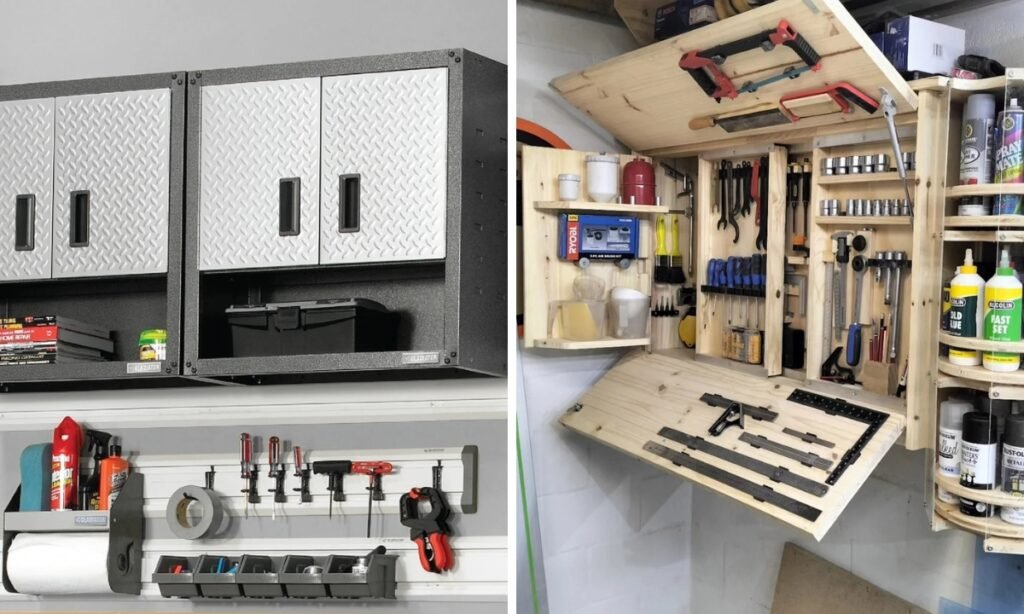
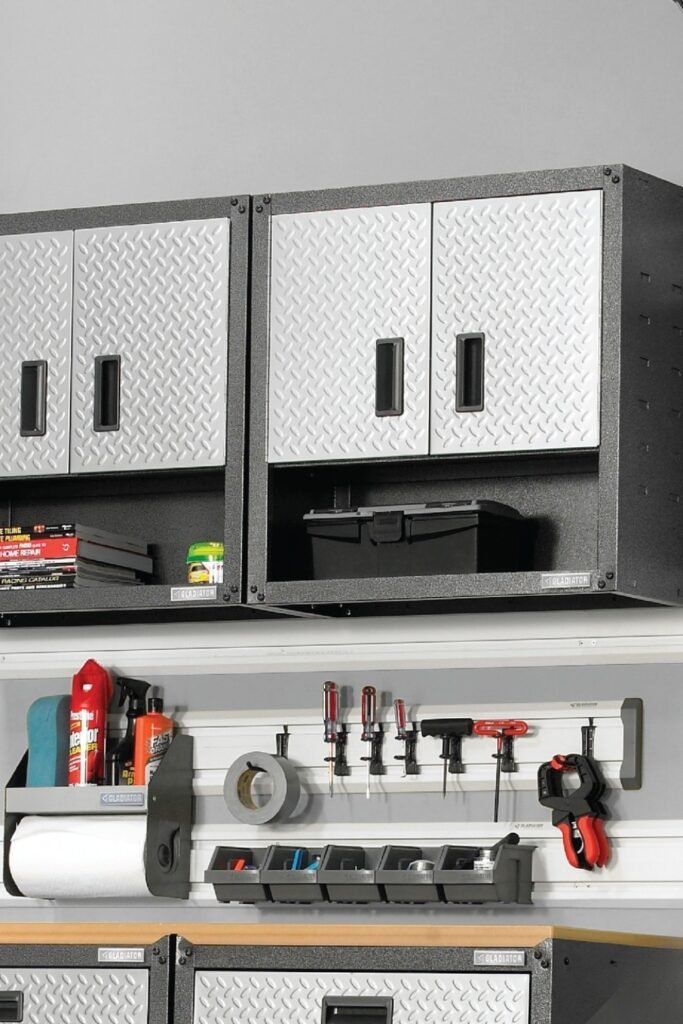
Wall Rail System
If your small tools keep disappearing in drawers, you can bring them right in front of you with this setup.
You should install a wall rail system and hang hooks, bins, and holders for each tool type.
If you keep screwdrivers, tape, and pliers near your workbench, you can reach them instantly.
When you add upper cabinets, you can store extra items without cluttering your space.
Ceiling Storage Lift
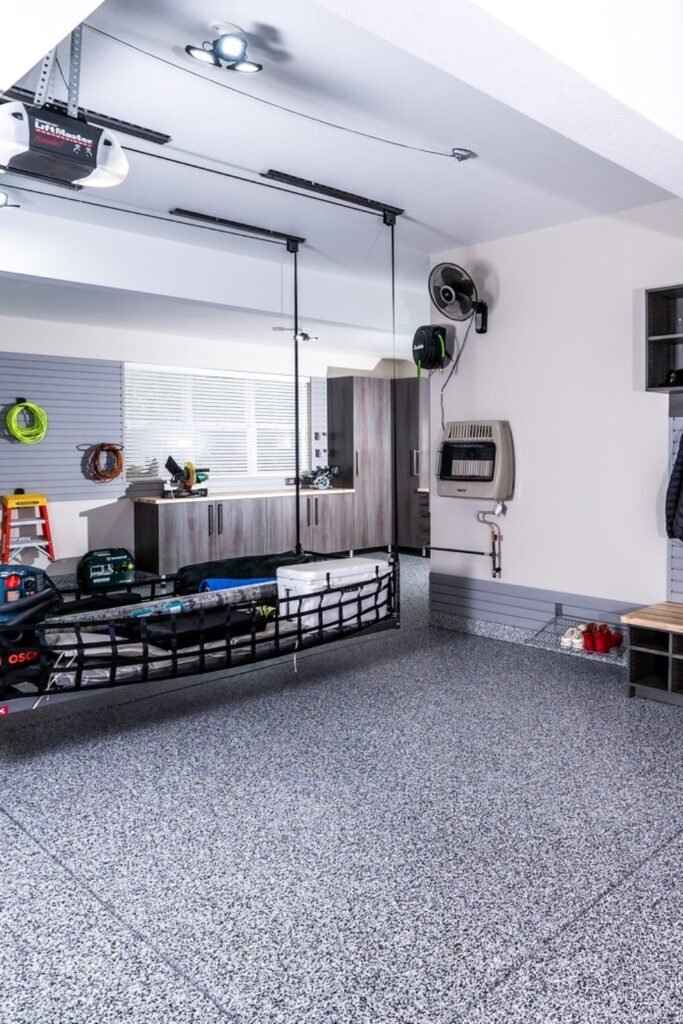
If your garage floor fills up too quickly, you can free that space by using overhead storage.
You should install a ceiling-mounted lift to store bulky tools and seasonal items above you.
If you don’t use them daily, you can still keep them nearby without blocking your floor. When you lower it only when needed, your garage stays open and easy to move in.
Fold-Down Tool Cabinet
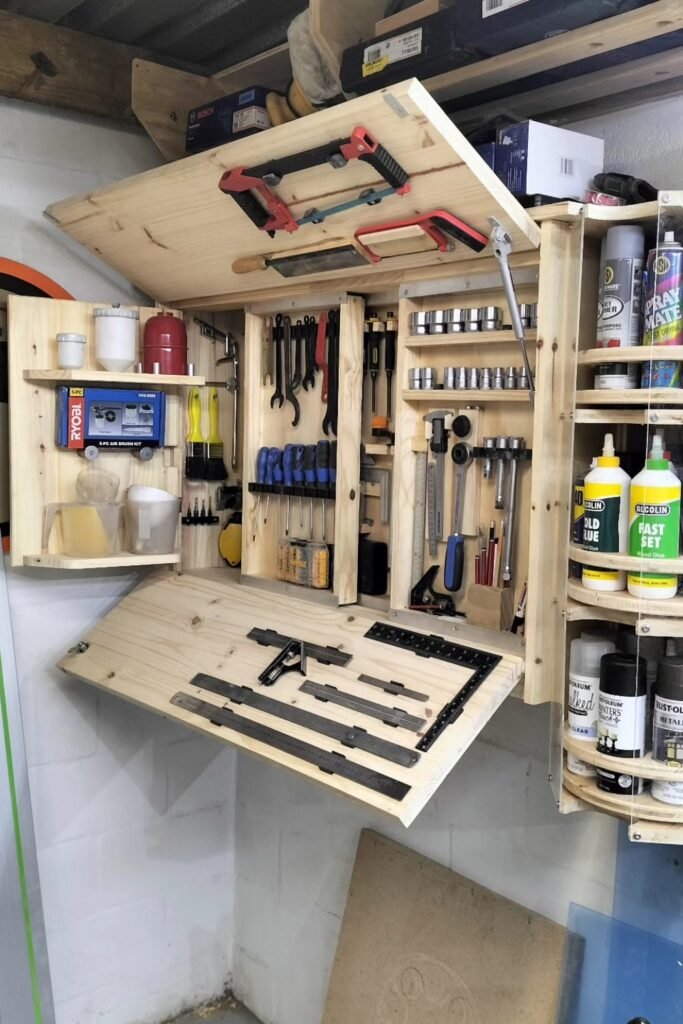
If you’re working in a tight space, you can combine storage and workspace in one smart setup.
You should build a wall-mounted cabinet with fold-down panels to store tools inside and use as a work surface.
If you keep frequently used tools inside the doors, you can access them quickly.
When you place measuring tools on the fold-out panel, you can work without extra clutter.
Pegboard Tool Layout
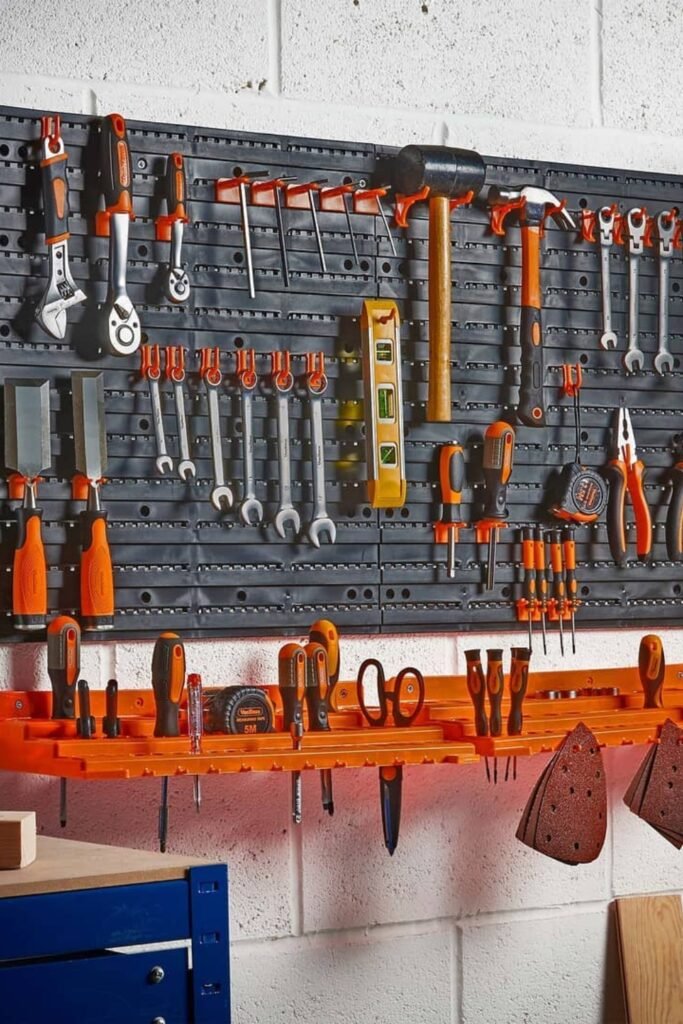
If you’re tired of searching through drawers, you can fix that by putting everything in plain sight.
You should mount a pegboard and group tools by type so everything stays organized.
If you keep wrenches together, screwdrivers in one row, and pliers in another, you can find them faster.
When you place frequently used tools at eye level, your workflow becomes smoother.
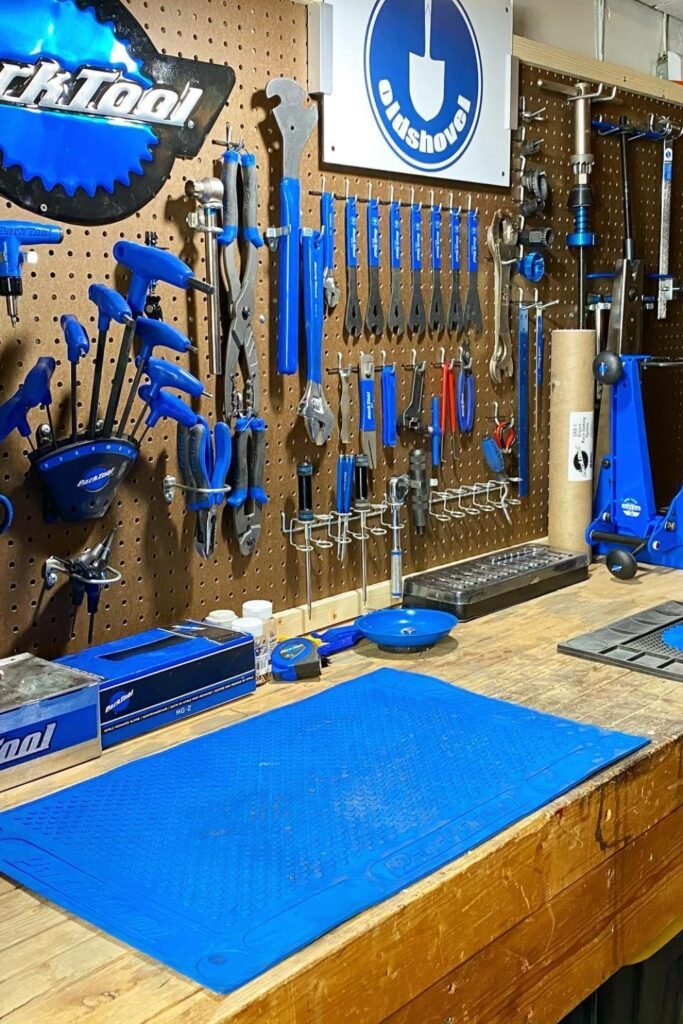
Workbench Pegboard Setup
If your workbench keeps turning messy during projects, you can control it with a smart wall setup.
You should install a pegboard above your bench and organize tools based on how you use them.
If you keep precision tools close, you can work faster and cleaner. When you add a clear workspace below, you won’t need to constantly move things around.
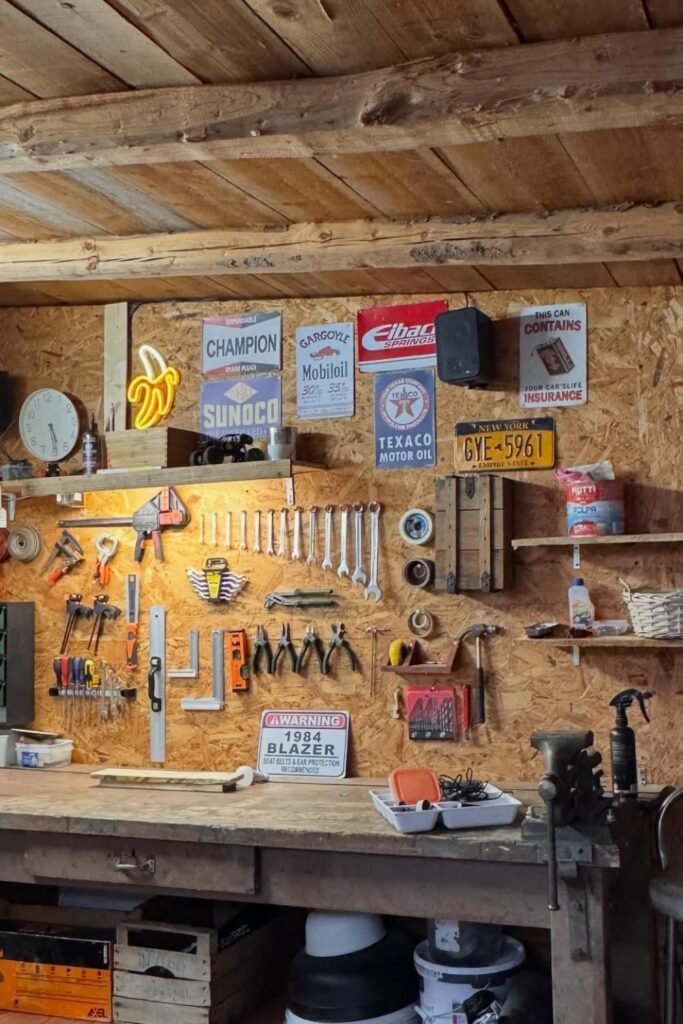
Rustic Wall Setup
If you prefer a simple and natural look, you can keep your garage practical with a wooden wall setup.
You should mount tools directly on wood using hooks and small shelves so everything stays visible.
If you line up similar tools together, you can avoid confusion. When you add a shelf above, you can store small items without making things complicated.
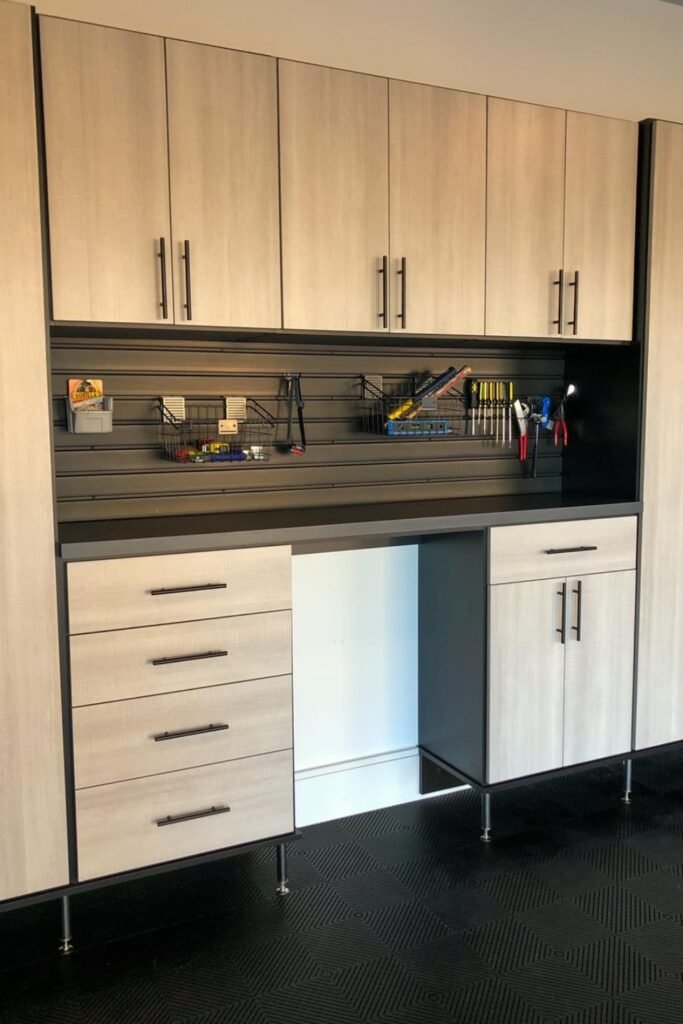
Cabinet Workstation Setup
If you want a clean garage without visible clutter, you can hide everything while keeping it accessible.
You should use upper cabinets for storage, drawers for small tools, and a wall rail for daily items.
If you prefer a neat appearance but still need functionality, this setup gives you both. When everything has a place, your garage stays easy to maintain.
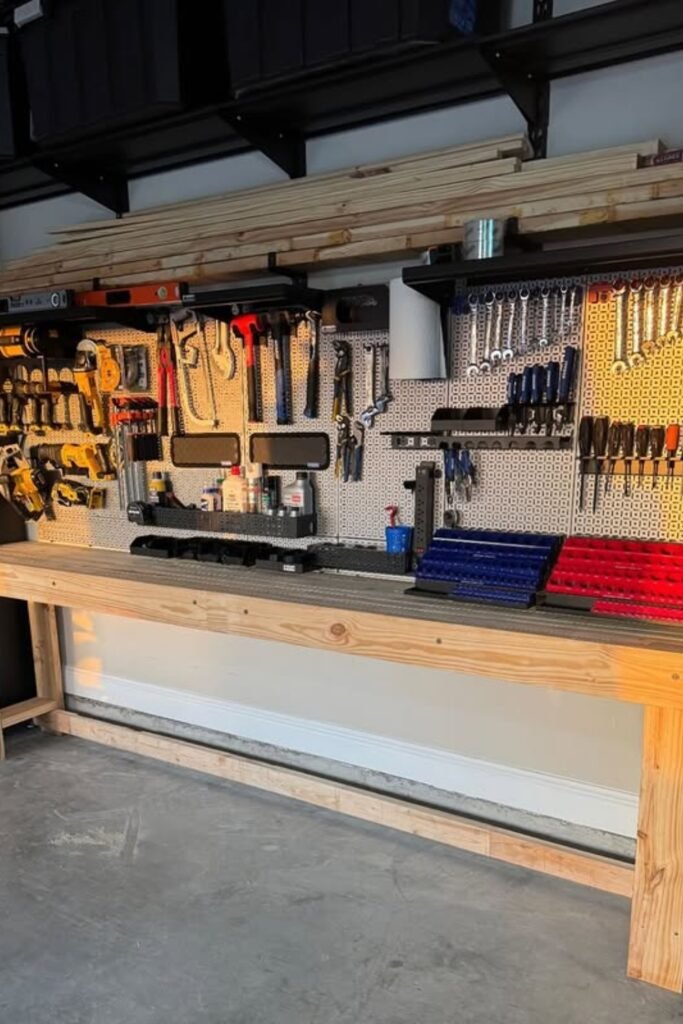
Workbench Tool Wall
If your workbench gets messy mid-project, you can stop that with a structured tool wall.
You should use a pegboard behind your bench and group tools by usage, like cutting tools in one zone and measuring tools in another.
If you add small bins for screws and bits, they won’t scatter. When your surface stays clear, you always have space to work properly.
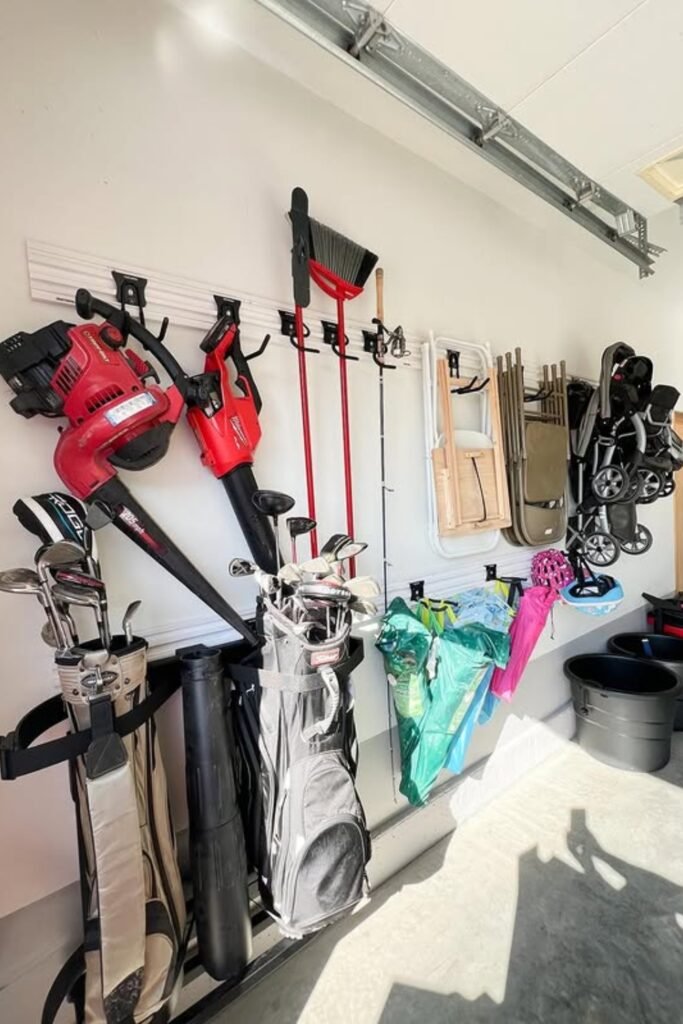
Wall Hook Storage
If bulky tools are taking over your garage floor, you can free up space quickly with wall hooks.
You should install a heavy-duty wall track and hang items like blowers, bags, and foldable chairs vertically.
If you keep heavier items lower and lighter ones higher, you can stay safe and organized. When everything is off the floor, your garage instantly feels bigger.
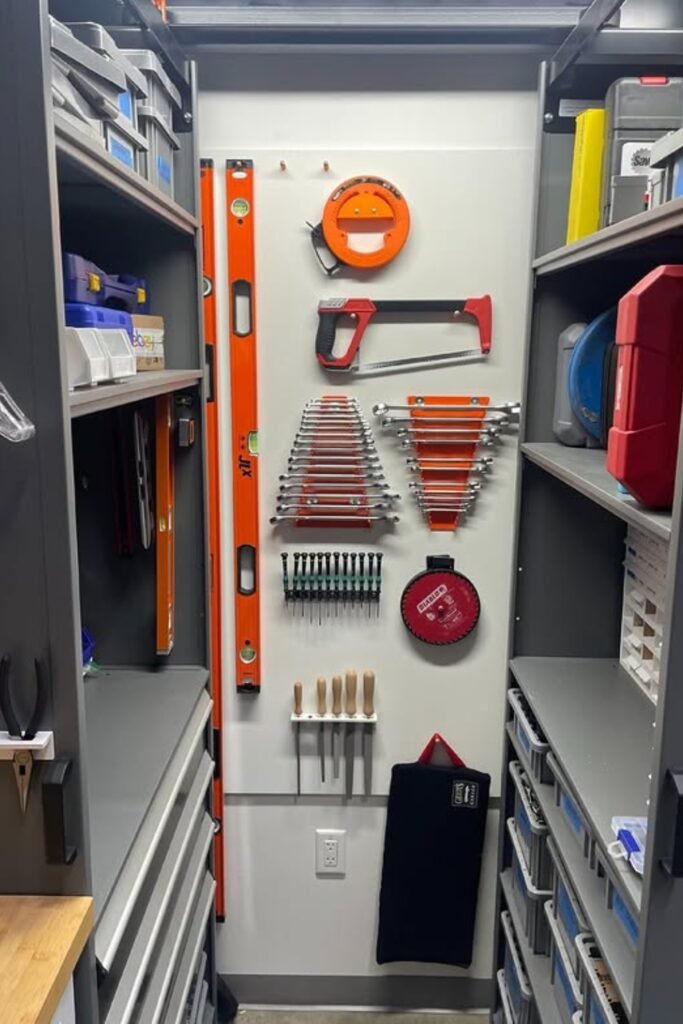
Narrow Wall Storage
That empty strip between shelves is actually wasted space if you ignore it, but you can turn it into a smart vertical tool zone.
You should mount hooks or a slim board so you can store flat tools like levels, saws, and wrenches neatly.
If you align items by size, nothing will overlap or get messy.
This works best when you have tight storage areas and you still need quick access without blocking shelves or walkways.
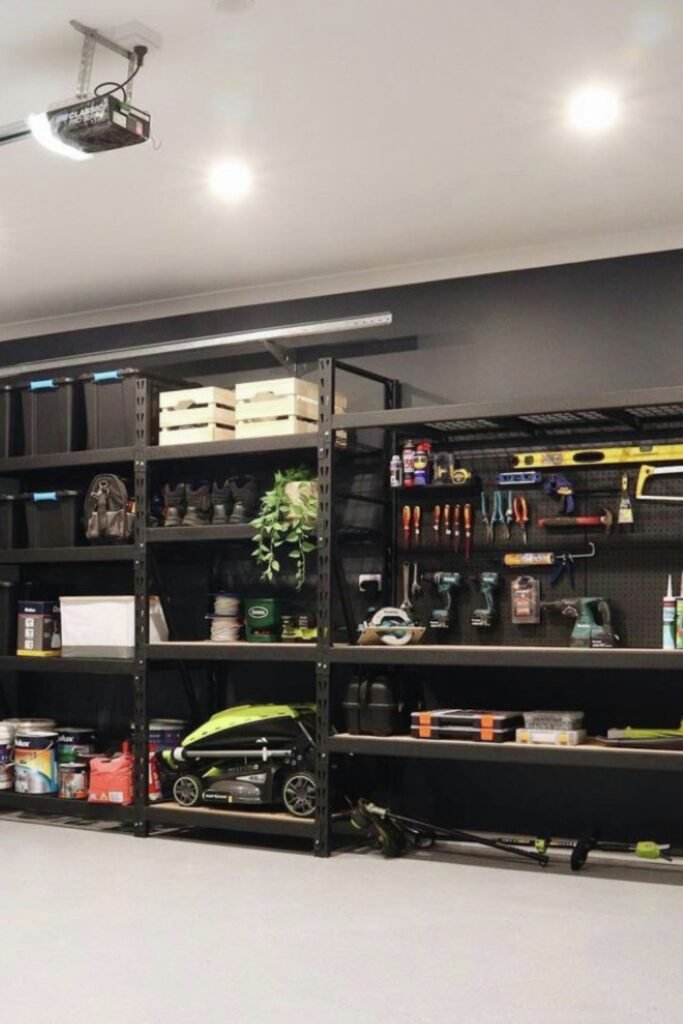
Open Shelf System
If your tools keep disappearing into boxes, you can fix that by switching to open storage.
You should use open metal shelving so you can see everything instantly and grab what you need without delay.
If you assign each shelf a purpose like power tools on one and supplies on another, you can stay more organized.
When you add bins for small items, you can prevent them from getting lost.
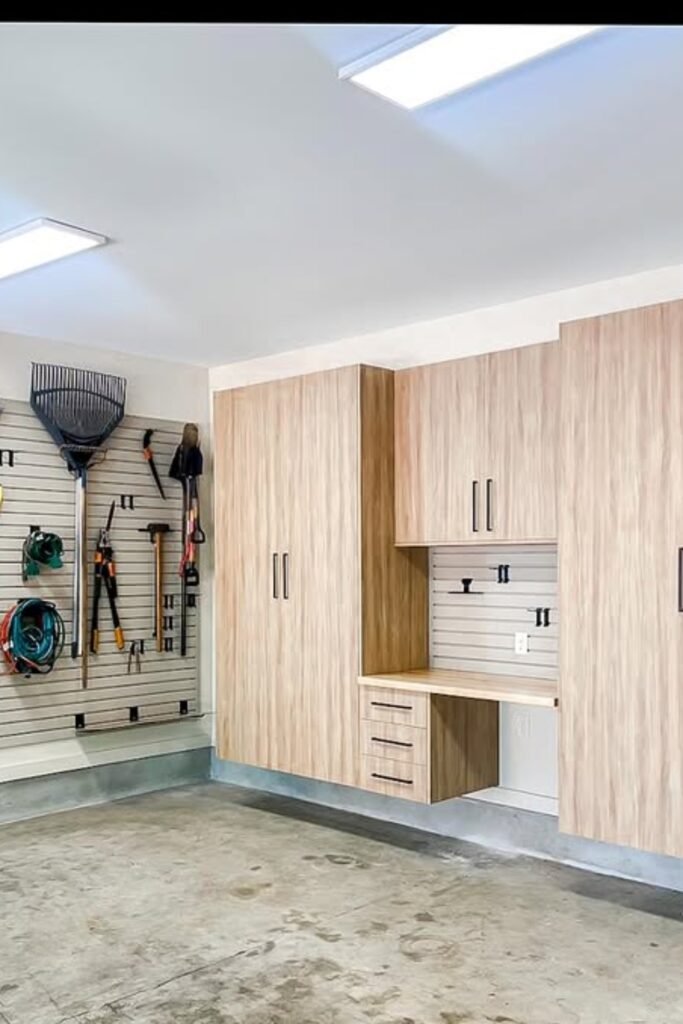
Slatwall Storage System
If your garage walls feel empty or unused, you can turn them into flexible storage with slatwall panels.
You should install hooks and holders that you can move anytime your needs change. If you hang ladders, rakes, and cords properly, you can avoid clutter.
When you keep frequently used tools at chest height, you can access them faster without wasting space.
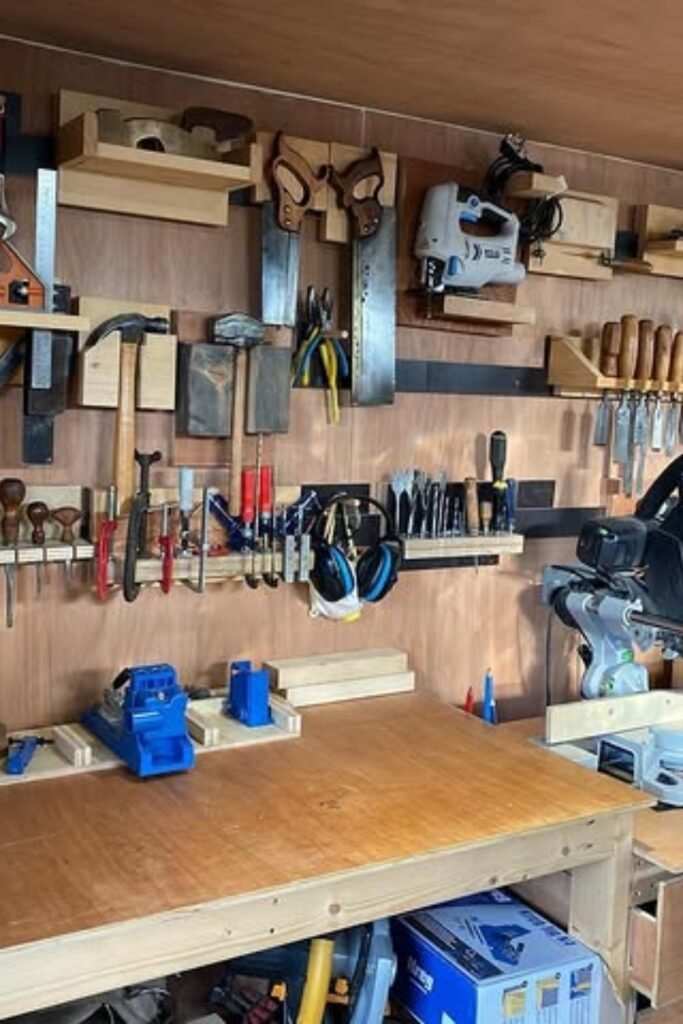
Custom Wood Tool Wall
If standard racks don’t fit your tools properly, you can take full control by building your own system.
You should create wooden holders and shelves based on each tool’s exact size.
If you keep frequently used tools within arm’s reach, you can work more efficiently.
When you place heavier machines near your bench, you can handle them more safely and easily.
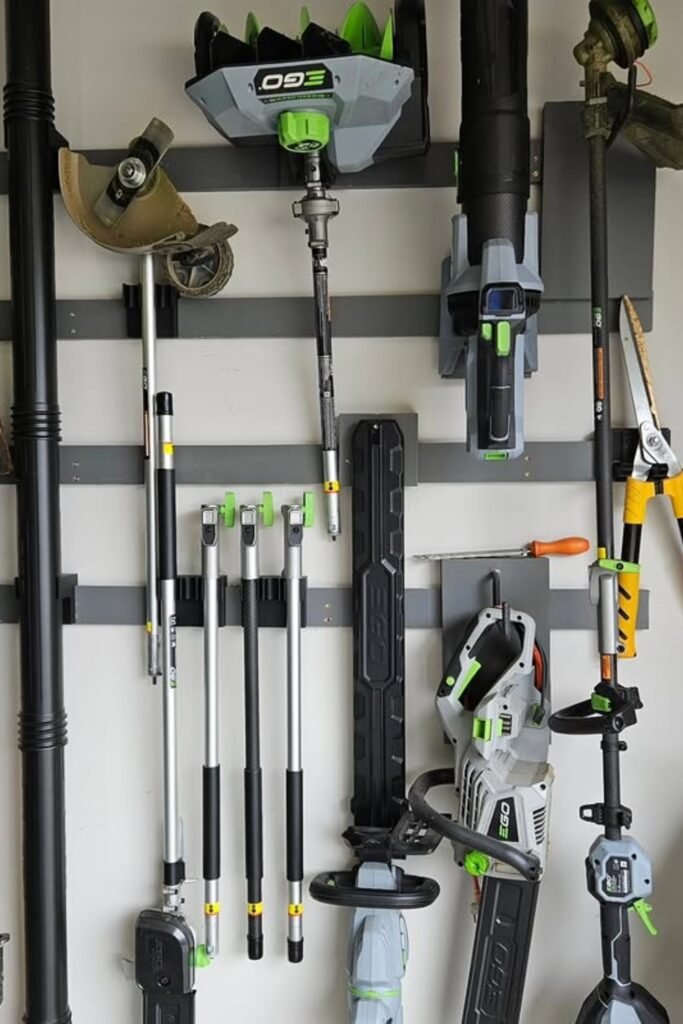
Vertical Tool Rack
If long tools always end up in a messy pile, you can fix that by storing them upright.
You should use wall strips or slatwall clips to hold trimmers, blowers, and long handles in place. If you space them properly, they won’t tangle or fall.
When you organize garden tools this way, you can grab what you need without wasting time.
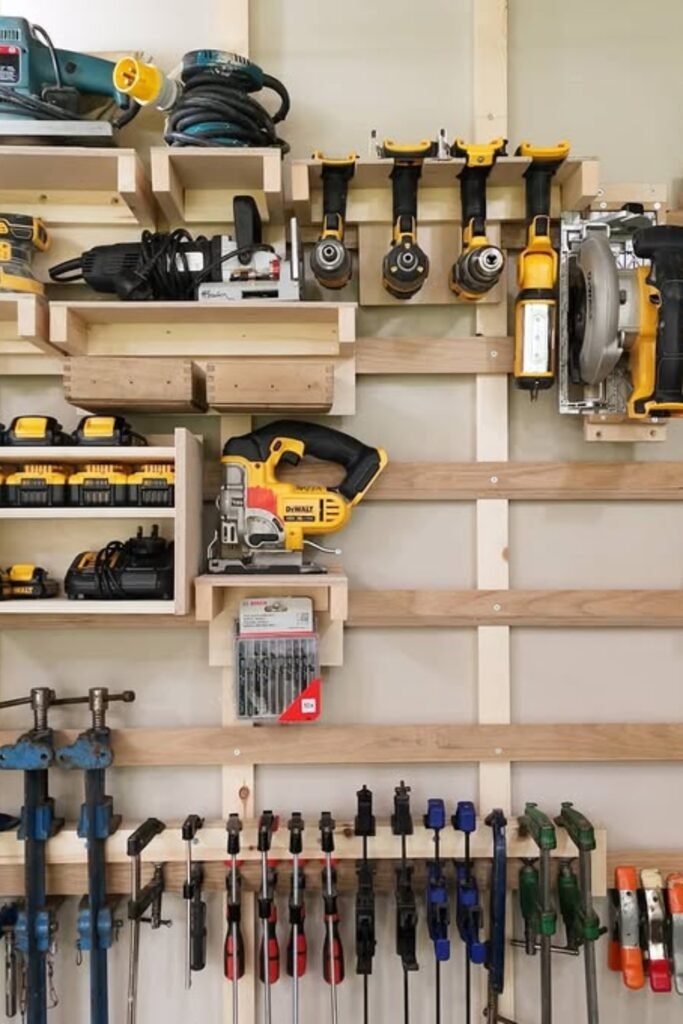
Power Tool Station
If your power tools are scattered and batteries are always missing, you can solve that with a dedicated station.
You should build a wall-mounted setup with slots for drills and a shelf for chargers.
If you keep all batteries in one place, you will always know where they are. When everything is charged and ready, you can start work without delay.
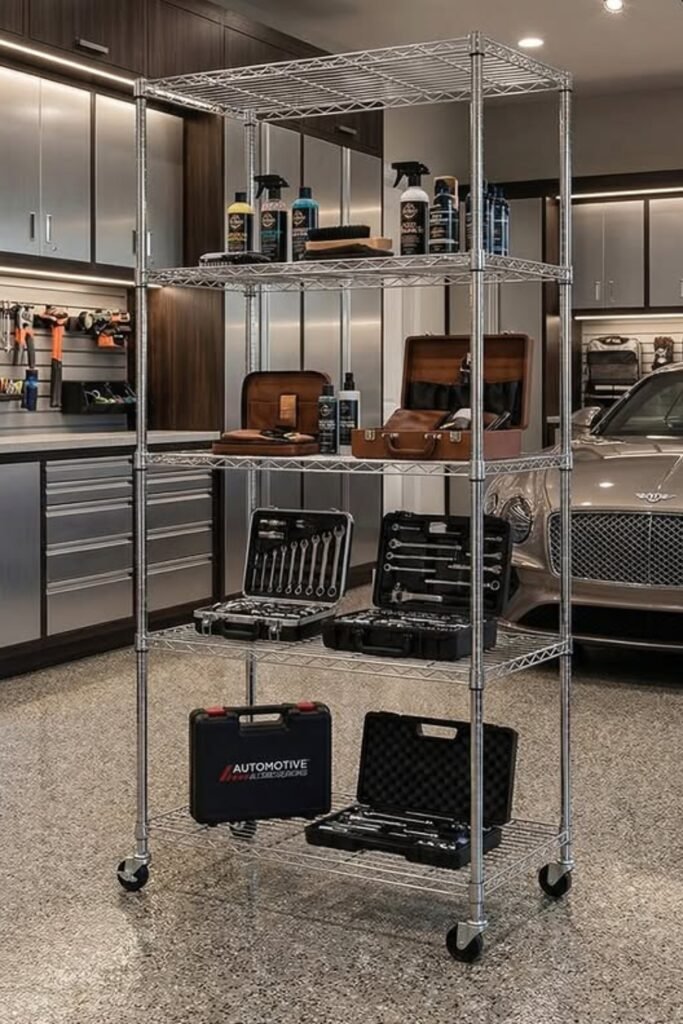
Rolling Storage Rack
If you keep moving between different projects, you can make your workflow easier with a mobile setup.
You should use a rolling rack with tiered shelves so you can separate toolkits, supplies, and small equipment.
If you keep frequently used items at waist level, you can access them quickly. When you move it around your garage, you can save time and effort.
Wire Rack Organizer
If small tools keep disappearing into drawers, you can fix that with a simple visible setup.
You should use a wire rack so you can hang tools underneath and place small items on top.
If you use basic materials, you can build it quickly without complexity. When you keep everything visible, you won’t waste time searching.
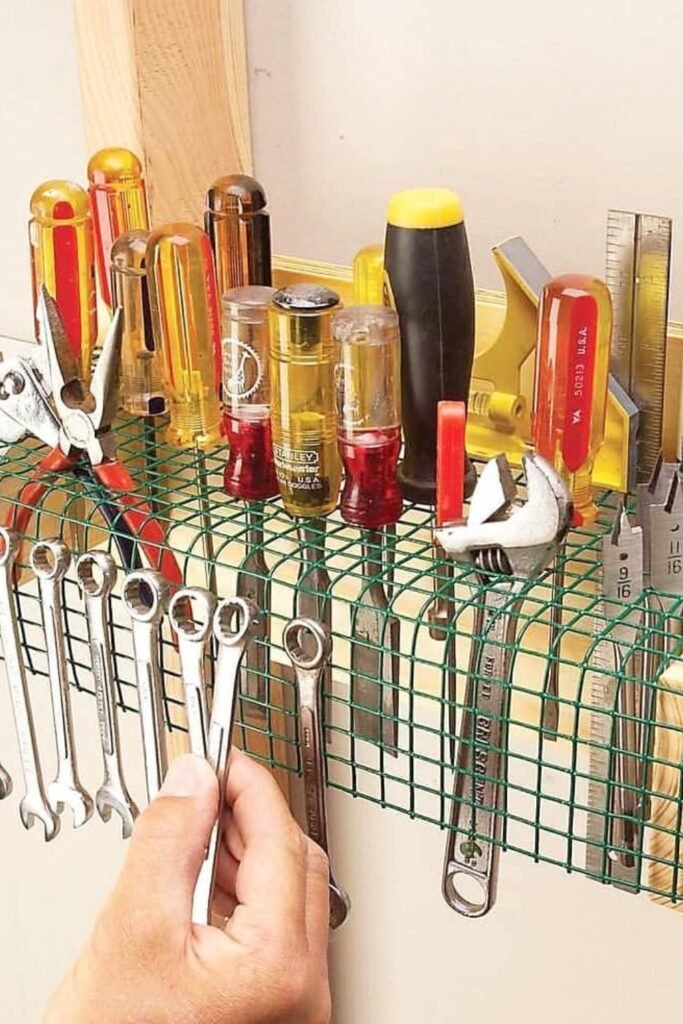
Full Wall System
If your garage never feels fully organized, you can solve it by using every part of your wall space.
You should combine slatwalls, hooks, cabinets, and shelves so every tool has its own zone.
If you keep daily tools near your workbench, you can work faster. When you store extras higher or to the side, you can keep your main space clear.
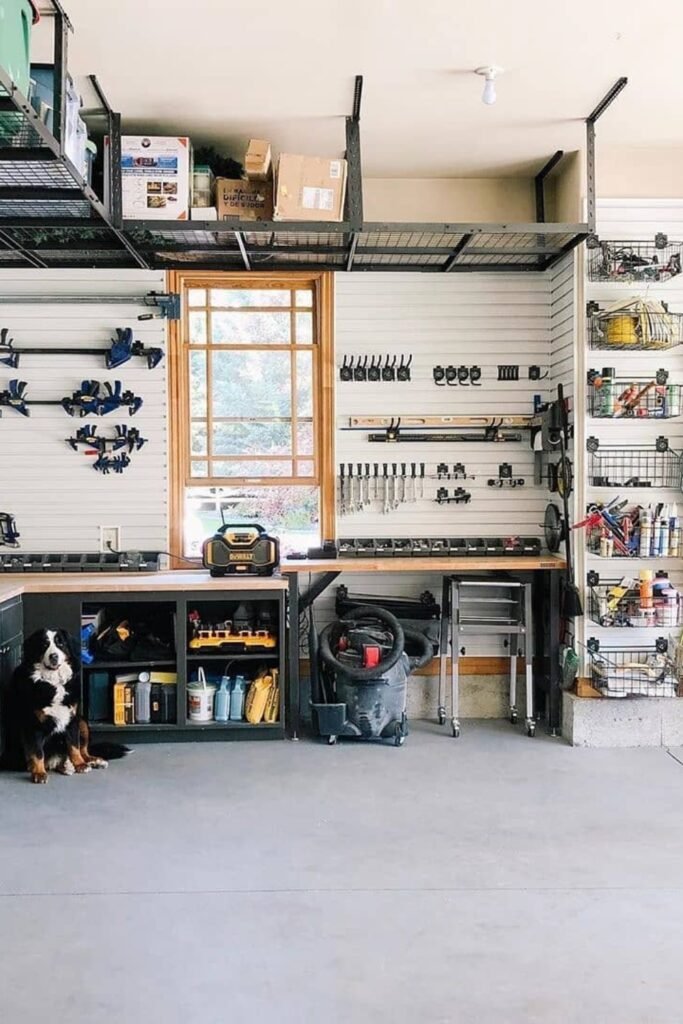
Organized Pegboard Grid
When tools start overlapping, you lose time and focus, but you can fix that with a grid layout.
You should space hooks evenly so each tool has a clear spot. If you align tools by size, nothing will block anything else.
When you keep measuring tools on the sides and daily tools in the center, you can quickly scan and find everything.
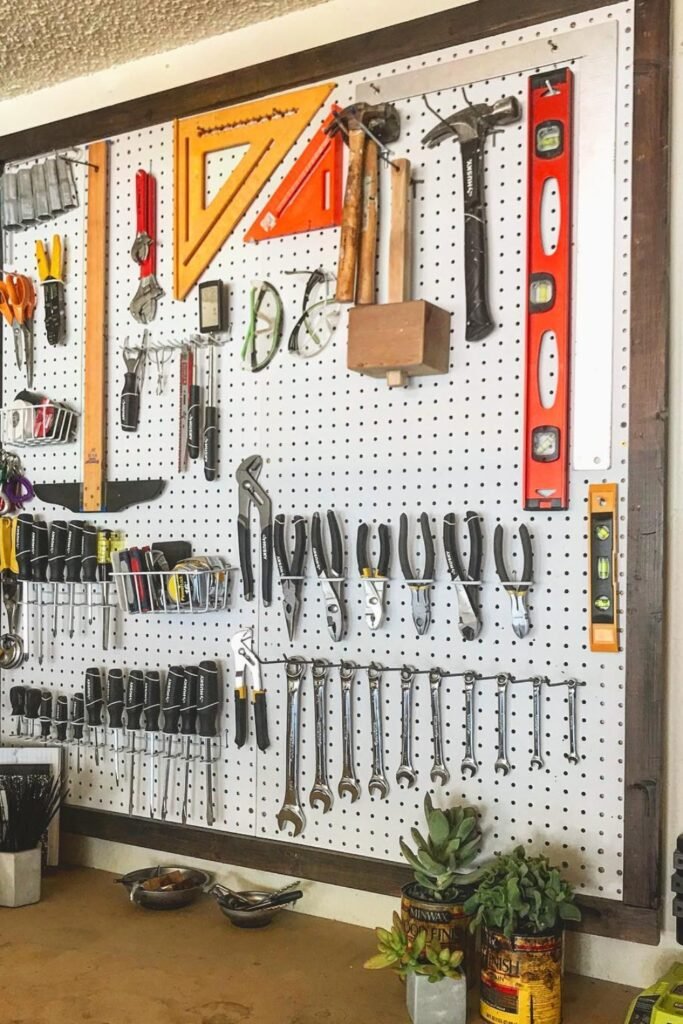
Labeled Storage System
If you keep opening boxes just to find one thing, you can stop that frustration with a proper labeling setup.
You should use labeled bins on upper shelves for items you rarely use, and you can keep clear drawers below for small parts so you always see what’s inside.
If you place tools on pegboards in the middle, you can create levels where everything has a fixed spot.
This works best when you want a system where you always know exactly where things are without searching.
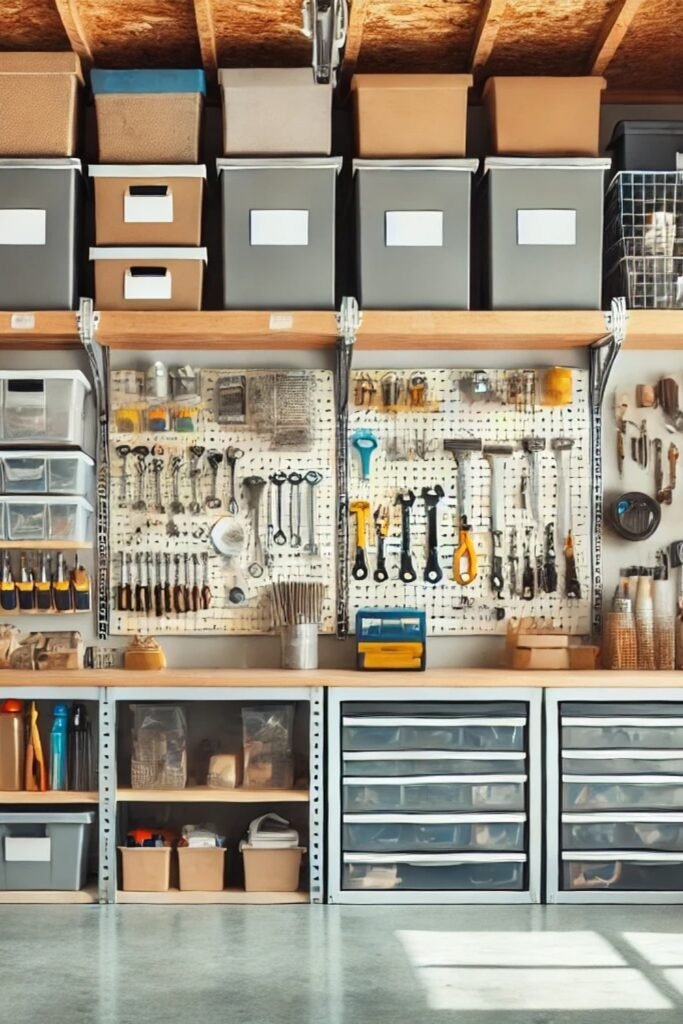
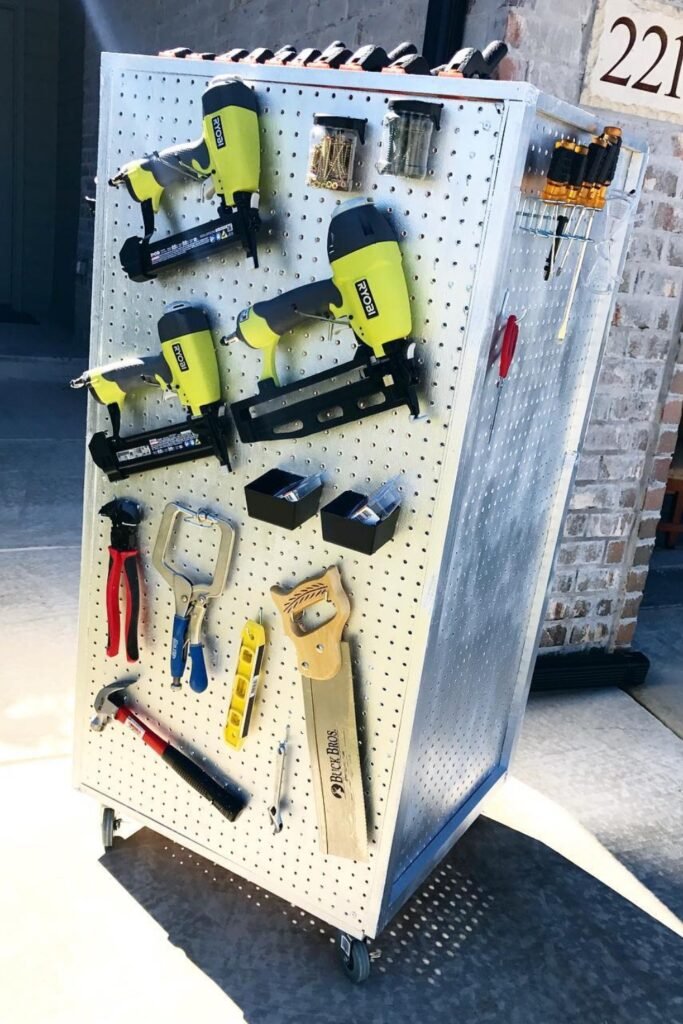
Mobile Pegboard Station
If you hate walking back and forth for tools, you can fix that by bringing everything with you.
You should build a rolling pegboard station so you can mount your most-used tools on all sides.
If you keep heavier tools at the bottom, you can maintain balance and safety while moving it.
When you attach small bins for extra items, you can keep everything in one place.
This works best when you are handling active projects and need tools within reach at all times.
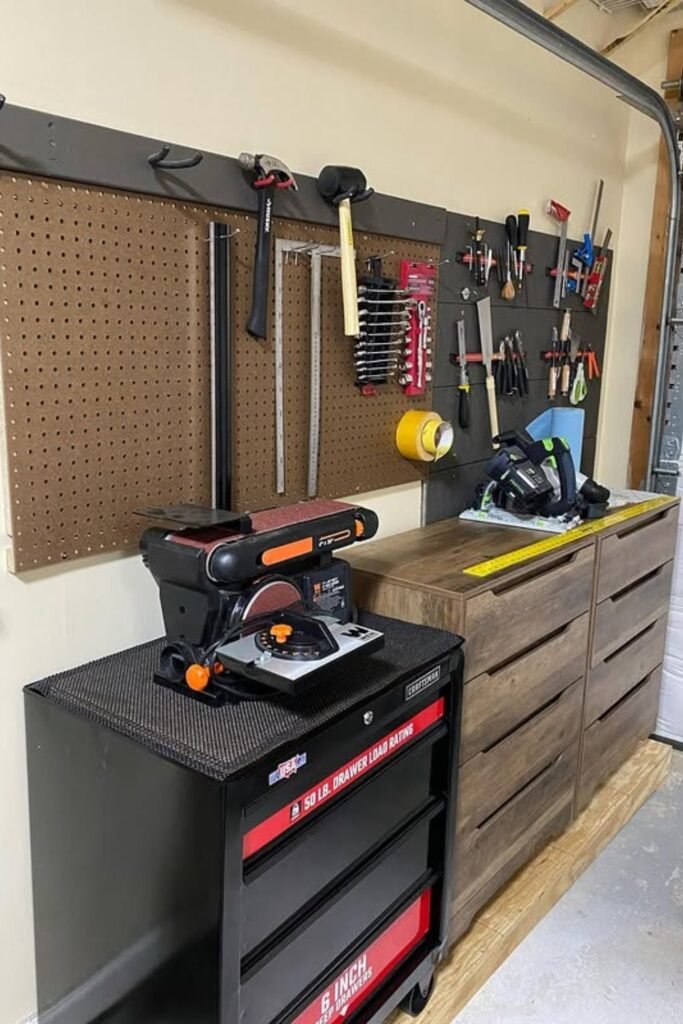
Hybrid Tool Wall
If one storage method doesn’t fully work for you, you can combine different systems into one flexible setup.
You should use a pegboard for small tools, a rail strip above for heavier items, and drawers below for hidden storage.
If you keep measuring and cutting tools near your workbench, you can speed up your workflow.
When you mix systems like this, you get flexibility without depending on just one storage style.
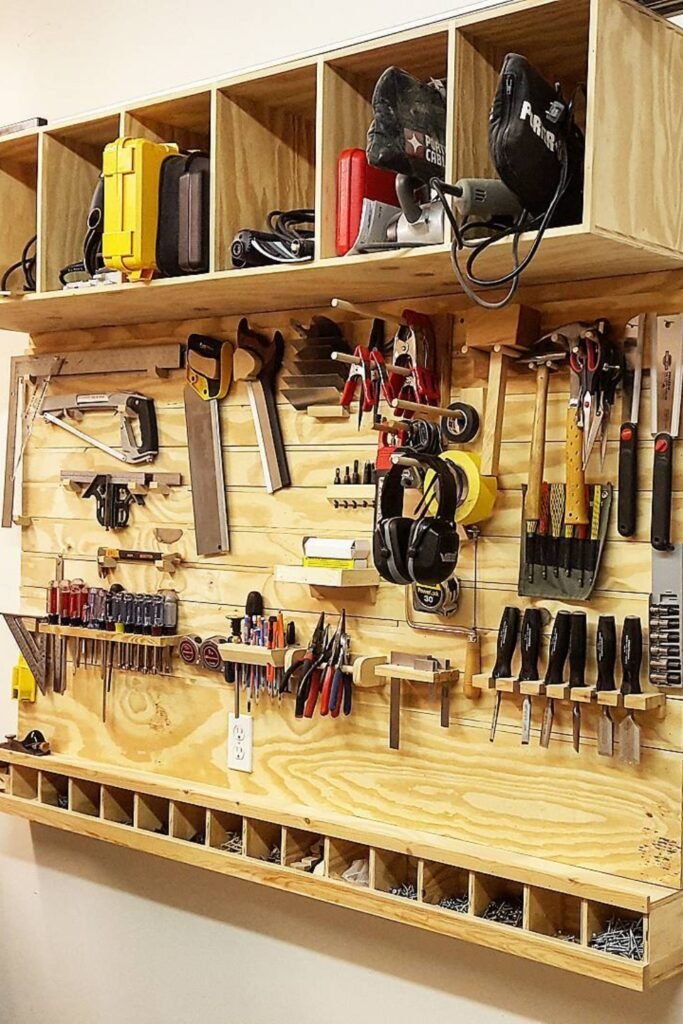
Cubby Tool Storage
If your tools keep piling up with no clear place, you can fix that by forcing structure into your space.
You should use open cubbies above to separate power tools and cases so nothing stacks on top of each other.
If you mount a custom tool wall below, you can keep daily items within easy reach.
When you add small compartments for screws and bits, you can avoid digging through messy boxes. This works best when you want everything sorted by category.
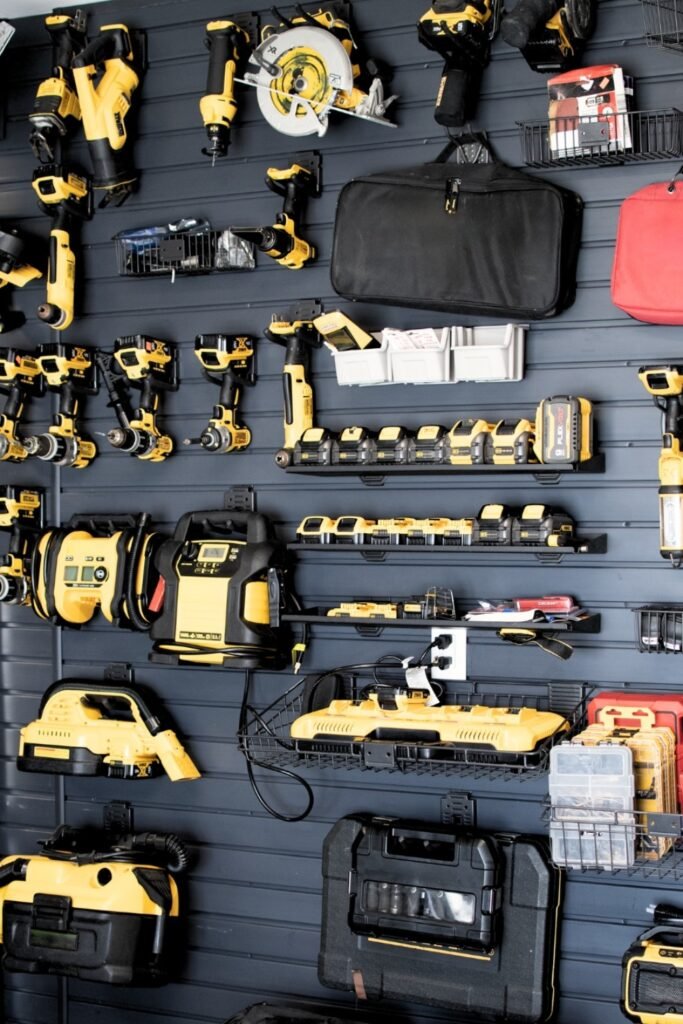
Power Tool Wall
When your power tools are scattered everywhere, you waste time before even starting work.
You should set up a slatwall with shelves for batteries and hooks for each tool so everything stays visible and ready.
If you keep chargers in one dedicated section, you can avoid cable mess and confusion.
When everything has a charging and storage spot, you can start your projects faster and more smoothly.
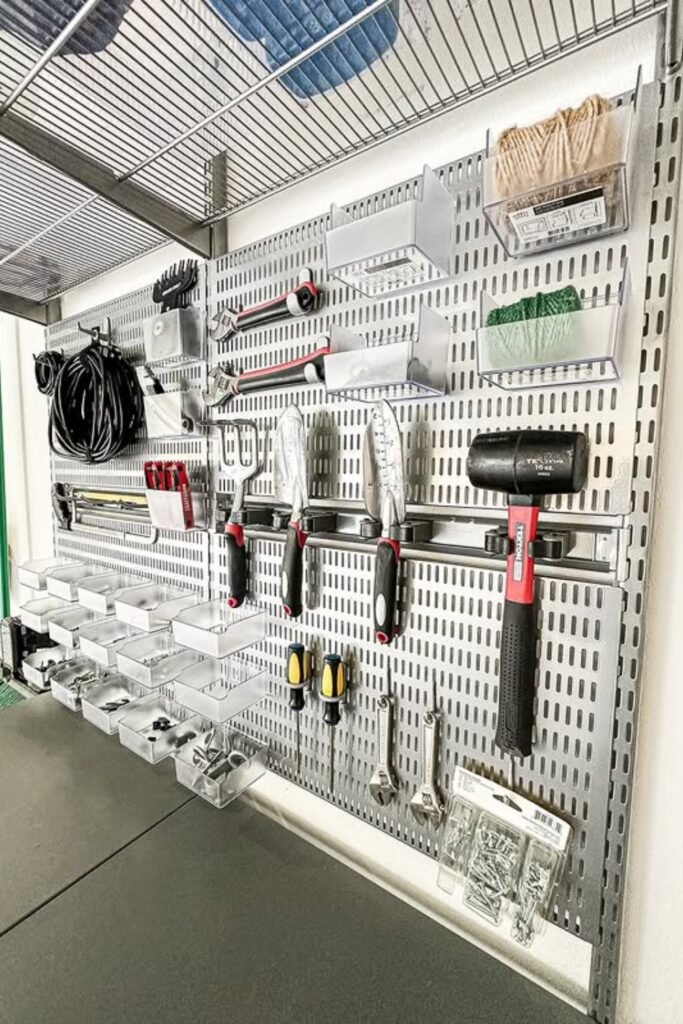
Clear Bin Organizer
If small parts keep disappearing, you can solve that instantly with transparent storage.
You should use clear bins mounted on a wall panel so you can see screws, nails, and fittings without opening anything.
If you group similar items together, you can find them faster every time.
When you keep frequently used bins at eye level, you can reduce wasted time during detail work.
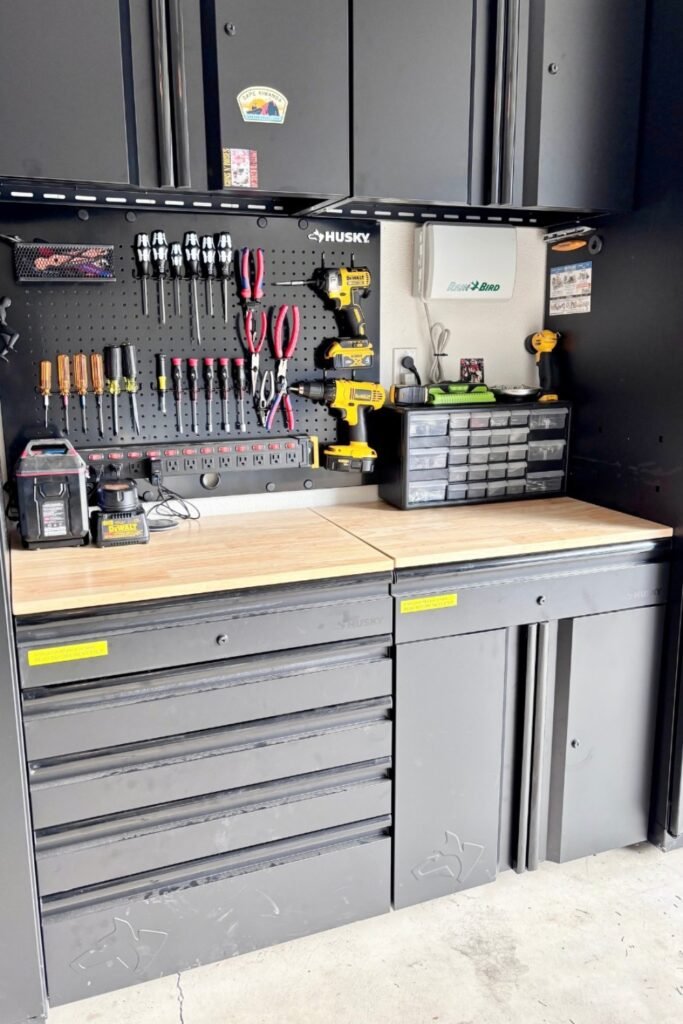
Compact Workstation Setup
If your garage space is limited, you can still create an efficient all-in-one setup.
You should combine a pegboard for daily tools, drawers for small items, and upper cabinets for things you don’t use often.
If you add a power strip near the wall, you can keep your tools charged in one place.
When everything stays in a tight system, you can work cleanly without tools spreading all over your garage.
FAQs
What is the best way to keep garage tools organized long-term?
The key is giving every tool a fixed spot and sticking to it, because if a tool doesn’t have a home, it will keep getting misplaced.
You should set proper places for everything and follow them every time.
You should use wall storage for daily tools and bins or drawers for smaller items you don’t use often, so things stay organized and easy to find.
Once you finish using a tool, you should put it back immediately, because if you don’t, the mess will slowly come back again.
How do you organize tools in a small garage without clutter?
Focus on vertical space instead of the floor, because if you rely only on the ground, things will quickly start feeling messy again.
You should use walls for pegboards, hooks, or slatwall systems so your tools stay visible and off the ground.
If you keep only frequently used tools within easy reach, you can grab them quickly without wasting time.
The rest you should store higher up or inside cabinets so they don’t block your space.
When your floor stays clear, even a small garage will feel organized and much easier for you to use every day.

Hi, my name is Zeeshan, and I am the founder of The Crafts Geek. I have been passionate about DIY projects, home organization, and creative problem-solving for years. Over time, I realized that simple storage solutions and practical DIY ideas can make a huge difference in how a home looks and functions.