You start a project, and you reach for a scrap piece but you quickly realize you’re digging through a messy pile of wood that you’ve let sit there for months.
You might find some pieces are too small, and you might notice that some are buried where you can’t even see them.
You can bet that half the time, you won’t even find what you know you have.
That clutter doesn’t just waste space, it can slow you down and make every project feel harder than it should.
When you organize your scrap wood the right way, you can actually save time and frustration.
In this article, you will see how you can store your pieces so you can stop digging endlessly and start using what you already have, because you deserve to work smarter, not harder.
How Do You Store Wood Scraps?
If you don’t have a system, you’ll see how scrap wood can take over your space.
You might start small, just a few leftover pieces, but if you keep throwing everything in one pile.
You’ll waste your time digging, and you still won’t find what you need when you want it.
You should start by sorting your scraps by size. You can keep long pieces separate from medium cuts, and you shouldn’t mix tiny offcuts with boards you might actually use.
If you mix everything, you’ll create chaos but if you separate them, you’ll make your life so much easier because you’ll always know where to look.
Next, you must get your wood off the floor. If you leave it on the ground, it will get messy, damaged, and harder to manage.
You can use vertical racks, wall storage, or even simple bins. If you’re short on space, you can go vertical and that alone might free up half your workshop.
For smaller scraps, you should use bins or divided boxes. If you just throw them together, you’ll find they become useless.
But if you group them by size or type, you’ll actually be able to use them in future projects, you’ll see the difference instantly.
You also need to be honest about what you keep. If a piece is too small or you haven’t used it in months, you should get rid of it.
Keeping everything doesn’t make you efficient, it just creates clutter that will slow you down.
When you follow these steps, sort, lift, organize, and reduce, you’ll turn a messy pile into a system that actually works, and you’ll feel the difference every time you start a project.
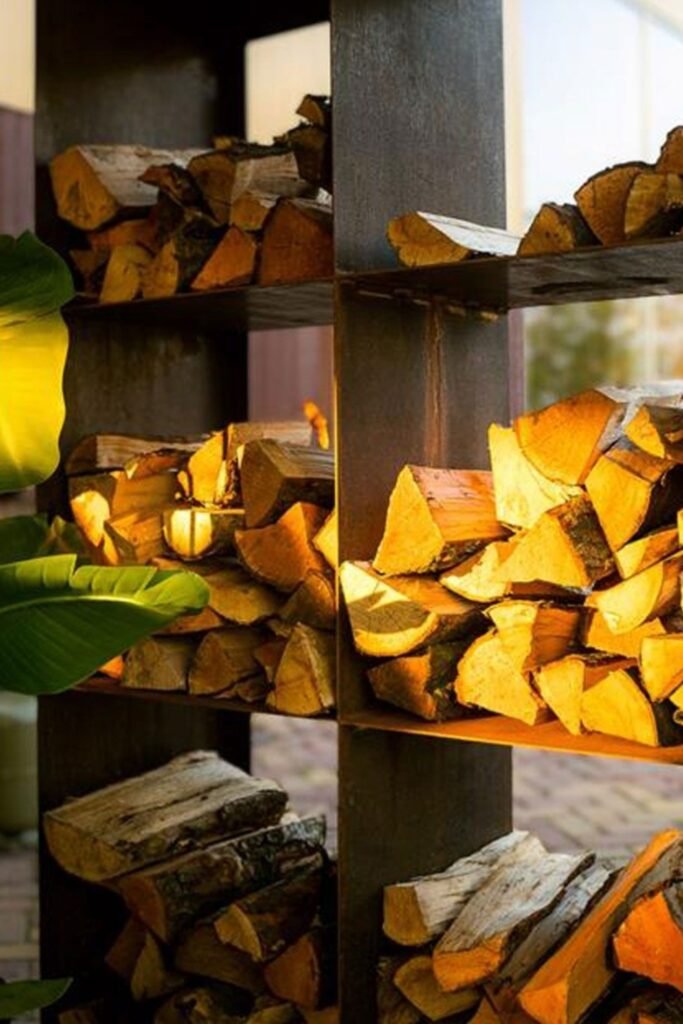
Built-In Shelf Storage
When your scrap wood starts spreading everywhere, you can take control by giving it a fixed home.
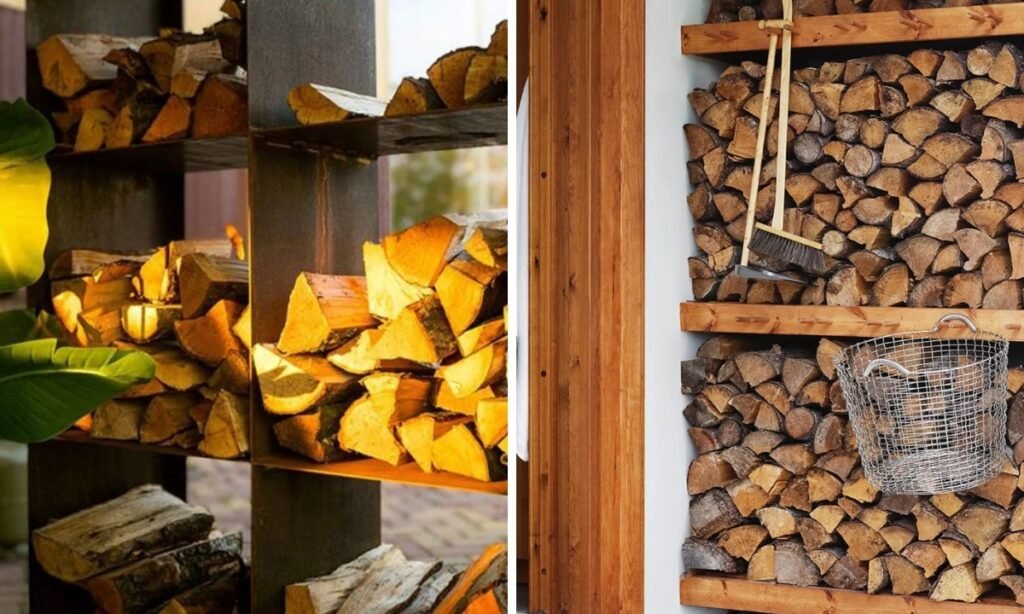
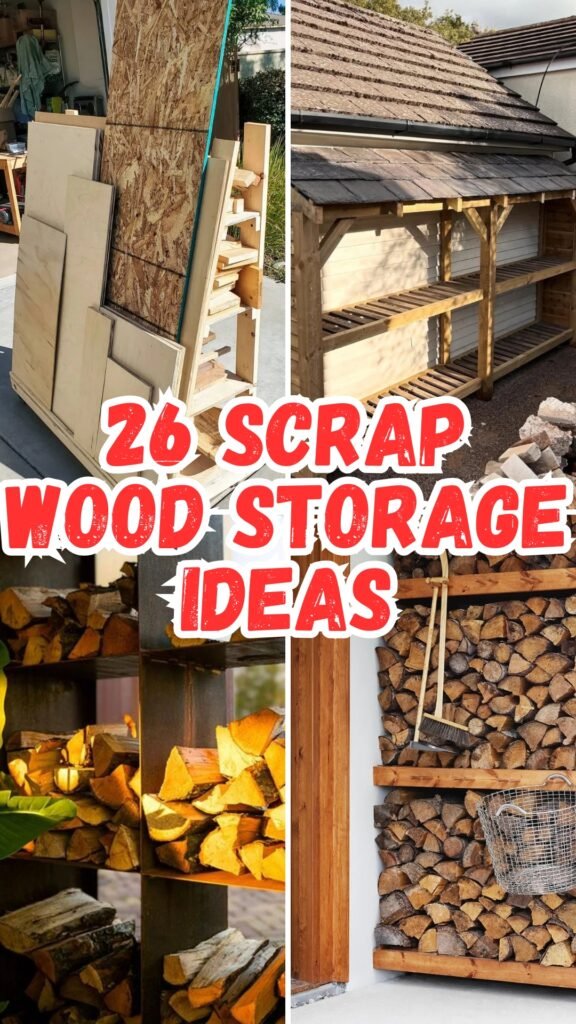
You’ll see how sectioned shelves let you stack pieces by size so you can grab what you need without digging.
You can build this into a wall unit or repurpose an old shelving frame.
You should keep wider compartments for bigger chunks and tighter ones for smaller pieces so you don’t mix everything together.
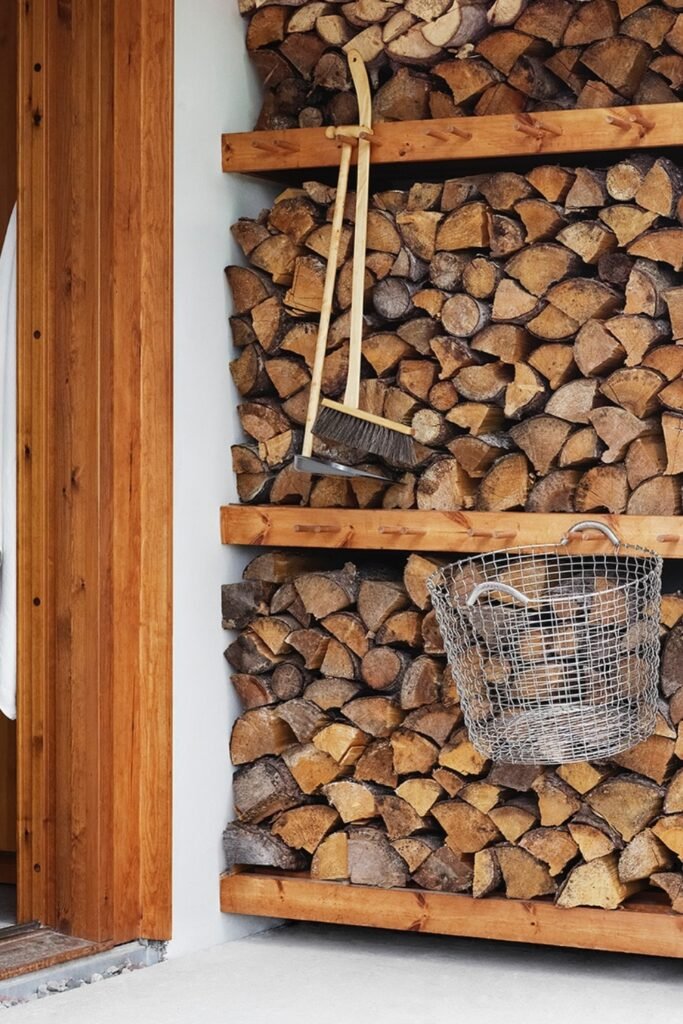
Wall Rack Storage
If your scraps start eating up floor space, you can push them onto the wall and change everything.
You can make a simple horizontal rack with support slats to stack pieces tightly while keeping them easy to grab.
You might even add a few hooks underneath for your tools or baskets, and you’ll turn one wall into a full storage zone.
You can use this in garages or entry-side spaces where you want quick access without clutter.
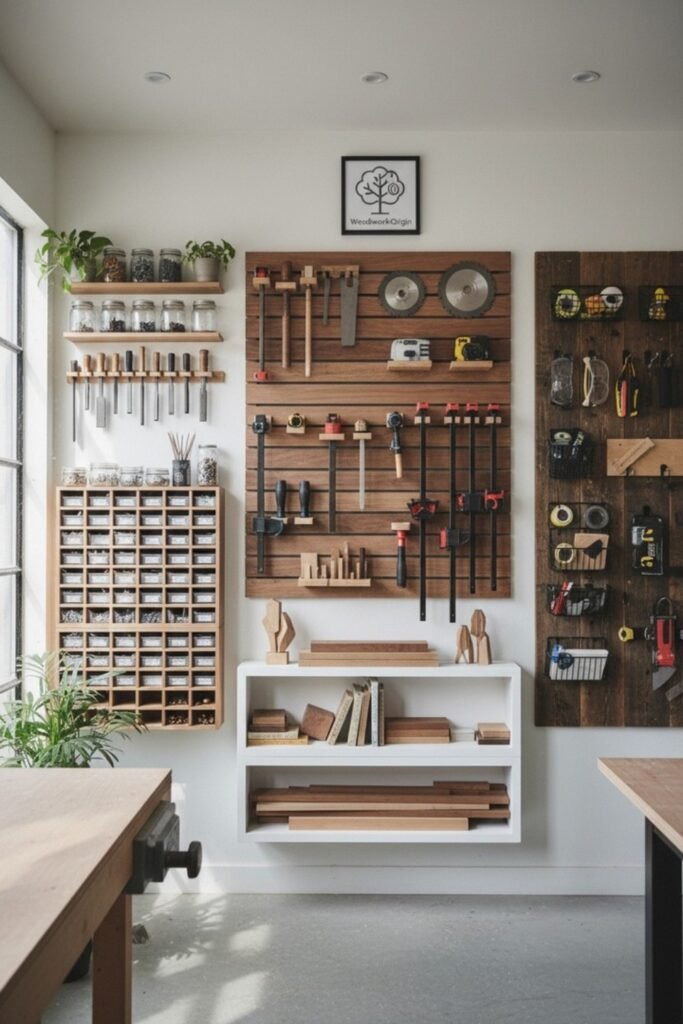
Organized Wall System
When you want everything in reach without cluttering your workspace, you can combine storage to make a big difference.
You could use a wall panel for tools, small drawers for tiny scraps, and an open shelf below for larger pieces.
You’ll notice that when each type has its own spot, you stop wasting time searching.
You should try this in a dedicated workshop where you need both storage and workflow in one clean setup.
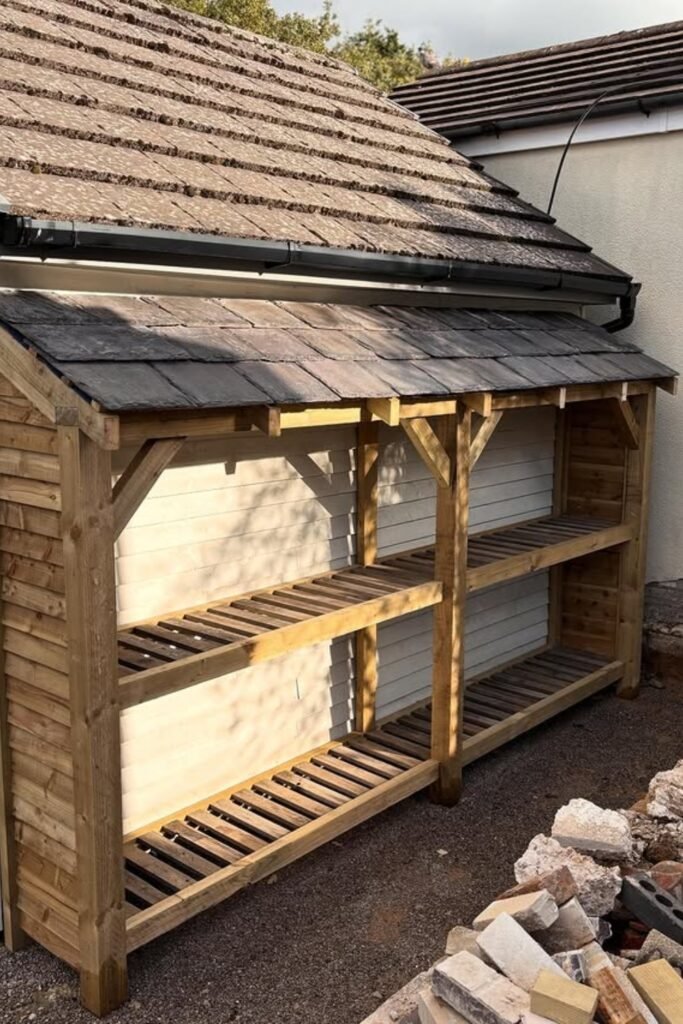
Outdoor Rack Storage
If your scrap wood keeps getting wet or damaged outside, you can build a covered rack and solve the problem fast.
You’ll keep pieces off the ground with raised slatted shelves, while a small roof protects them from rain.
You can build it against a wall using basic framing and leftover boards, you’ll find it perfect for outdoor spaces where you want storage without bringing everything inside.
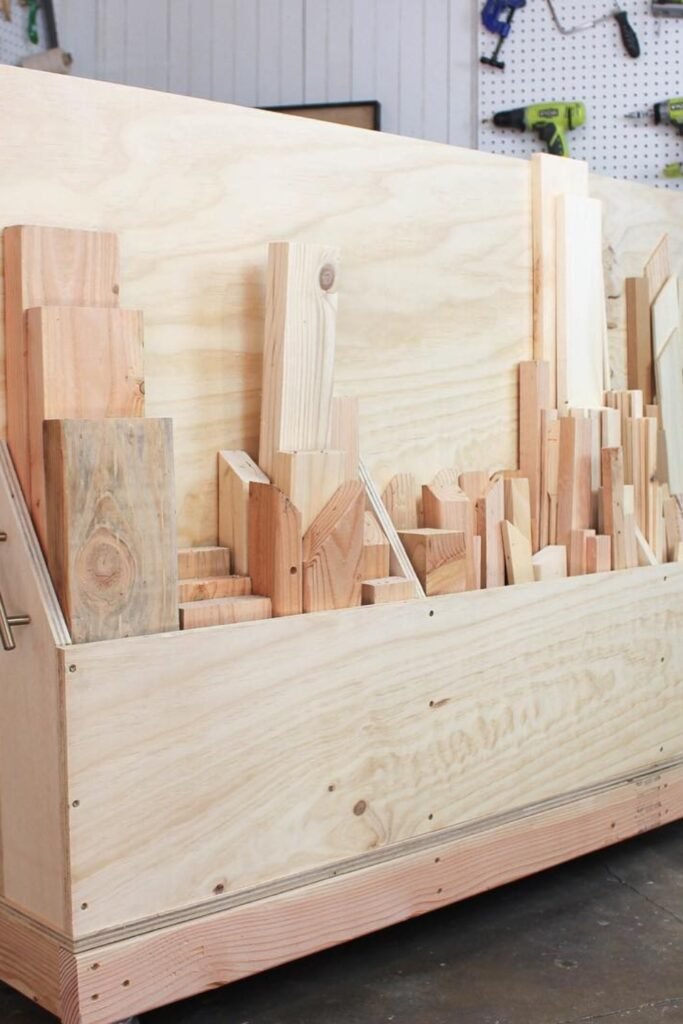
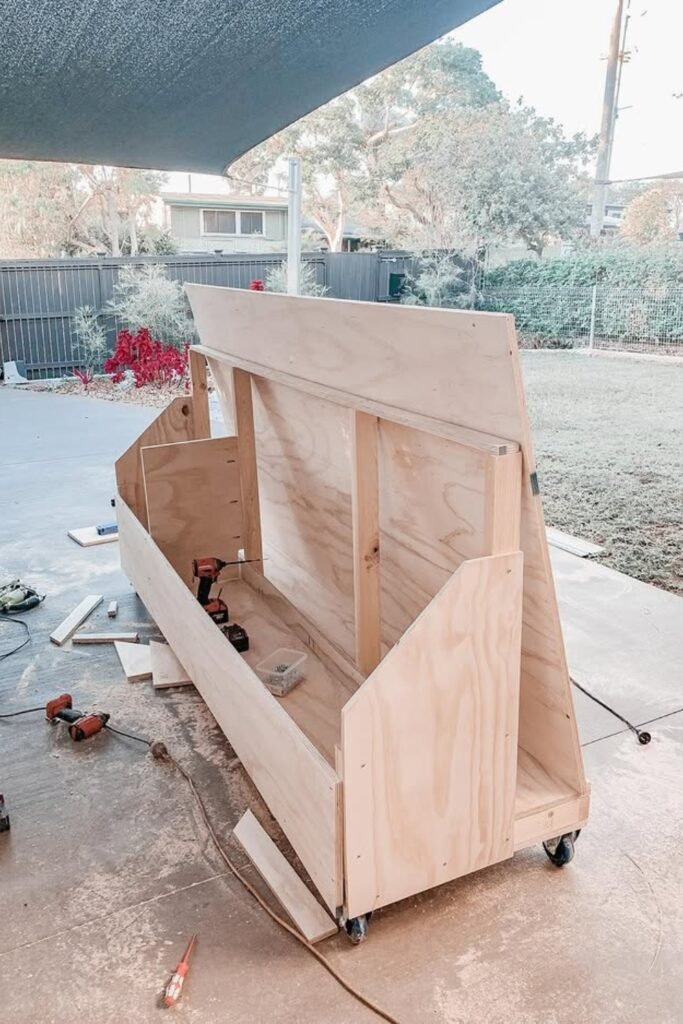
Rolling Scrap Cart
When your scraps keep moving from one corner to another, you can put them on wheels and gain control.
You can use a vertical cart to sort pieces by height while keeping everything visible.
You can roll it next to your workbench when you need it and tuck it away after.
You should build it with plywood sides and a sturdy base so you know it holds weight without tipping.
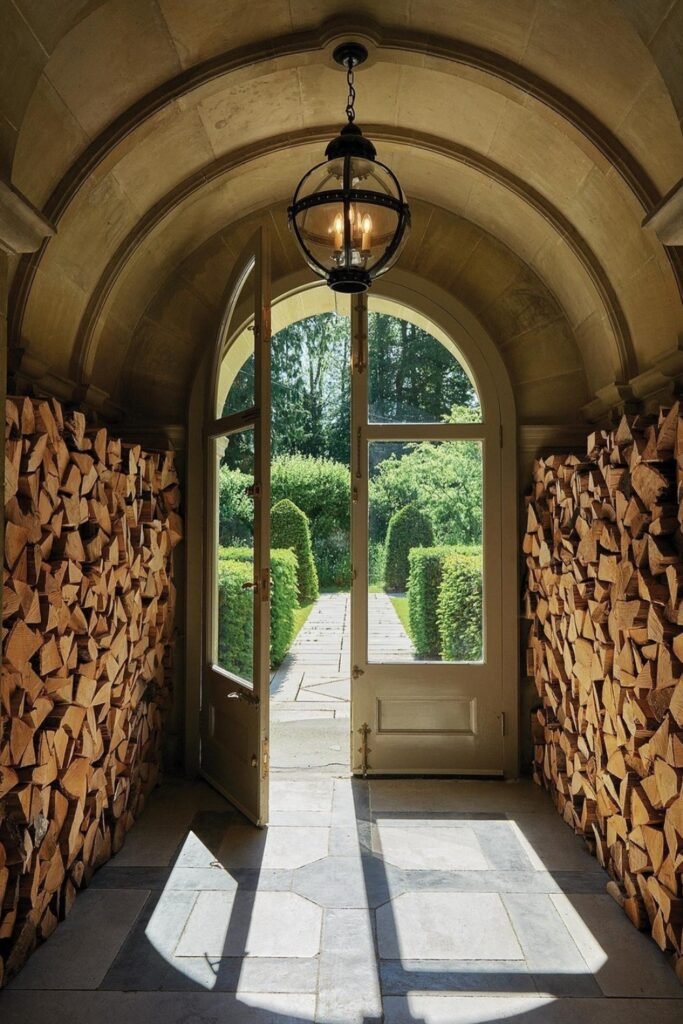
Hallway Stack Storage
If you’ve got narrow spaces that usually go unused, you can stack wood along both sides and turn them into functional storage.
You’ll keep pieces lined neatly against the wall so you can reach them without blocking movement.
You can use this in entryways or side passages where you want quick access. You should keep stacks even and stable so nothing shifts or falls over.
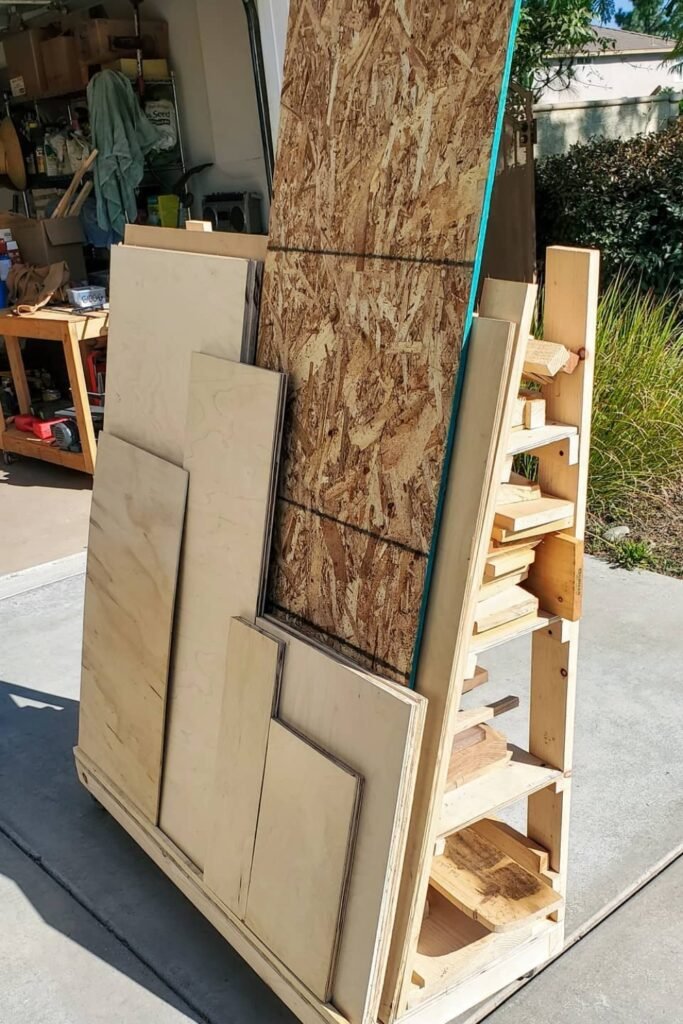
Vertical Sheet Storage
When large scraps become a problem, you can stand them upright in a narrow rack to keep everything visible and prevent bending or damage.
You can add side slots for smaller pieces so nothing gets mixed up.
You might build it with plywood and dividers, and you’ll see it works best in garages where you deal with sheet goods and offcuts together.
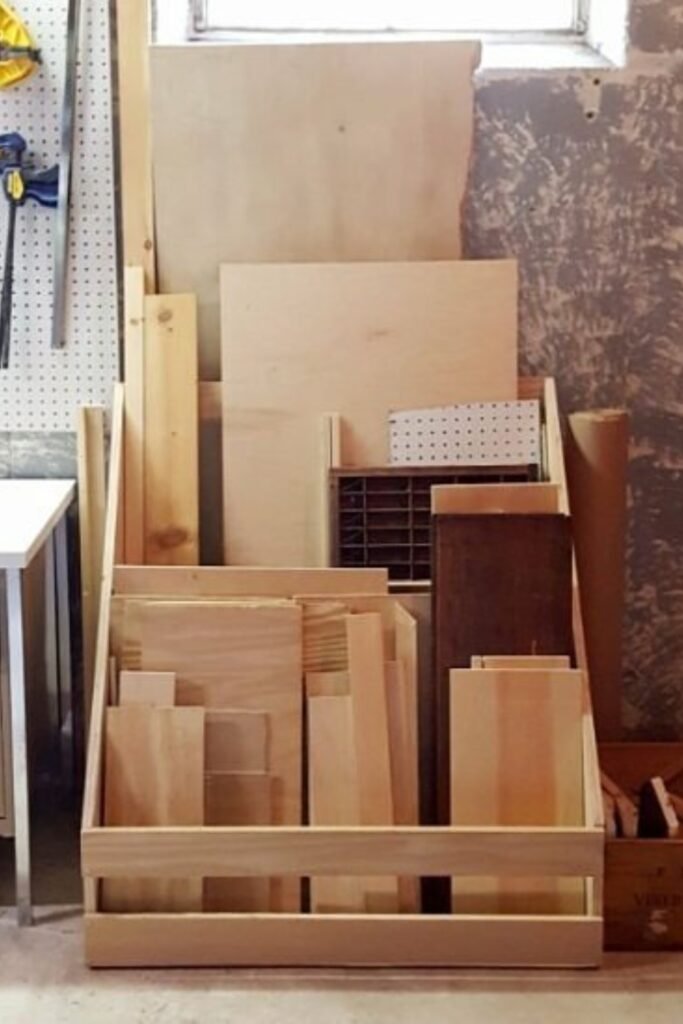
Corner Bin Storage
Corners usually become dead space, but you can turn one into a scrap zone and get easy access without taking over the room.
You can use a simple open bin with vertical dividers so pieces stand upright instead of piling up.
You’ll notice that when everything is visible, you stop forgetting what you have.
You can use this next to a workbench where you constantly reach for offcuts.
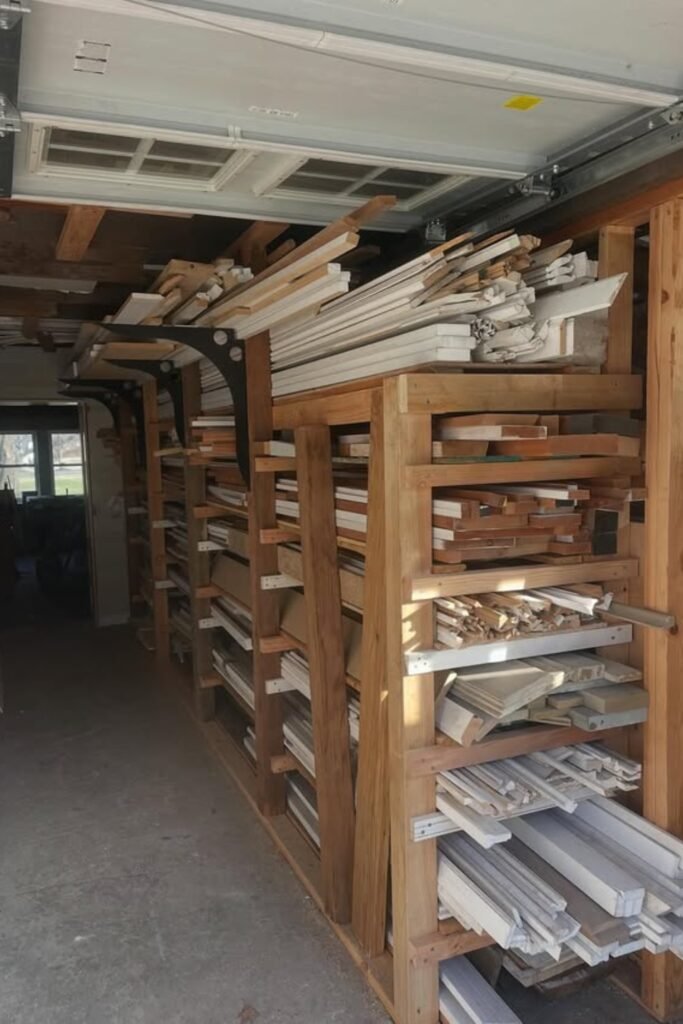
Multi-Level Rack Storage
If you keep stacking scraps on top of each other, the bottom pieces become impossible to reach.
You can spread them across multiple levels to keep everything visible and sorted by length.
You should use strong horizontal supports between vertical frames so each layer holds weight safely.
You’ll find this setup works best for long boards in garages where you need both capacity and easy access.
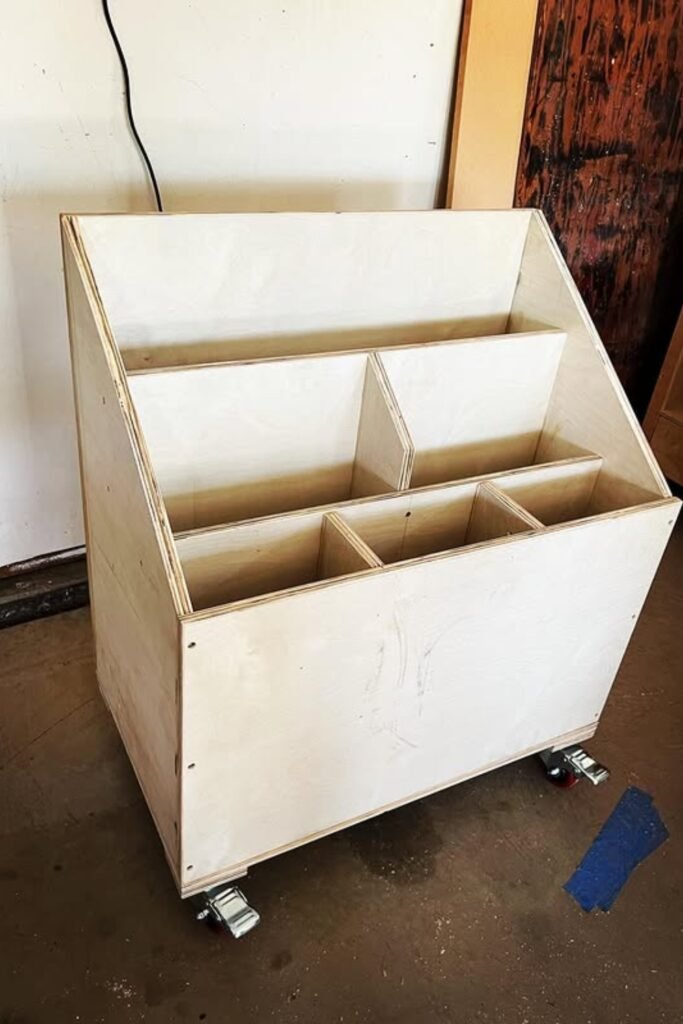
Divided Cart Storage
When small scraps keep getting lost in bigger piles, you can separate them inside one unit and make a huge difference.
You can use built-in dividers to group pieces by size so you can grab exactly what you need without sorting every time.
You might add wheels so you can move it around your workspace easily.
You’ll see this works great if you deal with a mix of small offcuts and medium pieces every day.
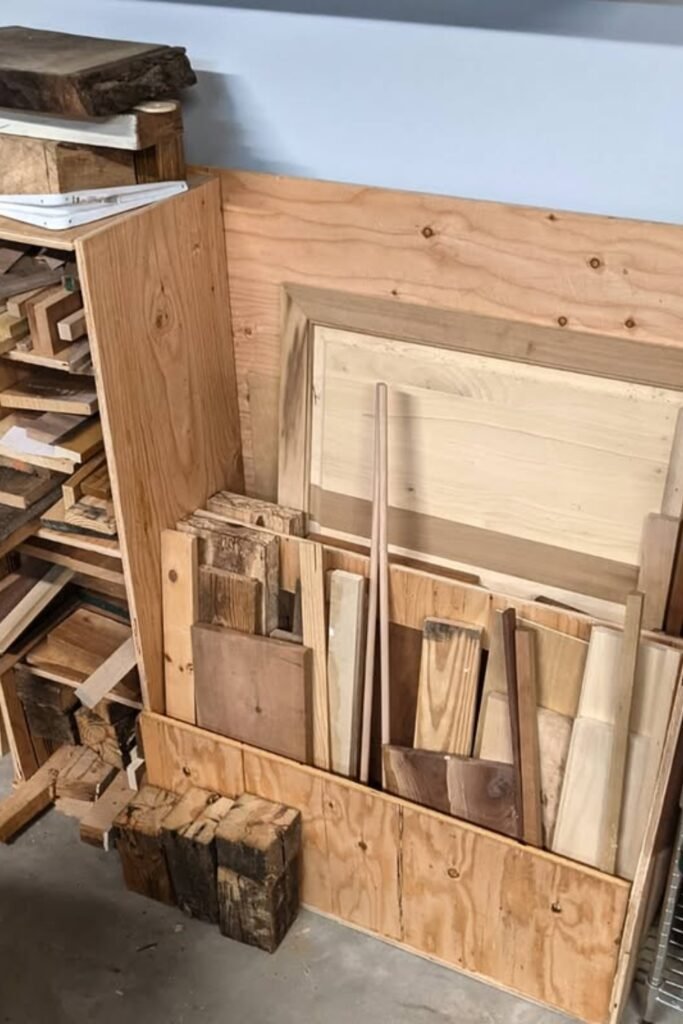
Floor Slot Storage
When you lean scraps against the wall, you might think it’s easy, but you’ll quickly see how they turn into a messy pile.
You can create a simple floor slot to keep everything standing upright and separated.
You should add a front barrier and a few vertical dividers so your pieces don’t slide around.
You’ll find it’s a quick build using plywood, and it works well along garage walls when you handle mixed-size offcuts.
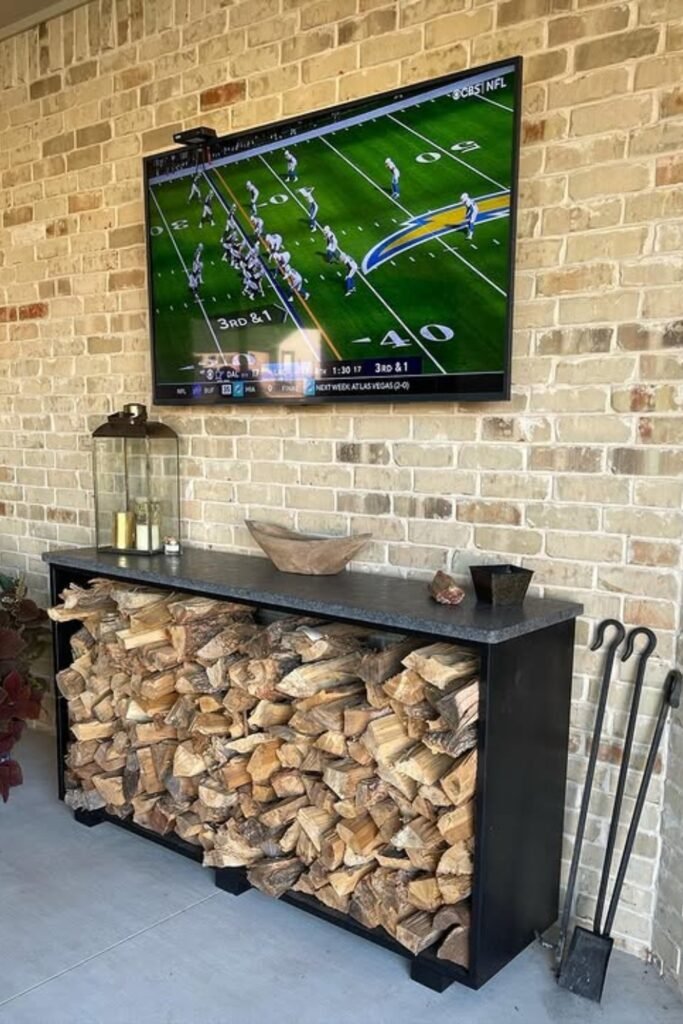
Bench Base Storage
If you want storage that doesn’t feel like storage, you can hide scraps inside a bench setup and keep things clean while staying useful.
You can stack pieces neatly underneath while using the top as a working or display surface.
You should build a sturdy frame with an open front so you can load and grab wood easily.
You’ll see this works great in patios or indoor spaces where you want function without clutter.
Vertical Frame Storage
When different types of scraps start mixing together, you can separate them into dedicated sections to keep everything under control.
You could use a tall frame to store large panels, medium boards, and small pieces all in one place without overlap.
You can build simple vertical slots using studs and add a few shelves in between.
You’ll notice it’s ideal for workshops where you handle multiple wood sizes daily.
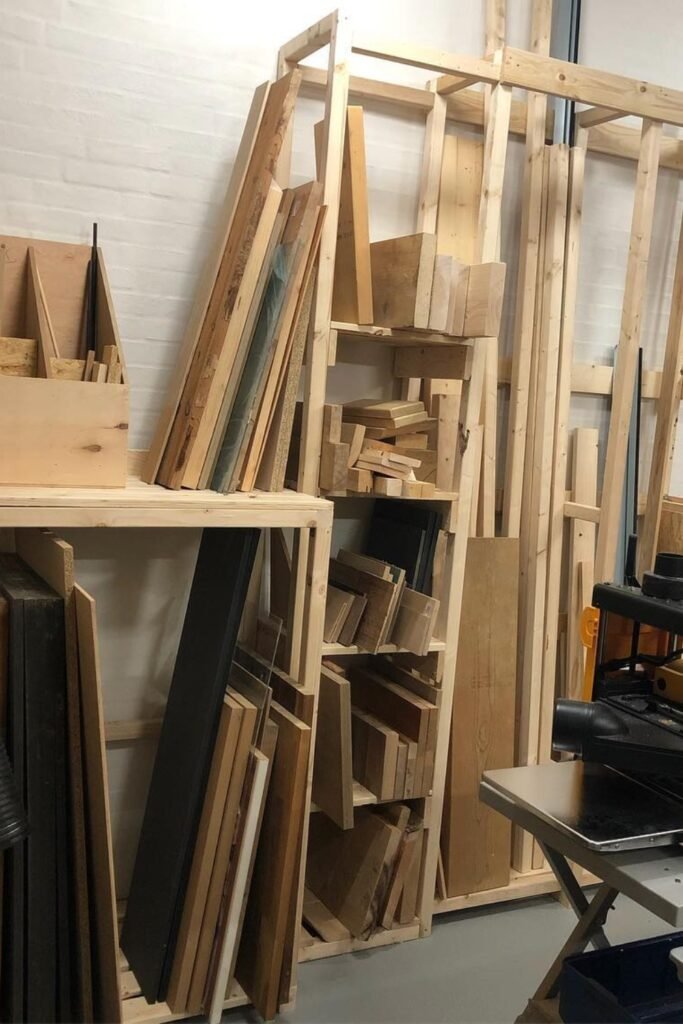
Simple Corner Stack
If your scraps start piling up, you’ll realize the real problem isn’t space, it’s lack of structure.
You can even use a basic corner setup if you keep longer boards at the back and smaller pieces in front.
You should add a low barrier or divider to stop everything from collapsing into one pile.
You’ll find it’s a quick fix for garages where you need order without building anything complex.
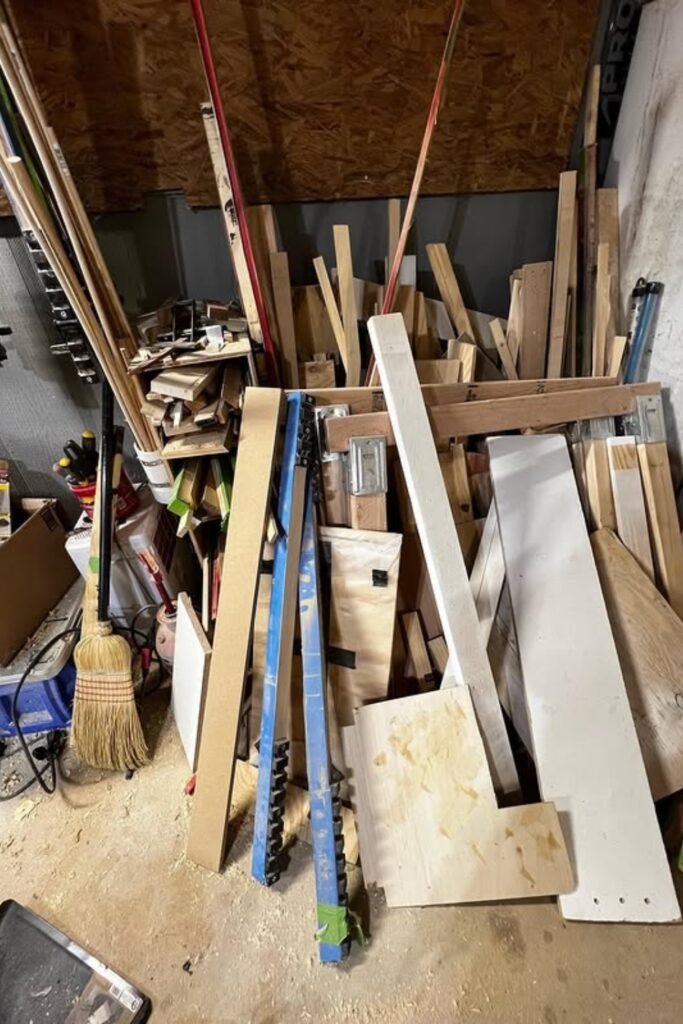
Angled Cart Storage
When straight bins make everything disappear, you can angle your storage so you see every piece at a glance.
You can use slanted compartments to keep scraps upright while making it easier to sort by length without digging.
You might add wheels so you can pull it closer while working and move it away afterward.
You’ll notice this works well when you want quick visibility without spreading wood across your space.
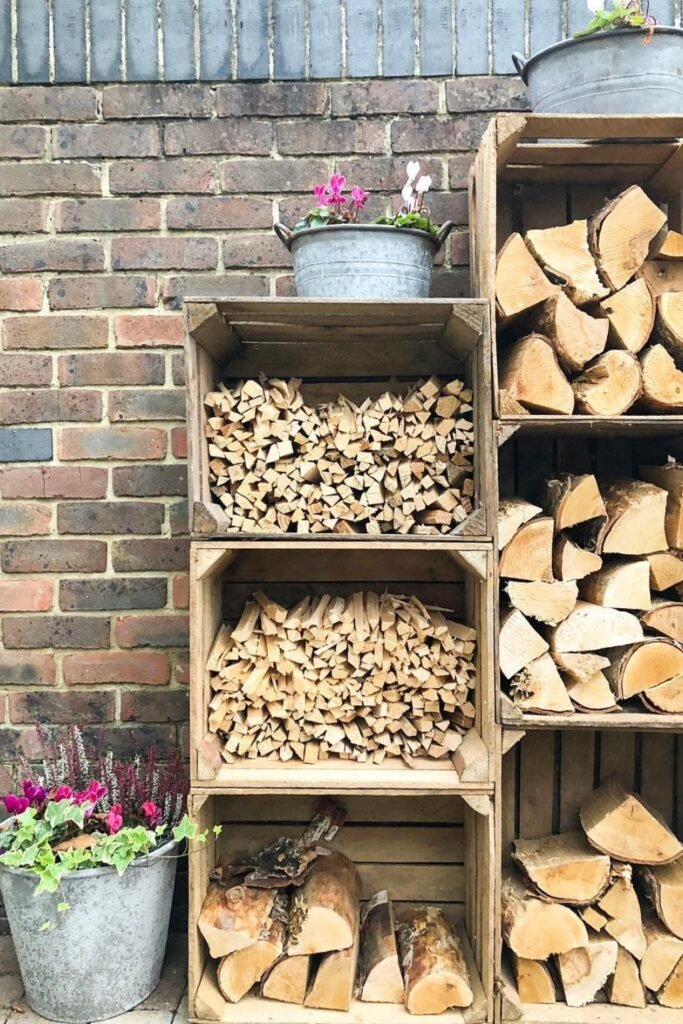
Crate Stack Storage
If you deal with mixed scrap sizes, you can stack them in crates to keep everything separated without extra effort.
You should use individual boxes for different types, small offcuts, medium pieces, or larger chunks, so nothing gets buried.
You can stack or rearrange them anytime depending on your space.
You’ll see it’s a simple solution that works well outdoors or in garages where flexibility matters.
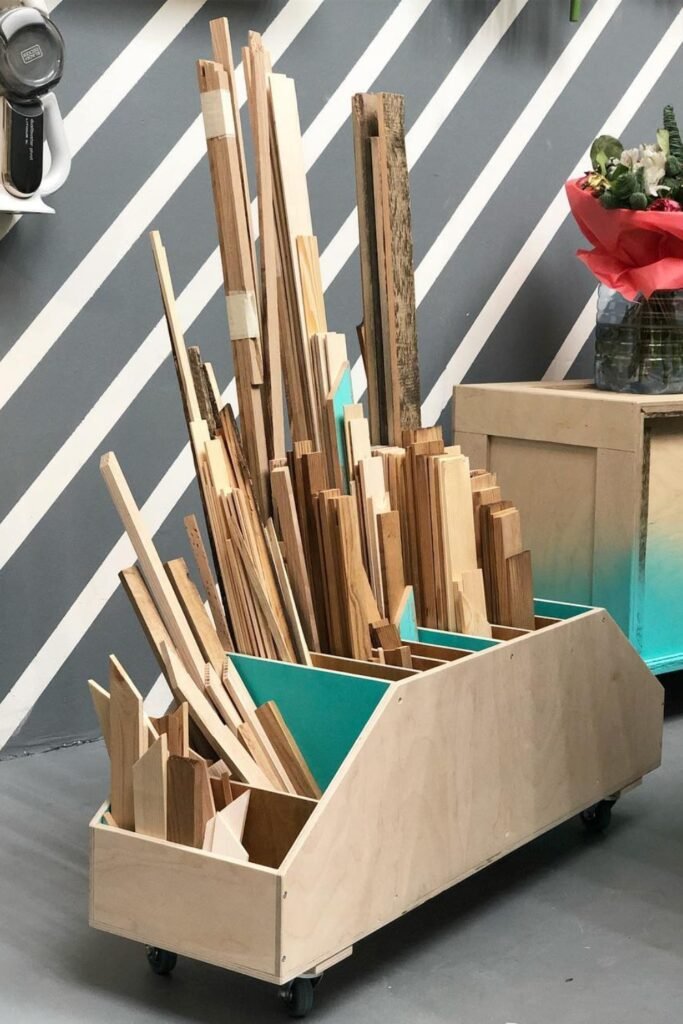
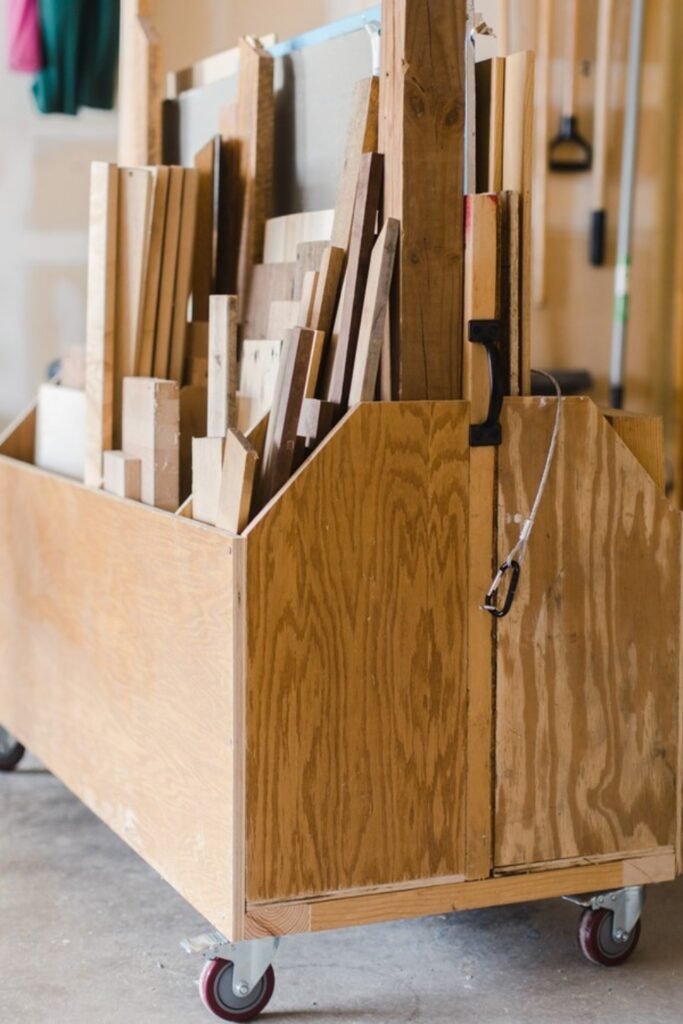
Mobile Bin Storage
When you drag scraps around, you waste time, especially when you need them near your workspace.
You can keep everything in a mobile bin so you can move your entire stock where you’re working.
You’ll find that tall sides keep pieces contained while the open top makes sorting easy.
You should build it sturdy with casters so it handles weight without wobbling, especially if you store heavier boards.
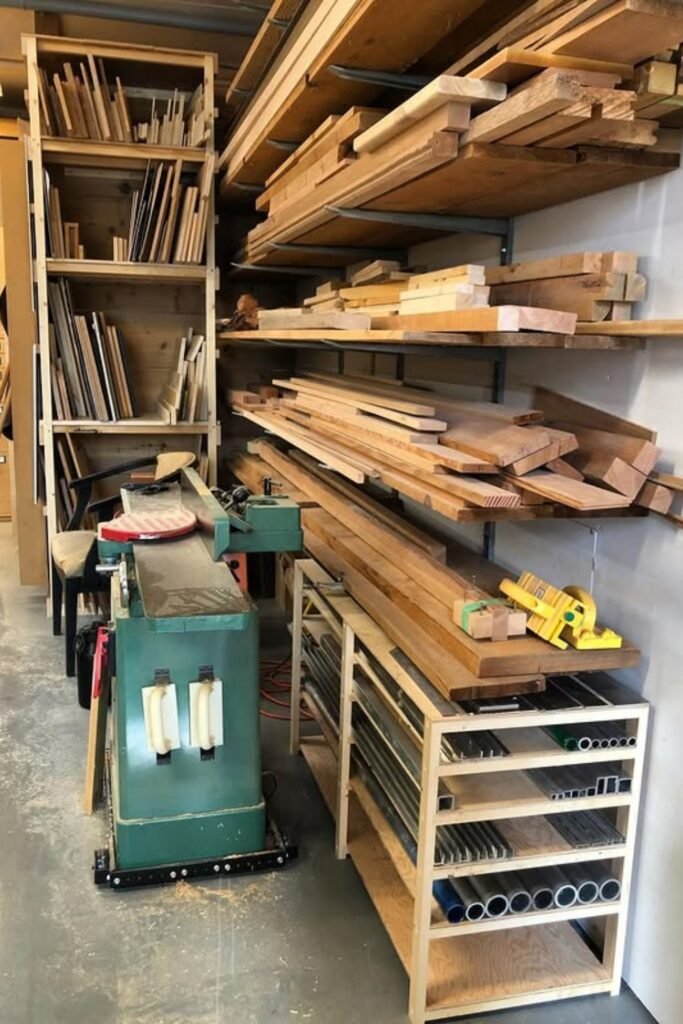
Wall Shelf Storage
If long scraps start taking over your floor, you can move them onto wall shelves to clear space instantly.
You should use staggered supports to sort boards by length so you can grab what you need without shifting everything around.
You’ll want to mount strong brackets into studs to handle the weight.
You’ll see this works best in workshops where you deal with lots of long pieces and need quick access.
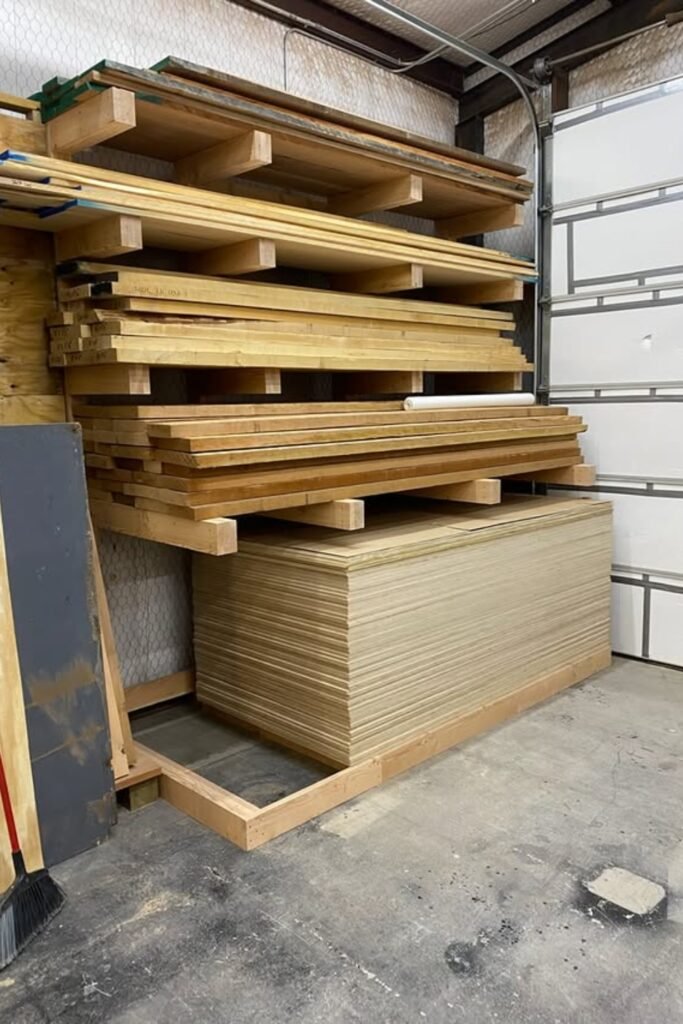
Heavy Duty Rack
When your scrap pile includes thick boards and sheet goods, you’ll notice that weak storage won’t hold up.
You can use a solid rack with deep supports to carry weight without sagging.
You should keep heavier pieces on lower levels and lighter ones above to stay safe and balanced.
You’ll want to anchor it well to the wall, and you’ll have a long-term solution that handles serious loads without shifting.
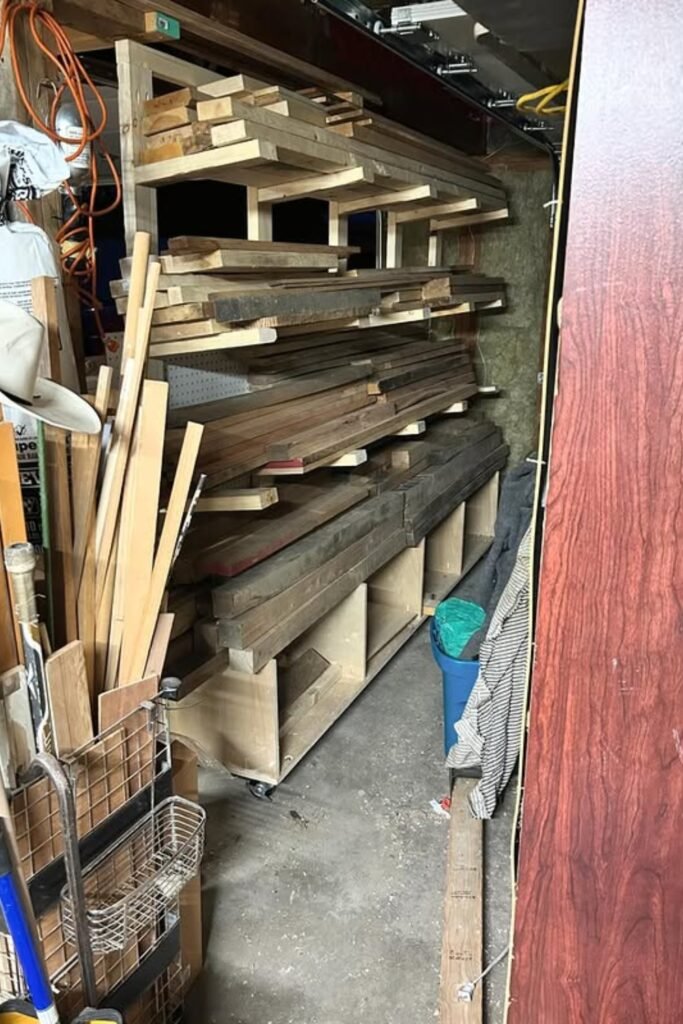
Compact Rack Storage
If you have tight spaces, you can still store a lot by stacking smart instead of wide.
You should use a narrow rack that relies on depth instead of floor space, letting you store different lengths without spreading out.
You can add multiple levels so each type has its own layer, and you should keep the heaviest pieces at the bottom.
You’ll find it’s perfect for small workshops where every inch matters.
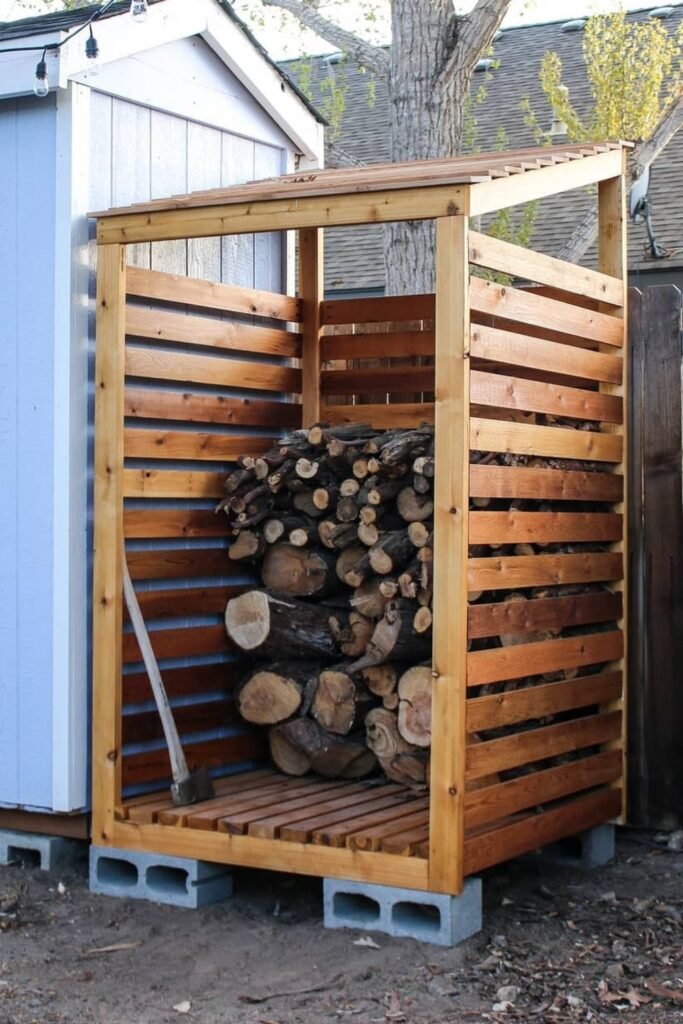
Covered Shed Storage
When you leave wood outside without protection, you’ll see it ruins fast.
You can use a simple enclosed shed to keep airflow while blocking rain so your scraps stay dry and usable.
You should raise the base slightly off the ground and leave gaps in the sides for ventilation.
You’ll notice it’s perfect for backyard setups where you need long-term storage without bringing everything indoors.
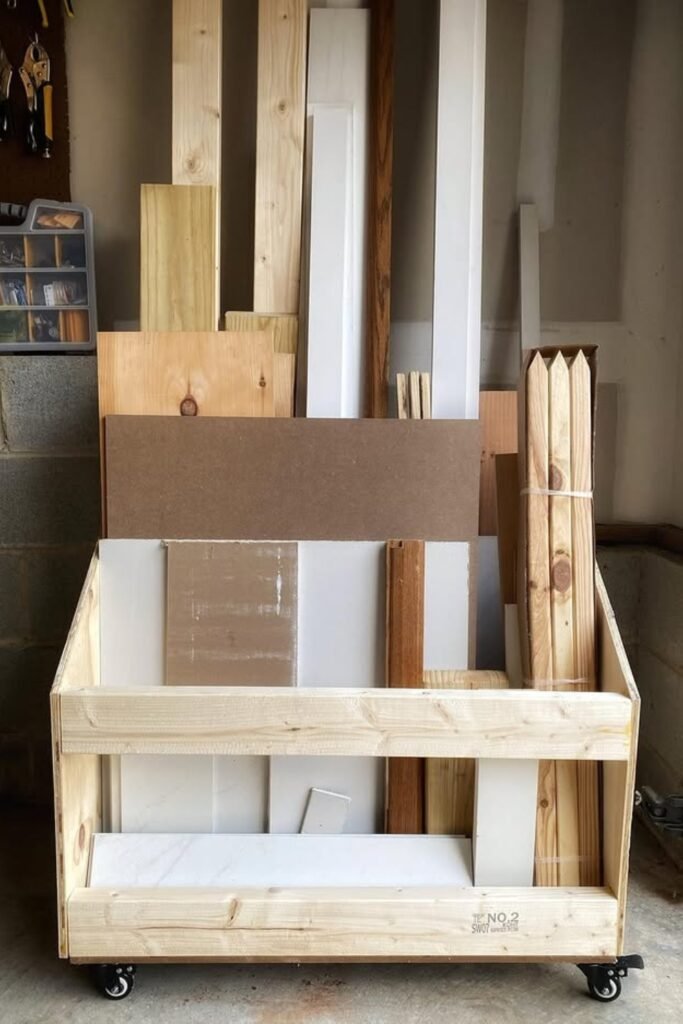
Segmented Cart Storage
When you mix sheet pieces with long boards, you’ll notice how everything becomes harder to manage.
You can split them into sections so each type has its own lane, and you won’t waste time sorting every time you need something.
You should use tall dividers for upright storage and a lower front area for flat scraps.
You can even add wheels so you can move the whole setup wherever you’re working.
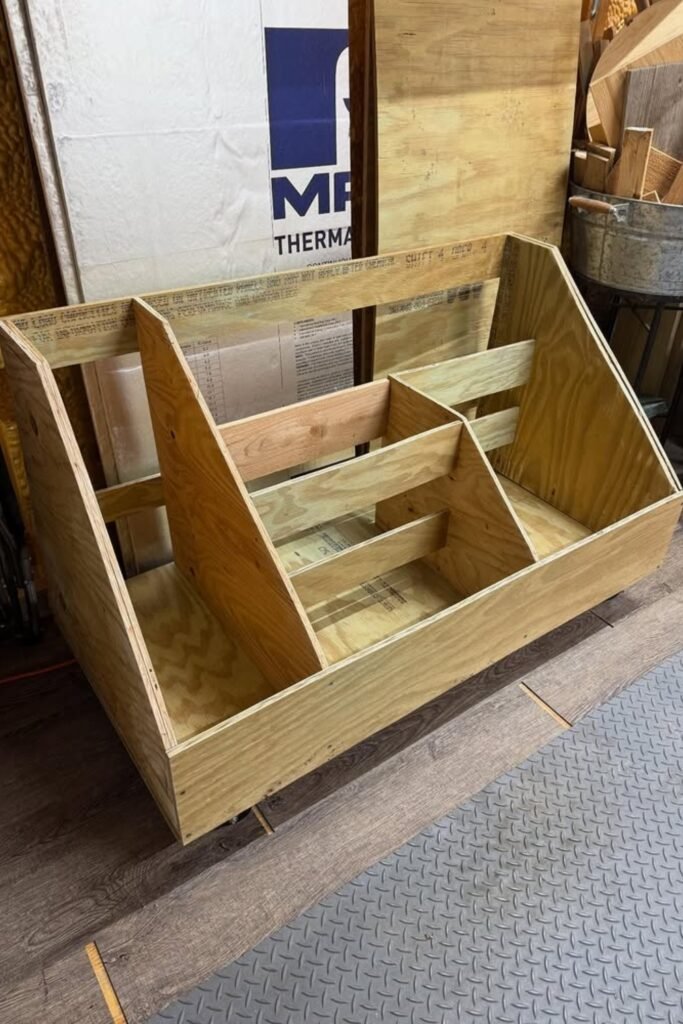
Tiered Bin Storage
If your scraps start hiding behind each other, you can step your storage levels forward to fix it instantly.
You’ll see each section sits slightly lower than the one behind it, so you can grab pieces without pulling everything out.
You should build it with angled dividers and staggered heights.
You’ll notice it’s perfect when you want quick access to different sizes without turning it into a digging job.
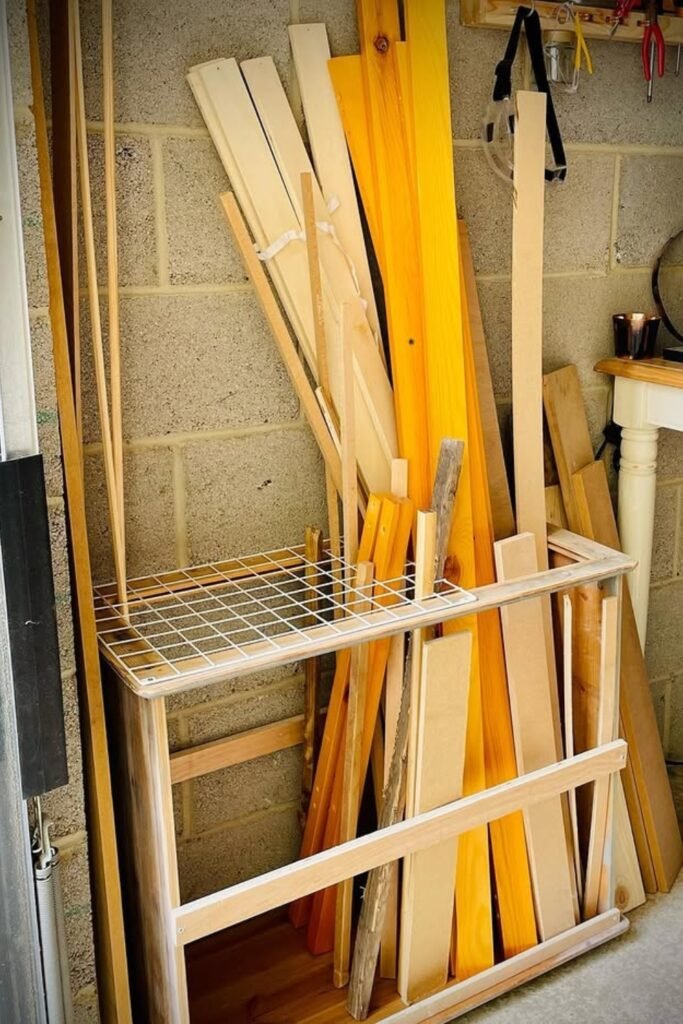
Slim Wall Rack
When space is tight, you’ll realize spreading wood across the floor isn’t an option.
You can use a slim rack to keep everything upright against the wall without taking up much room.
You should build a simple frame with a front bar to hold pieces in place and add a small shelf for tools or shorter scraps.
You’ll find it’s a great fit for narrow garage spots where you still want quick access.
Dual Side Cart
If one side of a cart isn’t enough, you can use both sides to double your storage without taking extra space.
You can store larger panels on one side and smaller scraps on the other so everything stays separated and easy to reach.
You should build a center divider with angled supports to keep pieces stable.
You’ll see this setup works well if you handle different sizes and need quick access from both sides.
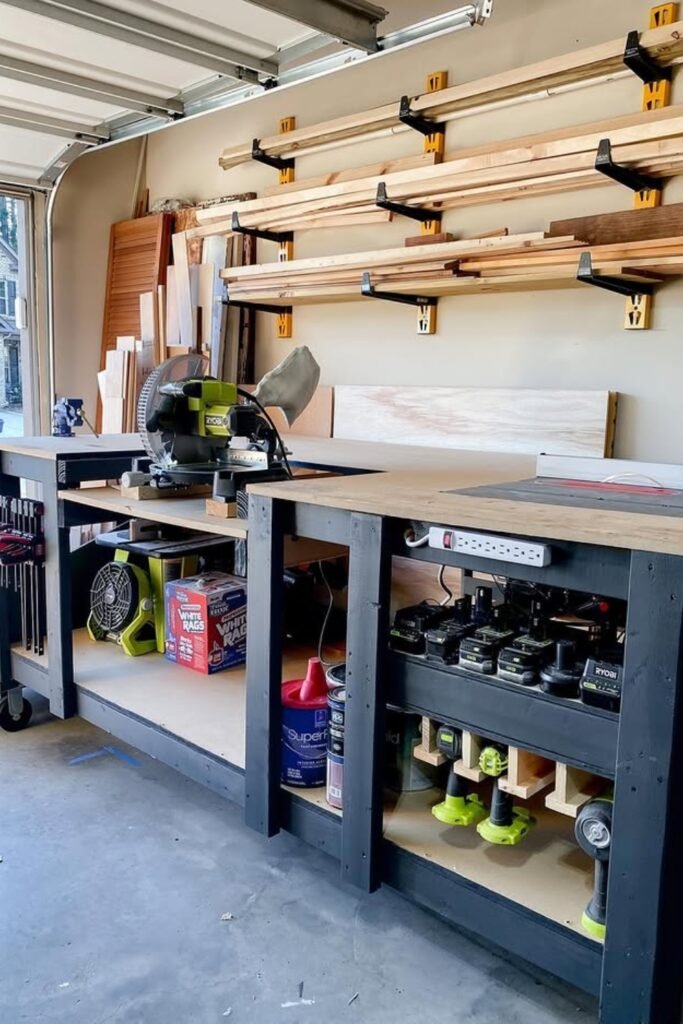
Workshop Wall Storage
When your workbench gets crowded, you can move scraps above it to keep your workflow clear.
You’ll find wall-mounted brackets let you store boards by length while keeping everything within arm’s reach.
You should install them into studs so they hold weight without shifting.
You’ll notice it’s a simple upgrade that keeps your workspace clean while making sure your most-used pieces are always easy to grab.
FAQS
What Scrap Wood Should You Keep?
If you keep every tiny piece, you’ll notice how quickly you end up with clutter instead of useful material.
You should focus on the pieces you can actually reuse, anything long enough for future projects or strong enough to cut again.
When a scrap has been sitting for months without use, you’ll want to clear it out so you can free up space and make your workshop feel organized.
How Do You Keep Scrap Wood Organized Long Term?
The key is for you to stick to a system. You should sort by size, keep everything visible, and make sure you don’t mix categories.
If you let scraps pile up again, you’ll see how quickly the system breaks.
You need to make it a habit to clean and reorganize after a few projects so your storage keeps working for you instead of turning back into chaos.

Hi, my name is Zeeshan, and I am the founder of The Crafts Geek. I have been passionate about DIY projects, home organization, and creative problem-solving for years. Over time, I realized that simple storage solutions and practical DIY ideas can make a huge difference in how a home looks and functions.